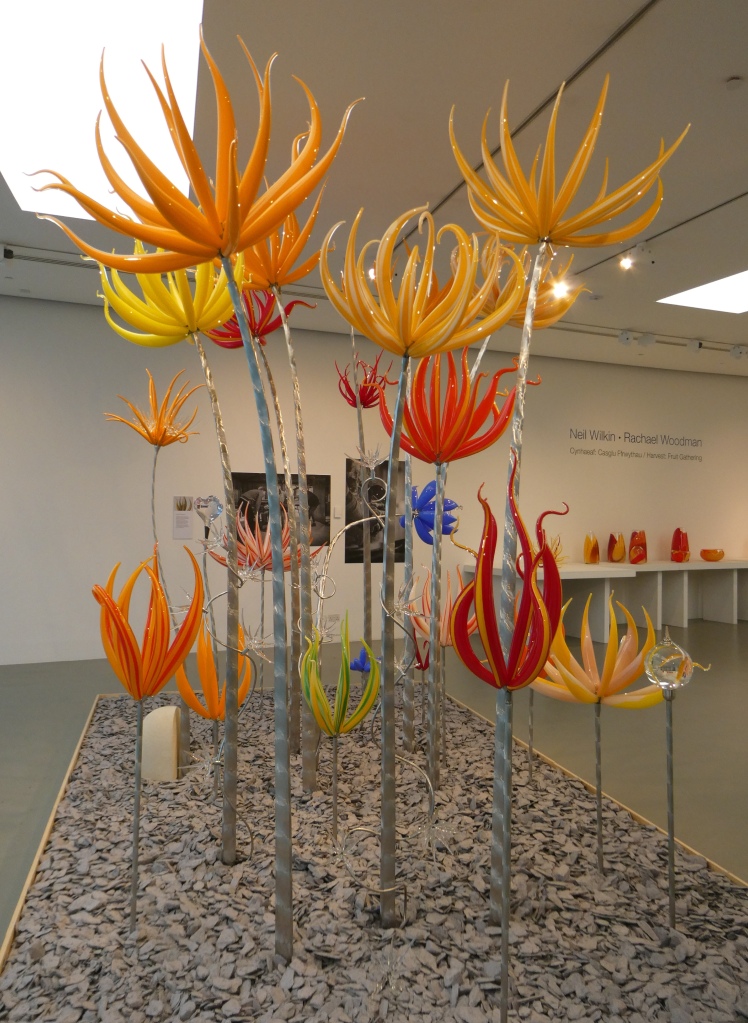
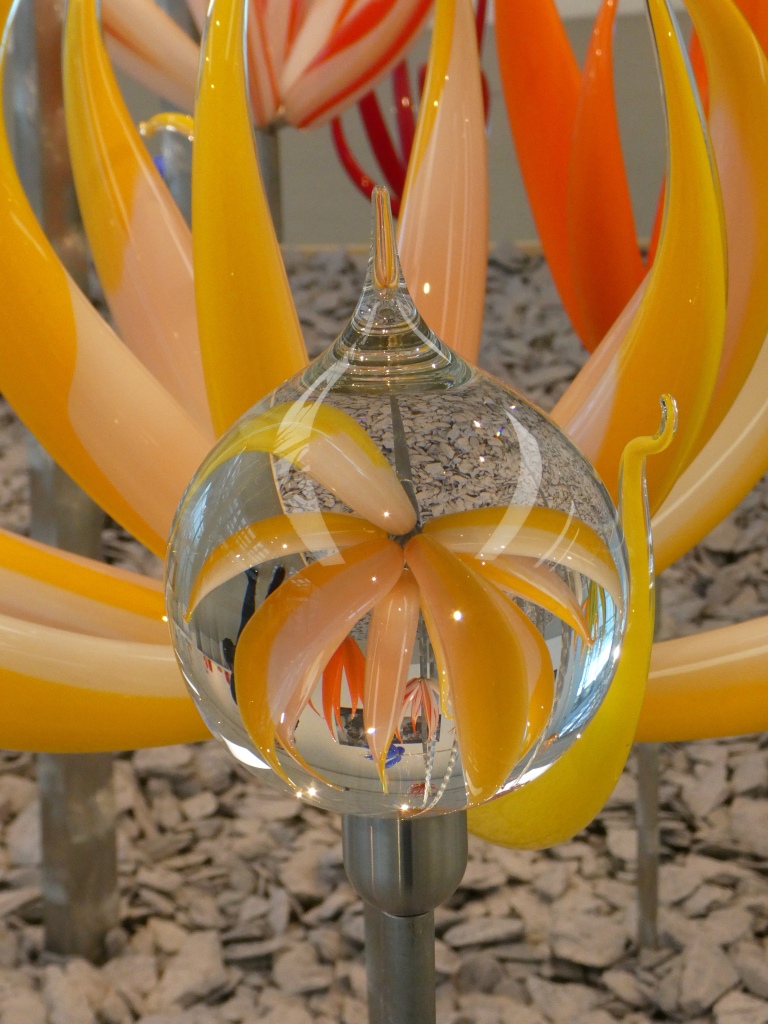
Exhibition photograph inside the National Glass Centre by Gill Helps
I’d just like to say the NGC and St. Peter’s Church belong close to eachother, as the first piece of stained glass in Britain – a skill learned from artisans from Gaul – was installed in St. Peter’s Church. I can’t imagine the NGC being anywhere else, because of these strong historical links with St. Peter’s. Nothing else makes sense.
Also, if it was relocated, where would the NGC be relocated to? What site has the space for glass blowing, studios, exhibition, meeting and learning spaces, shop and large café/restaurant? Would it cost more than refurbishing the NGC, and would people be less likely to visit if it was on a different site?
Exhibition photograph inside the National Glass Centre by Gill Helps
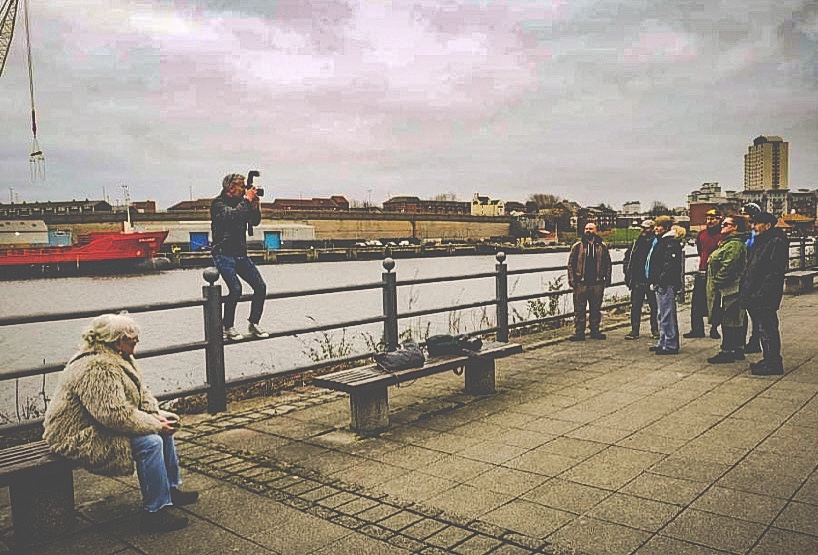
Over the years the NGC has been well loved by many. My own family have enjoyed making happy memories such as Mother’s Day lunches, half term pancake events for children, glass blowing, and of course, walking over the glass roof, to mention a few. I often walk along the riverside sculpture trail and as a keen amateur photographer, I have taken many photos of the NGC. I sometimes stop for a cuppa and meet friends there. The NGC is amazing, something for Sunderland to be proud of.
I am passionate about keeping the NGC in its current location and pray that somehow the money can be found to save it.
Gill Helps
Save The National Glass Centre by Gill HelpsSave The National Glass Centre by Gill HelpsSave The National Glass Centre by Gill HelpsSave The National Glass Centre by Gill HelpsSave The National Glass Centre by Gill HelpsSave The National Glass Centre by Gill Helps
Do you have a story about why we should save the National Glass Centre? Are you a glass artist? Architect? Teacher?
We want to hear from you!
Contact SaveTheNGC@gmail.com with your submissions.
The National Glass Centre is open for business and Save the National Glass Centre campaign wants you to show your love ❤️
BBC reports this morning about the impact of levelling upon North East arts projects. The article draws attention to the lack of footfall to many of our cultural organisations. It’s apparent that the cost of living crisis has become an overwhelming factor of everyday life. Decisions about your weekly budget have to be made carefully. And, at the moment, bus fare and lunch is a stretch too far for far too many.
Many organisations like the Tyneside Cinema in Newcastle are struggling to survive – with audiences failing to return to pre-Covid levels and a lack of local authority support. How is Arts Council funding distributed and how effectively is the government moving spending outside London?
By Richard Moss Political editor, North East & Cumbria
Most of our cultural organisations offer free entry, and often have free workshops or events. The National Glass Centre is one of these fantastic places. Sunderland University wants to eventually demolish the building, and they are ‘considering’ future options for the entire St Peter’s site. The campaign to save the National Glass Centre flies in the face of the current position of Sunderland University, Sunderland City Council, and local labour MPs. We have an extremely tall order to sway these main oppositions around to our way of thinking.
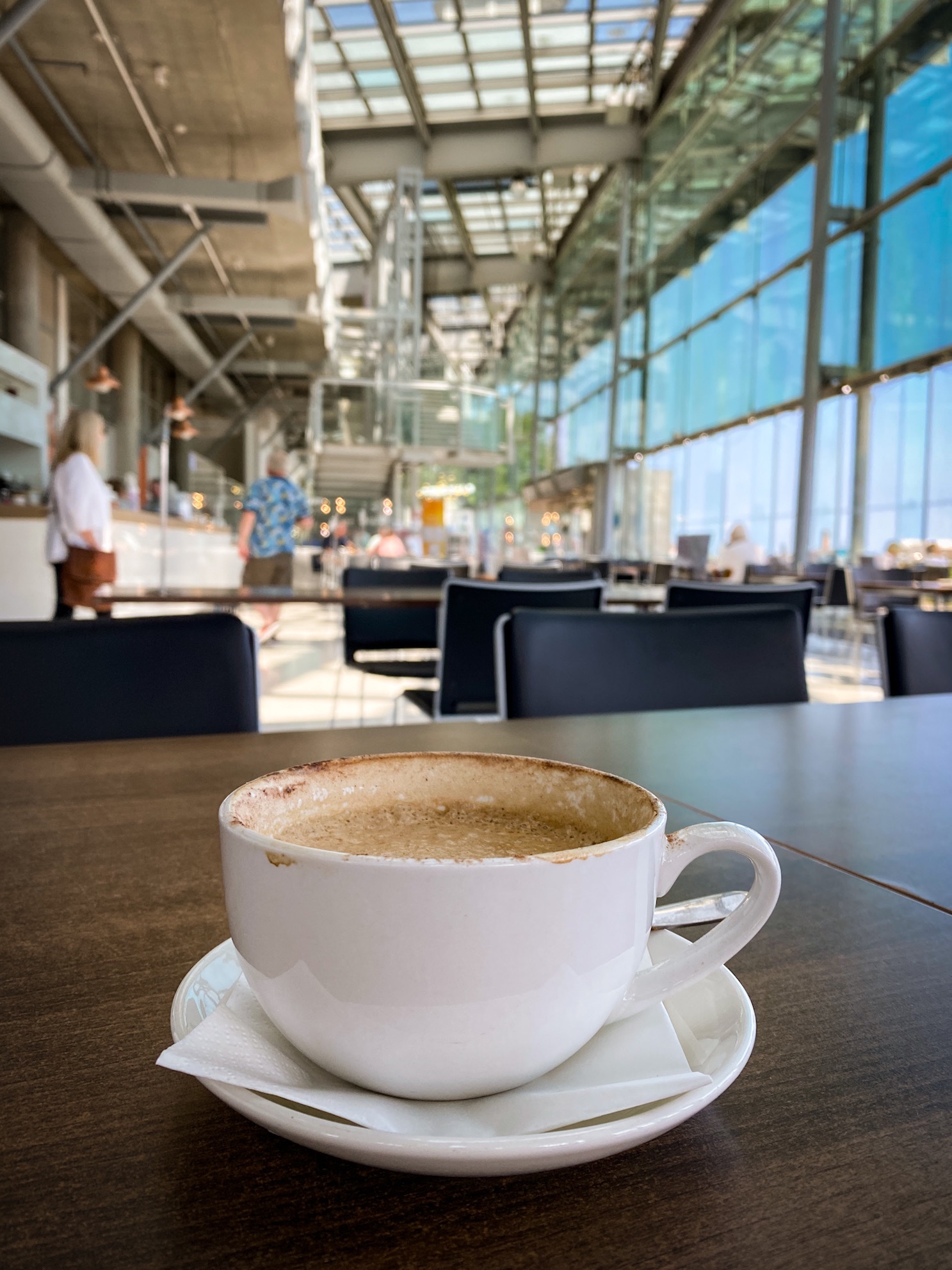
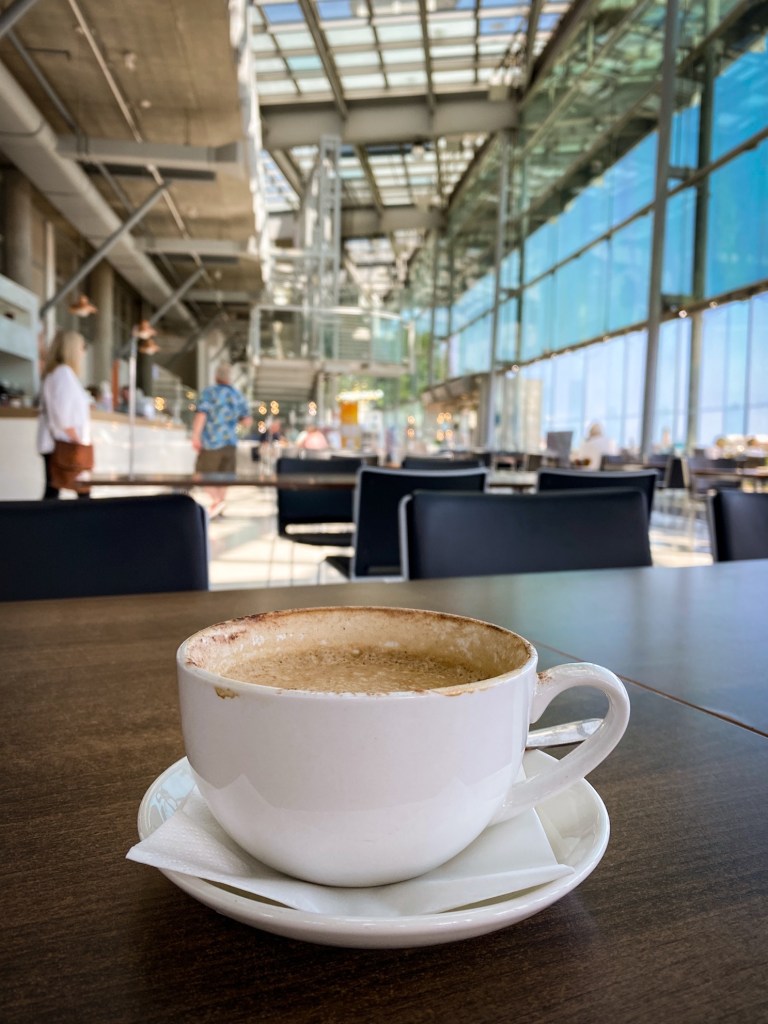
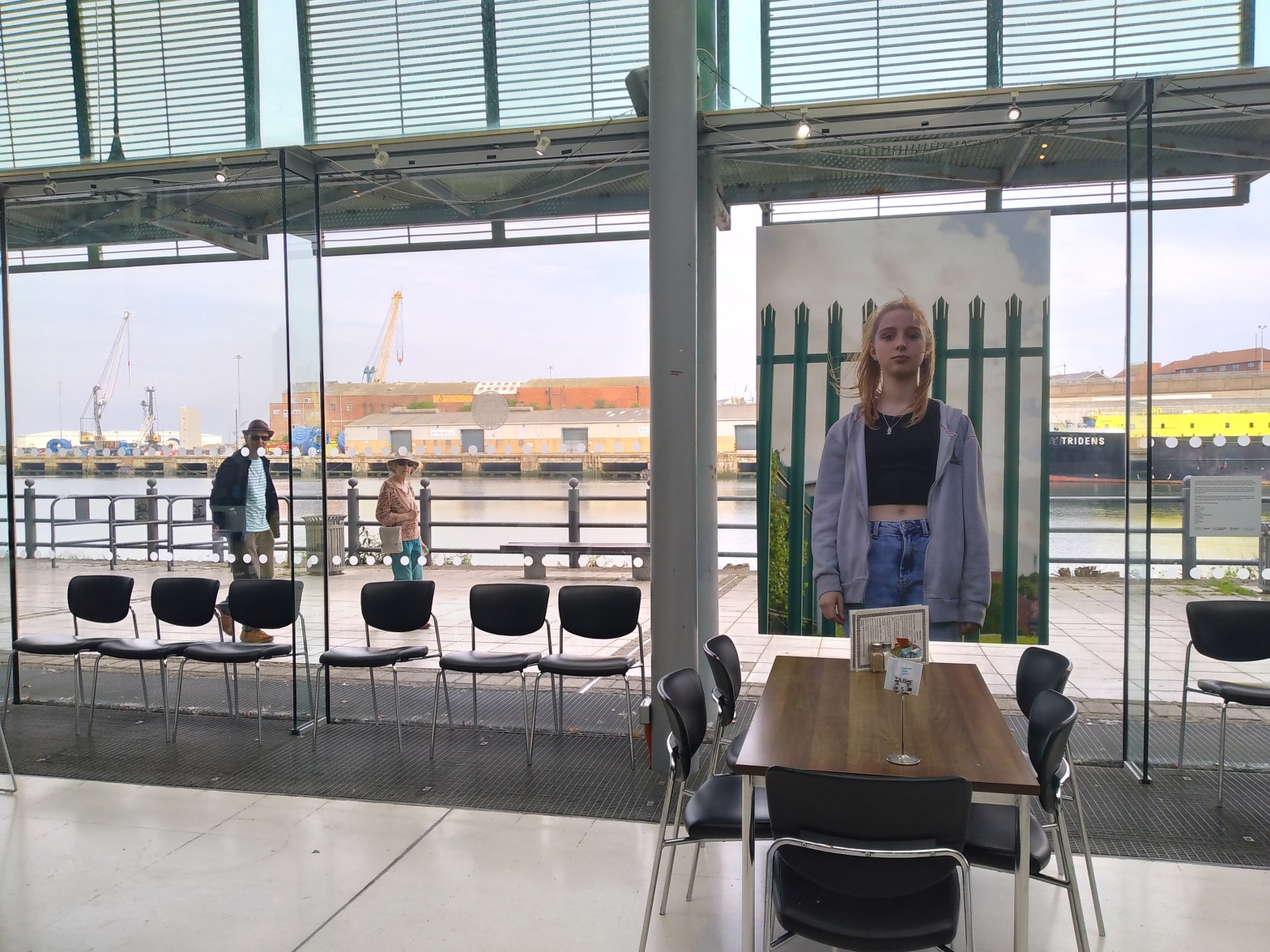
Delicious coffee and excellent views at the National Glass Centre
We are not going to be able to do that if the National Glass Centre doesn’t have enough footfall. The opposition have already won, if we aren’t visibly using the assets we already have. The campaign wants the National Glass Centre to stay, and be the amazing treasure that it is, for future generations. So, it starts today with you choosing to pop in for a coffee, or to watch a demonstration, to buy something from the shop, to take a workshop, or to enjoy an exhibition.
The National Glass Centre is open for you. Let’s keep it that way by visiting it! Check out the list of workshops and exhibitions on their website:
See the sea exhibition 2022 at National Glass Centre
In other news, the amazing Piers Gough, award winning master architect has sent us a message of support. Piers Gough was a great supporter of the National Glass Centre as an excellent example of one of the first buildings of its kind. Read his statement below:
The National Glass Centre does so many thing so right. It exploits the sloping topography between Roker Terrace and the Wear by inviting the visitor straight onto the roof to first get a sense of the panoramic setting. Whilst entry to the building, signalled by two soaring chimneys, is invitingly sliced into the slope [in the manner of the great Oscar Niemeyer] The roof of course turns out to be a tour de force of glazing giving a unique birds’ eye view of the spaces below. The multi function interiors are inviting, spectacular, well lit and flexible enough to allow for many existing and future uses. The lowest level space opens seamlessly onto the quayside from where the whole building can be perceived as akin to a glass aircraft carrier including its quirky below deck control turret. This reference to Sunderland’s ship building heritage as well as glass making past makes this unique building special to its particular location. It is the best and most apposite 21st century building of the region.’
‘Sunderland cannot afford to lose such an icon. It would seem ideal for a forward looking university to use or repurpose but should it be superfluous another more appreciative owner should be found.’
Glide around St Peters church, the birthplace of stained glass once the Romans left. Video by Phil Vickery
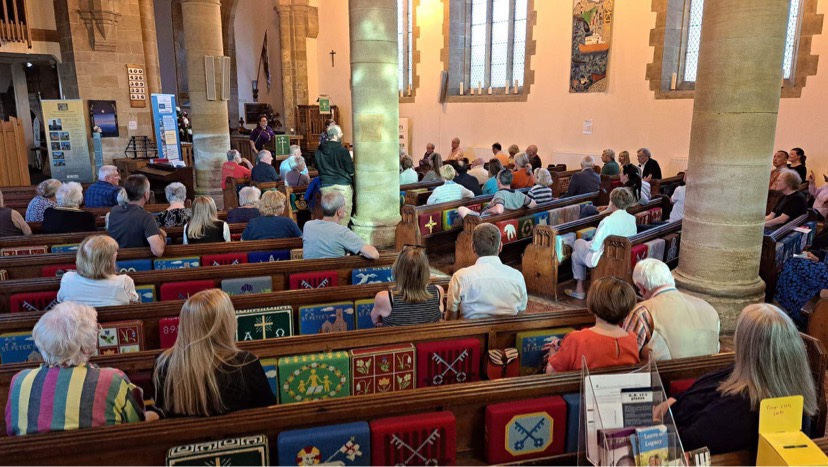
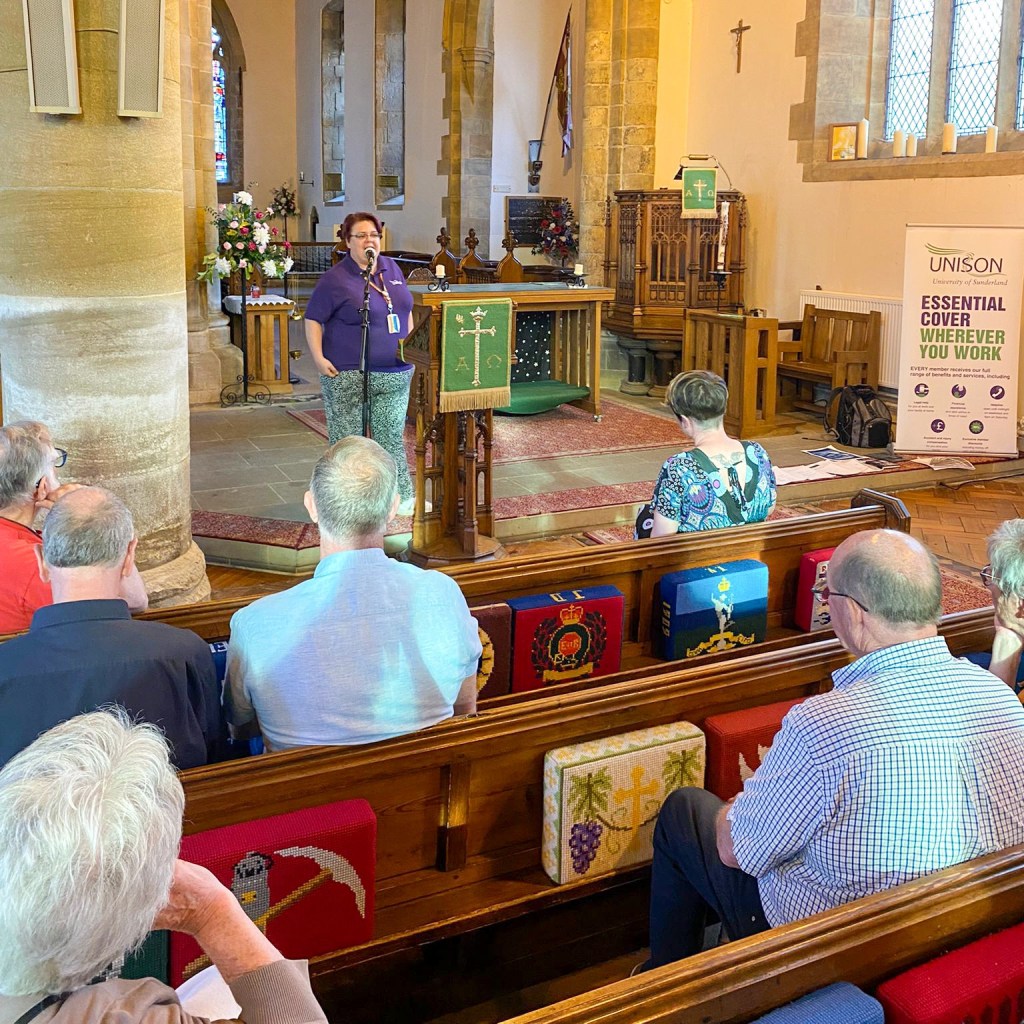
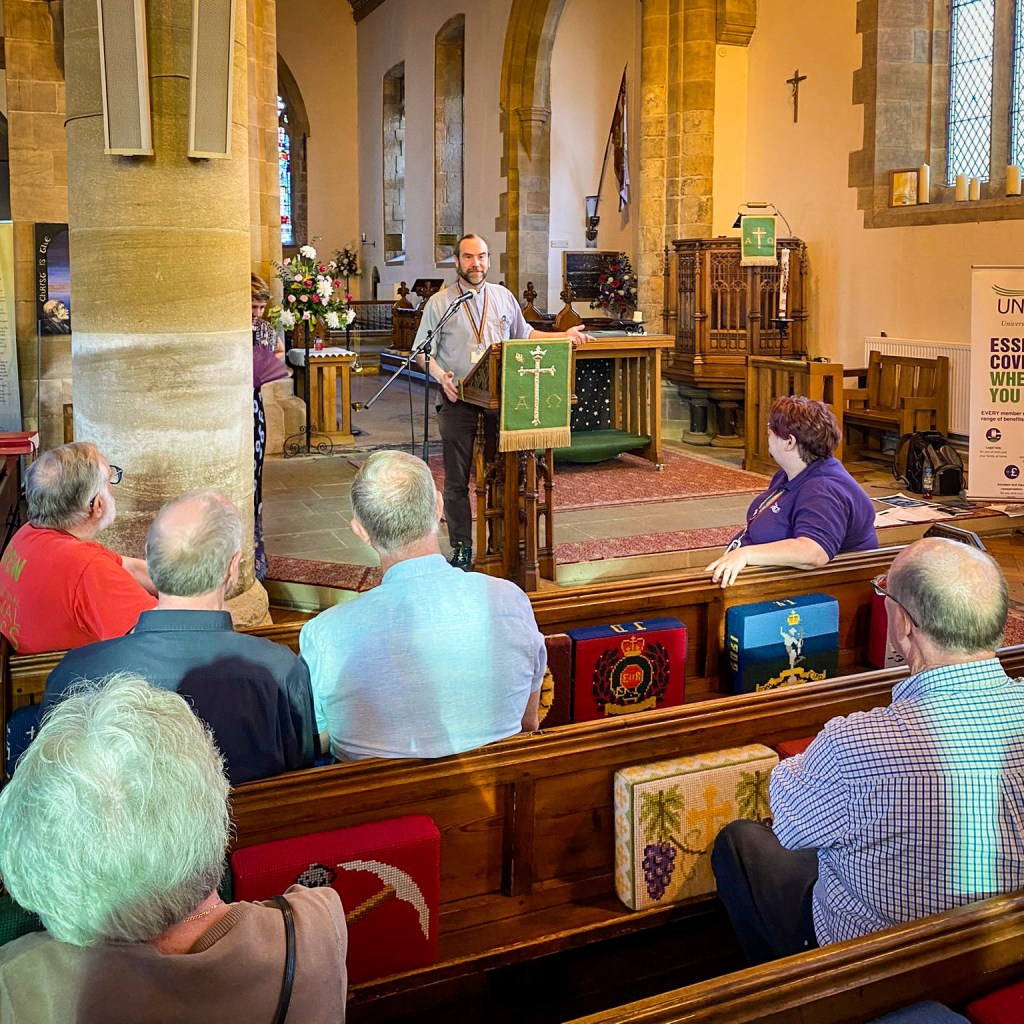
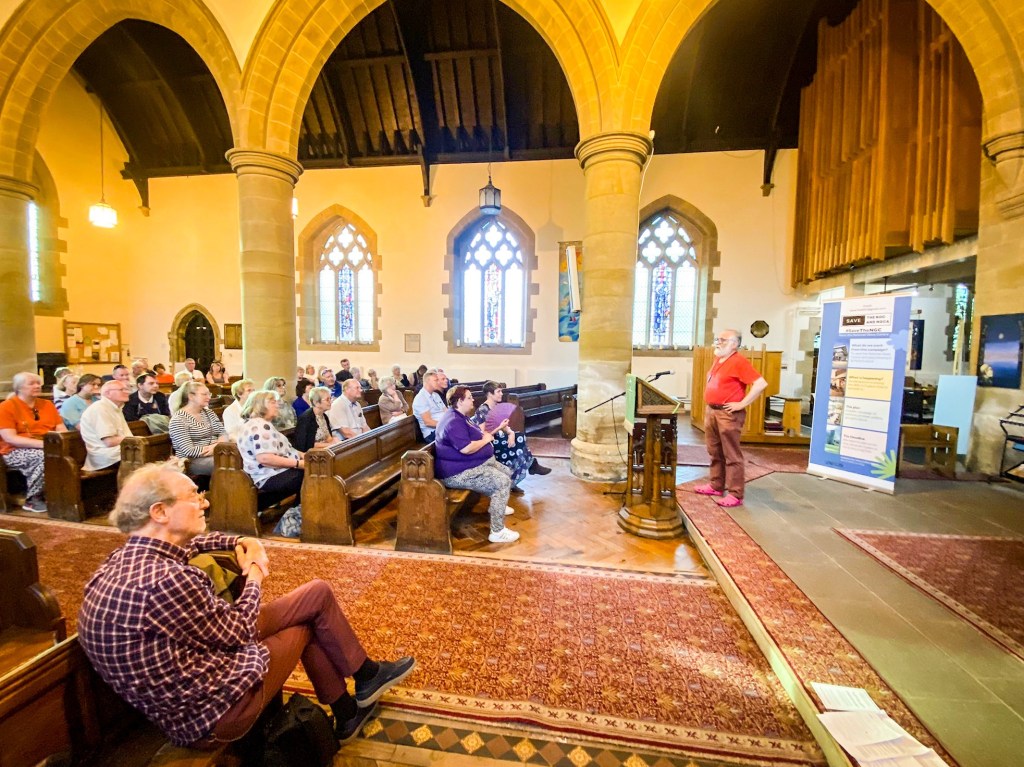
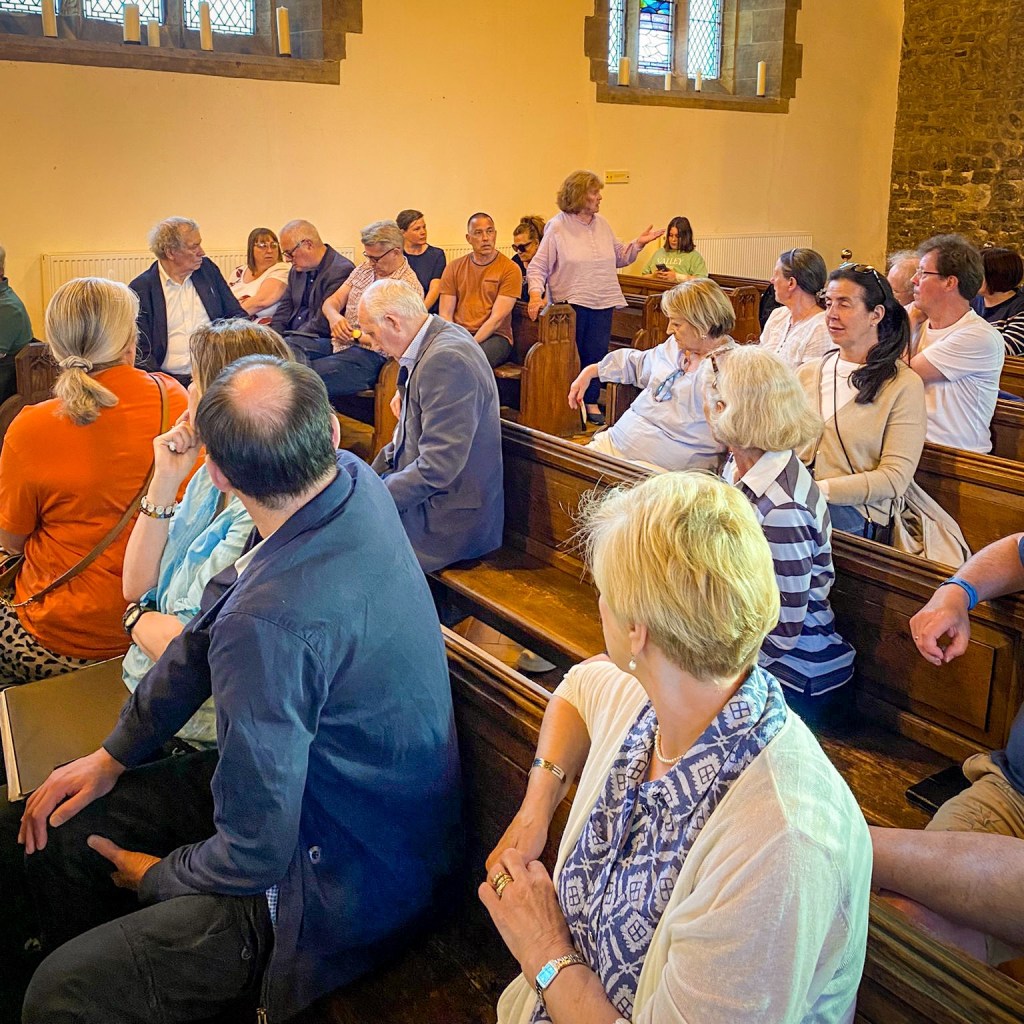
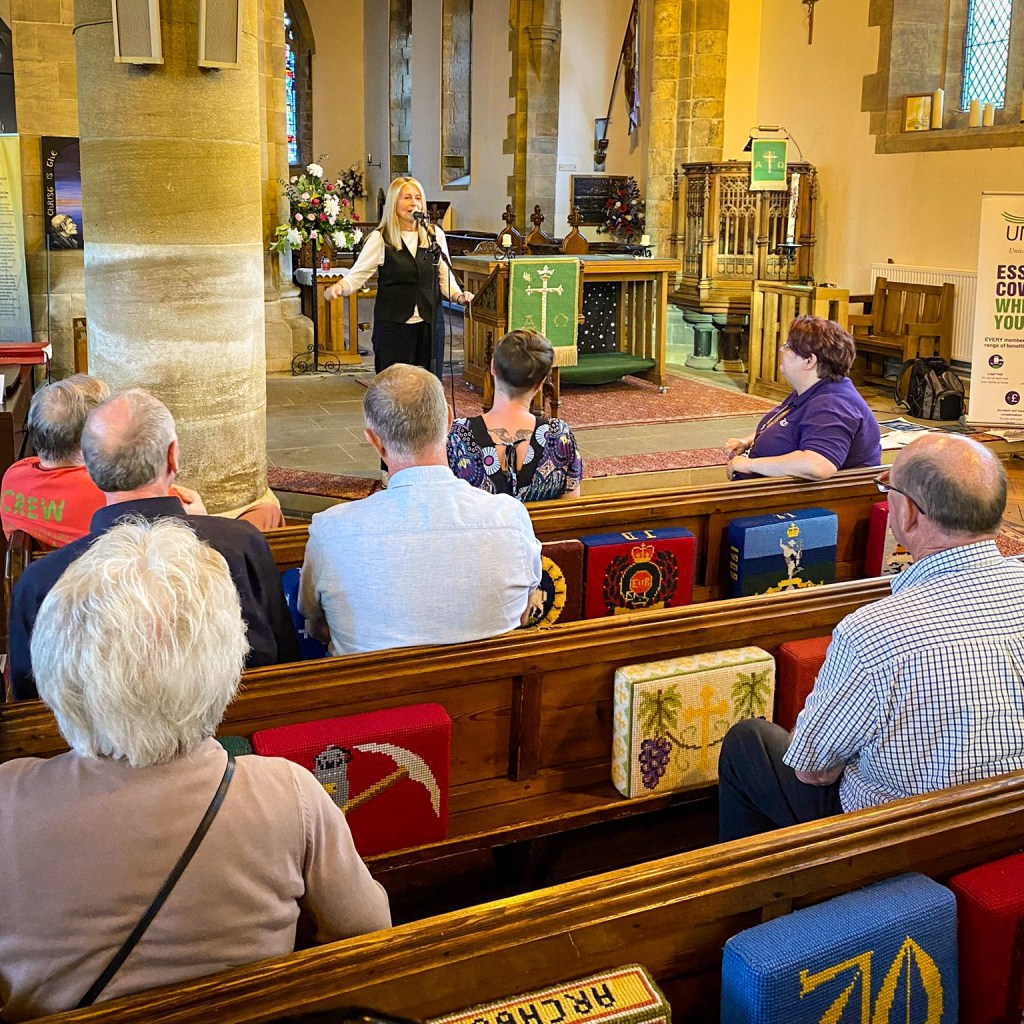
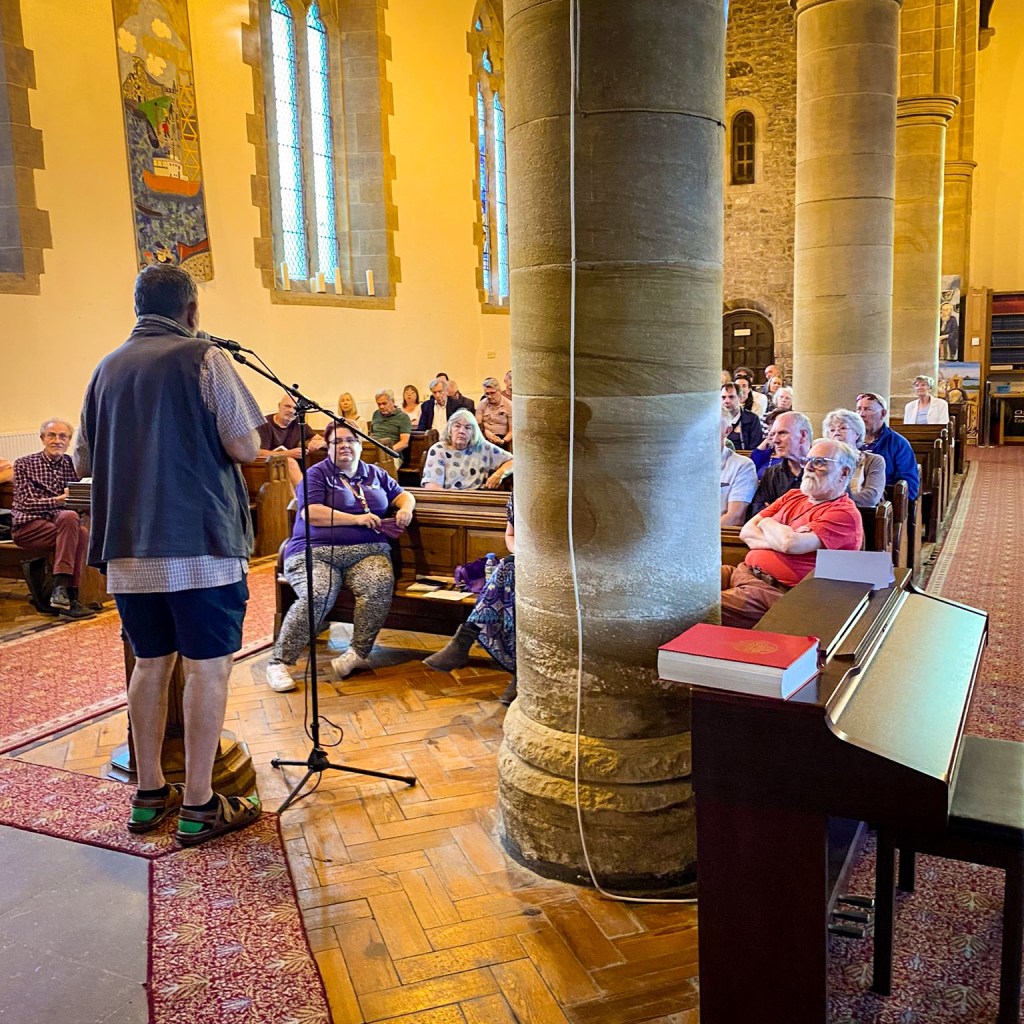
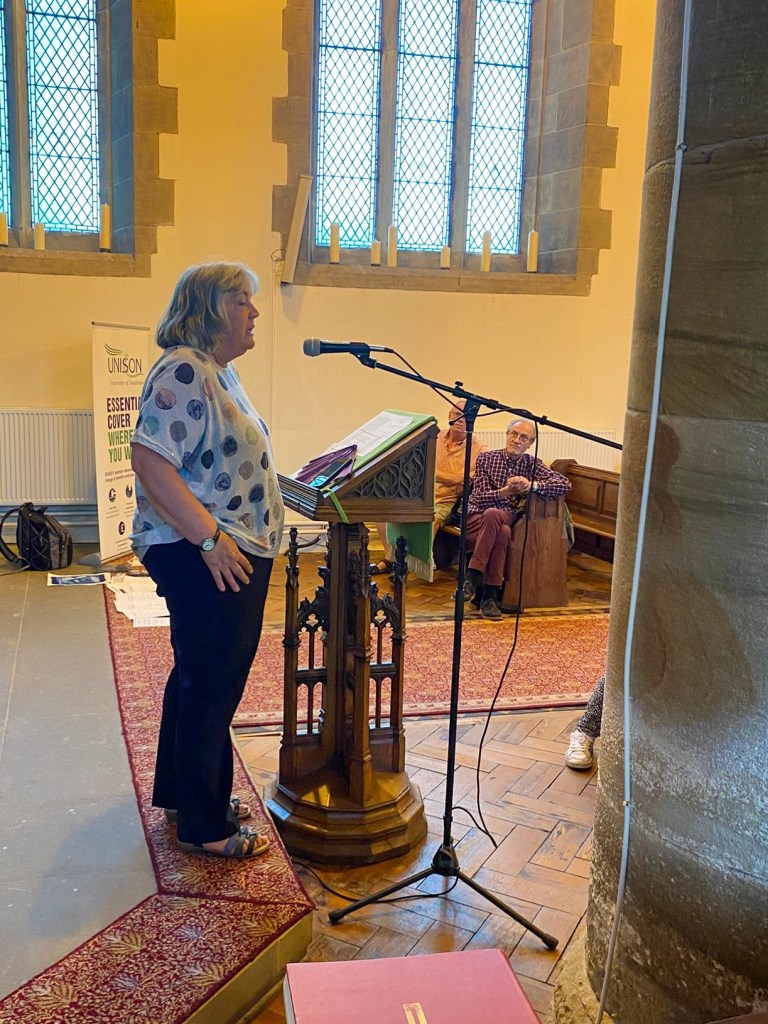
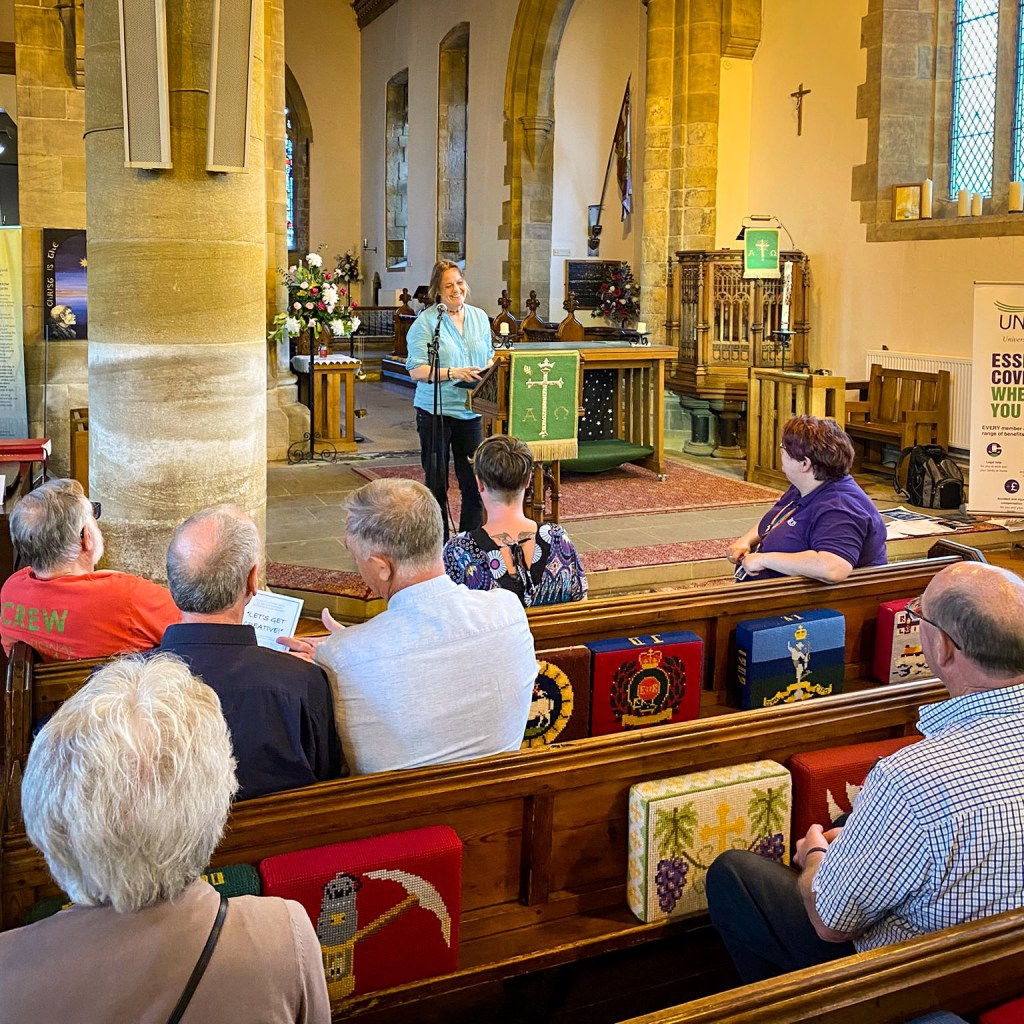
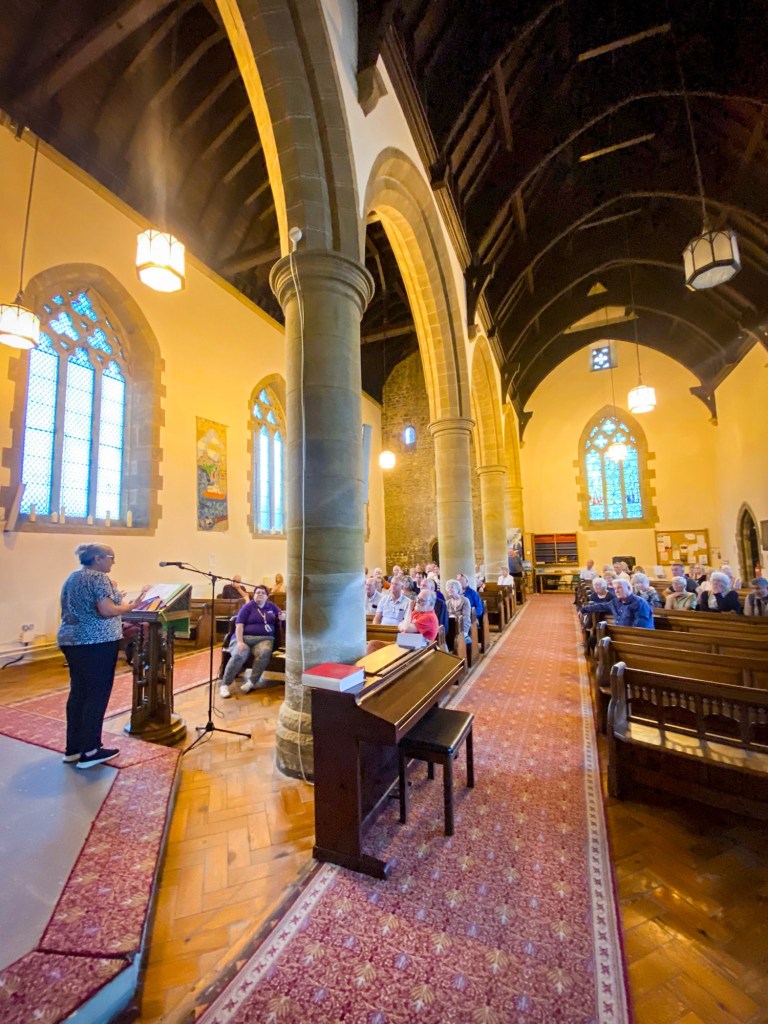
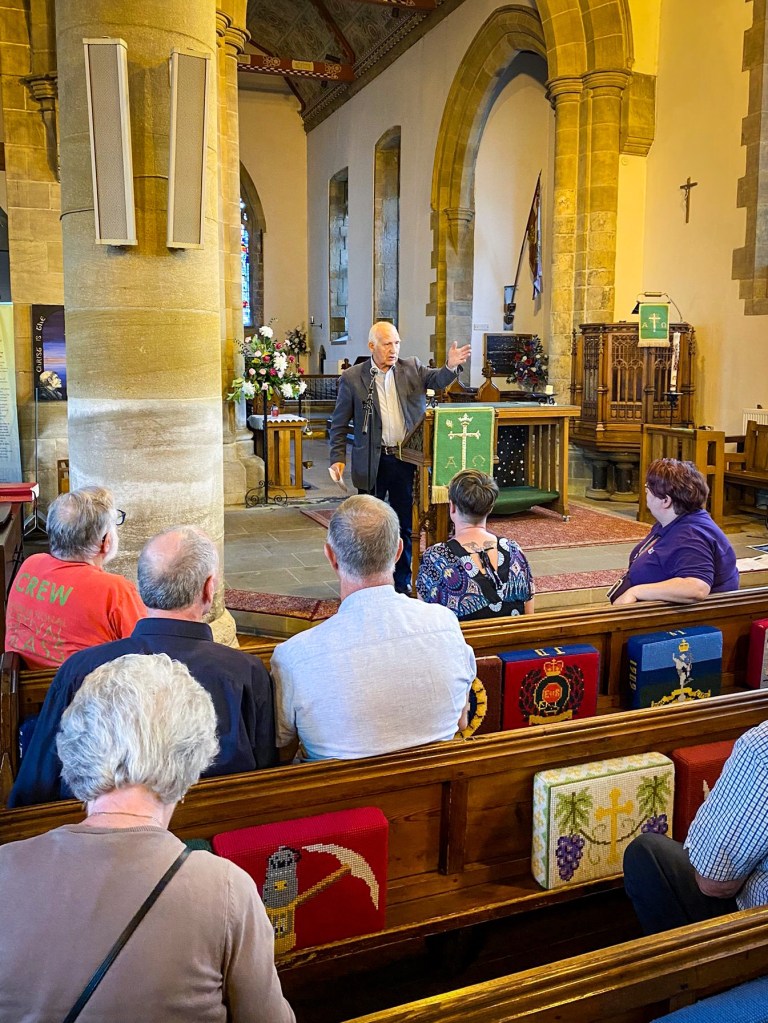
On a balmy summer night on 22nd June 2023, Sunderland citizens came from all across the city to St Peter’s church. This was the first public meeting of the save the National glass centre campaign. We had 30 people book through our eventbrite, but closer to 100 actually attended.
During the week I had visited Sunderland central MP Julie Elliott. I had invited JE to the meeting, but unfortunately she was busy. After an hour of conversation it was clear JE could support the fight to save the essence of glass making, but was adamant that the building of the National Glass Centre had not been beneficial for Sunderland, and that we should support the University line. I requested a statement for the blog. This is still pending.
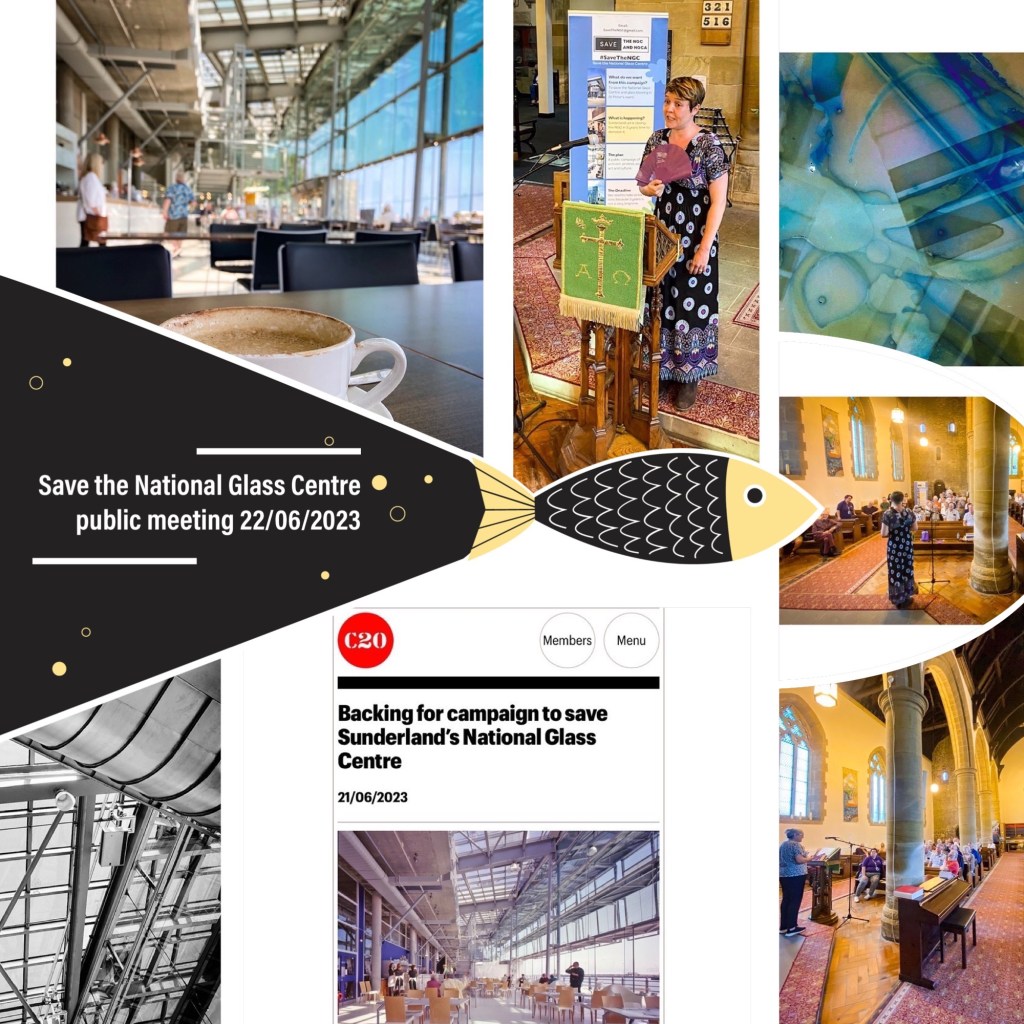
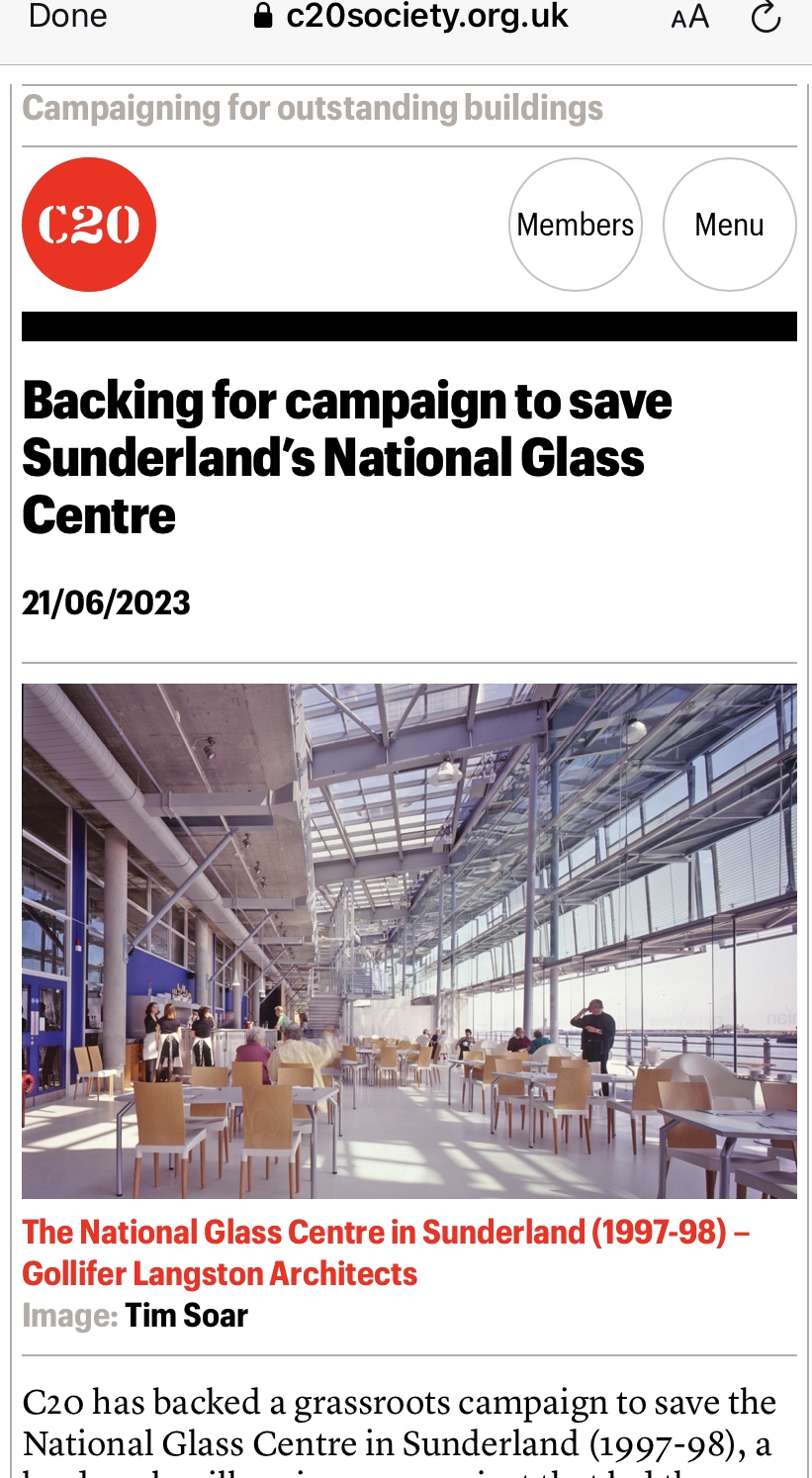
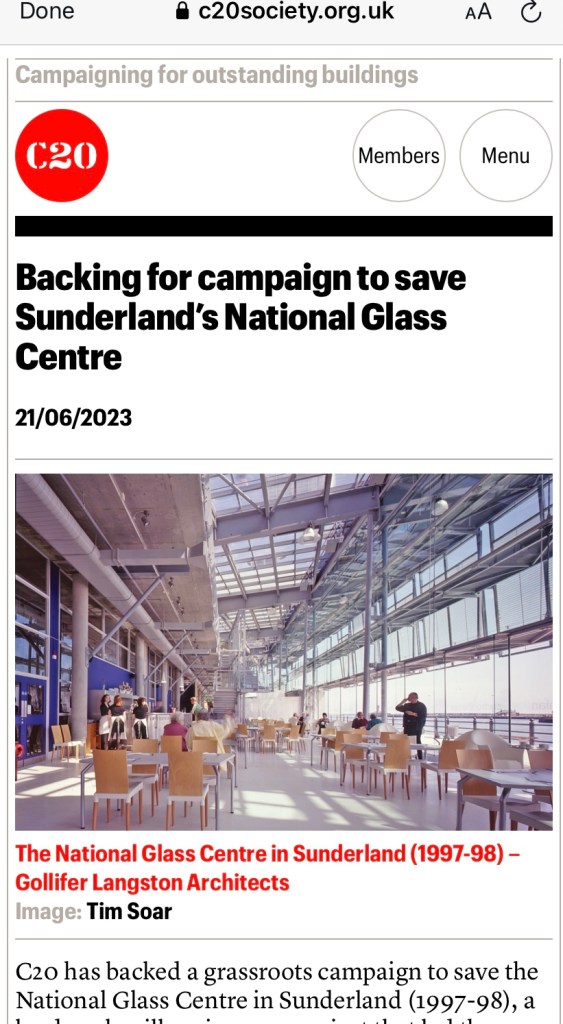
On the day of our meeting the 20th Century Society, for the protection of at risk 20th century buildings, wrote a fantastic article in support of our grassroots campaign. More support and much needed publicity. You can read their article here:
I also met with senior management from the University to further question statements made in the report. The estates manager confirmed that recent work to remove the metal from the riverside of the glass centre had resolved structural integrity problems.
Furthermore, the services like the heat exchange, furnaces, and utilities systems are all nearing end of life. I have requested further information about the ‘end of life’ equipment. As I believe this will be a key factor in exactly what is saved.
Photograph by Chris Howson
We had a lot of passion in that church during our public meeting. Emotions were running high. The awesome setting struck a cord with all of us. How tragic it would be to end 1350 years of glass making tradition in the North East? There were tears, there was laughter, there was unity, there was outrage, and there were outpourings of love from every speaker.
Jo Howell: Photo by Phil Vickery, glass blower
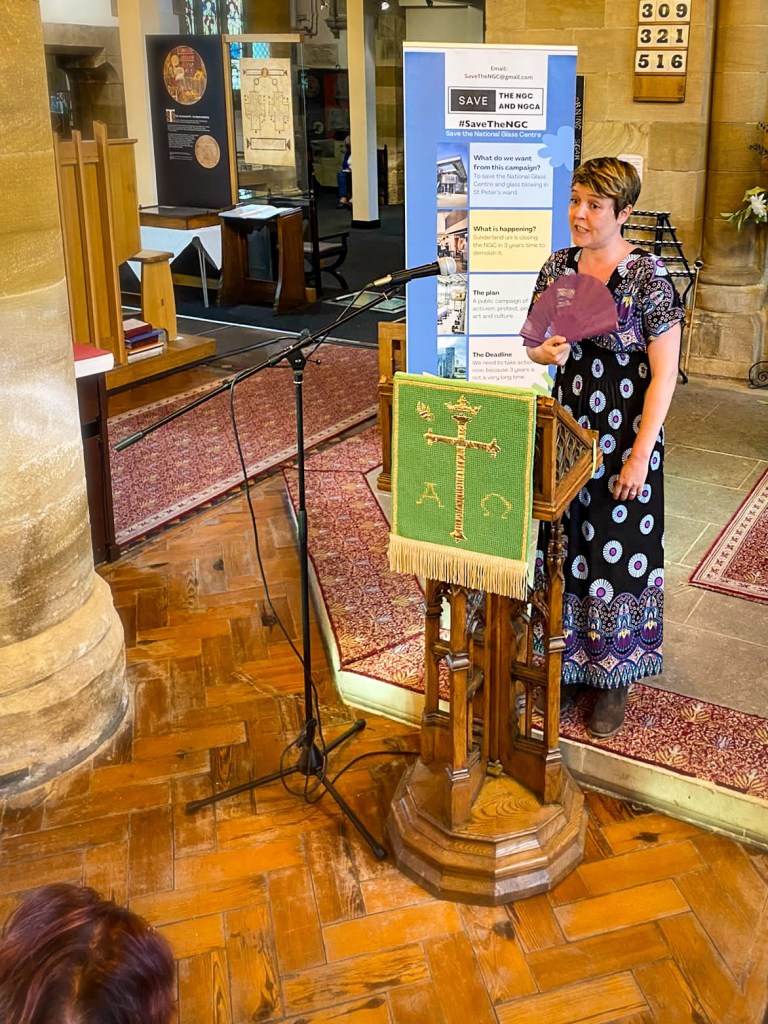
I opened the evening with a brief introduction to who I am, what we’ve managed to achieve in the campaign so far, and a statement provided by Sunderland University.
See below:
“The University has always been clear that the search for a new home, or homes, is an opportunity for the National Glass Centre’s work to reach new audiences in a financially secure and sustainable manner, rather than just seeking to recreate the status quo. Such future-facing work had already begun with staff even before the building issues made clear that a move was necessary.
“We remain in active and positive discussions with key partners, including Sunderland City Council, about future site options.
“On the future of the current NGC building and site, no decisions have yet been made.
“National Glass Centre and the Northern Gallery for Contemporary Art will remain open in the current building for the next 2-3 years, continuing to welcome visitors to a year-round programme of exhibitions and opportunities to take part in creative experiences.”
Katherine McLeod, Sunderland University, 22/06/23
Photo by Jo Howell
My quick introduction was followed up by Joanna Willets from Unison’s Sunderland University branch, who is in full support of the campaign on behalf of the staff; and she outlined why the unions are United with us.
Unison have put £500 into the campaign to support advertising, printouts, and other campaign costs. Joanna invited people to unionise, and explained how morale across staff in the national glass centre was fairly low due to the immense uncertainty around the future.
Joanna Willets: Photo by Phil Vickery
Chris Howson took the microphone for a moment to express how much his own family appreciated the National Glass Centre. And, he told the crowd of a successful campaign in Bradford, where a building had been marked for destruction but a community show of love turned the tide.
We will be including some of these ideas in our future events. Unity and love will be our primary weapons.
It is accepted and understood that Sunderland University cannot be expected to financially carry a building that is no longer part of their academic vision. What was very clear from the meeting was that there was a strong desire for amicable solutions that ultimately would benefit the City and the University by transferring custodianship. It is clear that the building and its contents are viewed by Sunderland University as a financial millstone.
This dim view of the National Glass Centre is not shared by the people attending the public meeting. The main takeaway being that the National Glass Centre is fundamentally, globally and locally, an important cultural leader.
The National Glass Centre was created as a beacon of hope for the people of the river Wear when shipbuilding was finally killed off. And, it was very successful in providing people from all levels of the city’s population a route out of poverty and depression.
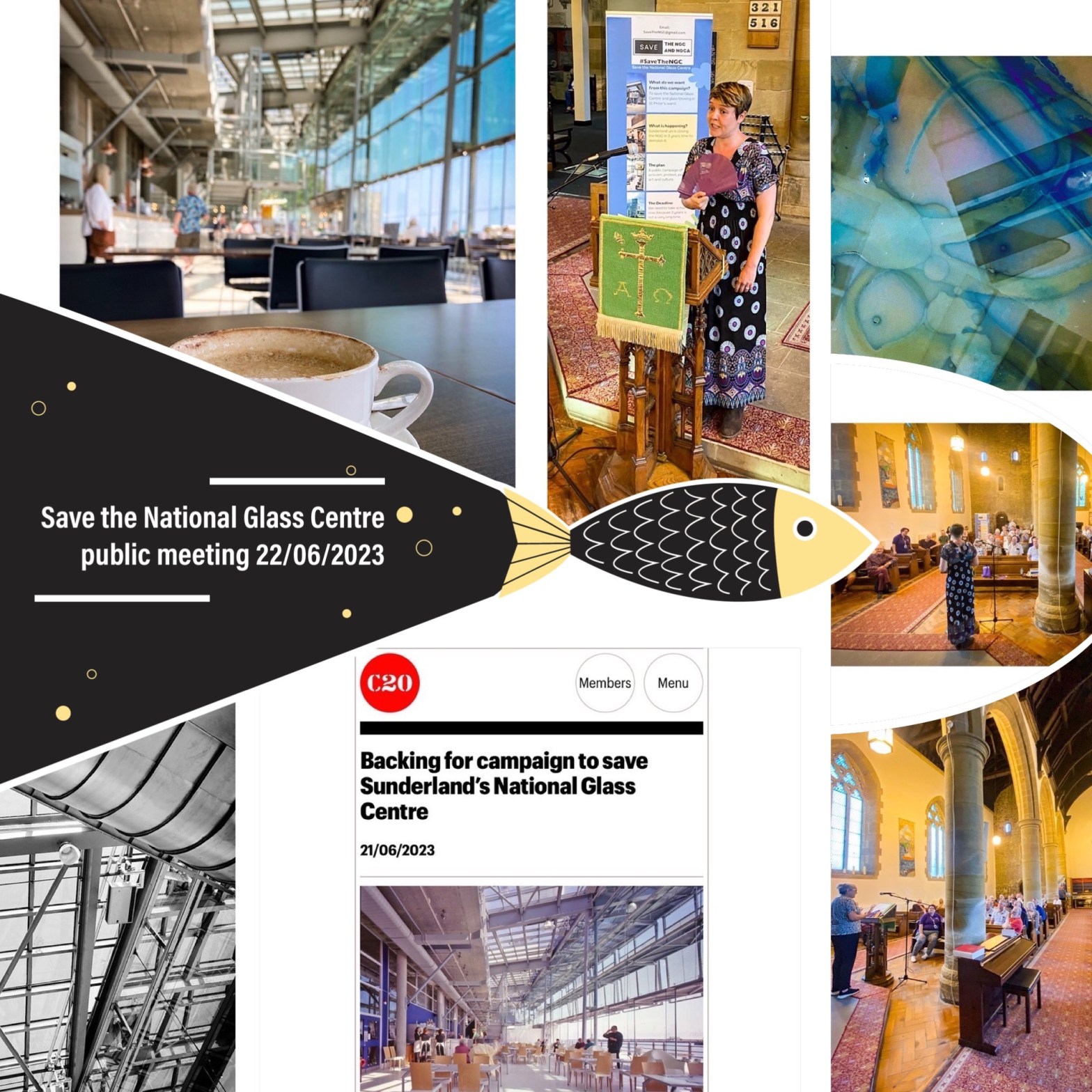
Save the National Glass Centre collage by Jo HowellChris Howson: Photo by Phil Vickery
A lot of members of the audience wanted to share their own impassioned experiences of why the National Glass Centre was so important to them. There were previous employees, current staff, friends of the glass centre, students, family of students, cultural workers, politicians, councillors, glass blowers, artists, construction professionals, legal professionals, heritage professionals, campaign professionals, and even an ex mayor!
And, so many more fantastically useful people, all willing to help in any way they can!
What did people say at save the National Glass Centre public meeting?
The below list is as much as I can recall from the meeting. The meeting overran by nearly an hour, and there were many people who wanted to speak. Each and every viewpoint was clearly heartfelt, and many came with their own suggestions of how we could save the building and the skill set housed inside.
The building is unique, and impressive.
Glass blowing is an endangered craft.
Sunderland has a prestigious and long heritage of glass making. How can we ignore 1350 years of continuous skill in this City?
They do not want to lose an important part of their cultural identity.
They are extremely proud of the National glass centre.
The building has hosted internationally famous artists during programs like the Glass Exchange. It has a global draw, of which no other venue can boast.
It is wasteful to destroy such a young building.
There are still a lot of questions surrounding the maintenance of the building. Many noting that regular painting would have avoided catastrophic rust.
A commitment has been made by several attendees to further work on the save the National Glass Centre campaign.
Could Sunderland Culture, as an Arts Council NPO seek to take over custodianship?
Funds could be raised via crowdfunding, diversifying income streams, adopt a furnace, and/or levelling up fund (apparently Sunderland has only accessed 12% of it’s levelling up allocations).
There are concerns that the intent is to demolish one of our best assets.
If the building is donated back to the people via a suitable local organisation, all it embodies can be saved for future generations.
If properly invested in, the National Glass Centre could create an ambitious cross industry program to research the most efficient and sustainable way of making glass.
Demolition would have a high carbon cost. Can this be justified?
Other glass blowing courses and studios have closed. The National Glass Centre could have far more students, and potential hirers of equipment because of this.
It is worrisome that the dilution, and vast reduction of the current provision isn’t being questioned by more MPs and councillors.
There will be a huge loss of opportunity.
The city will lose highly skilled workers.
The loss of the National Glass Centre will effect our ability to level up.
Students are worried about being able to complete their studies.
Morale is currently low in the centre.
Questions surround Sunderland University’s proposed financial numbers in the online report. We are seeking more information.
How will our young access their cultural heritage with glass?
Worried about losing studio spaces, equipment, staff, specialists, and skills.
Inside St Peter’s church in Roker, by Phil Vickery
What happens next?
Time to organise our campaign and divvy out jobs!
Those who emailed, I will contact and organise a follow up so that we can form a crack team! With this team of knowledgeable people we will have the most effective campaign possible.
There’s still time to email if you want to form part of the steering group. Email:
Savethengc@gmail.com
Initially we will start with a monthly meeting on the 3rd Thursday of the month. Venue TBC.
Thank you for your support. Spread the word. Email, write to, or phone your MP. Write to the culture minister. Write to Sunderland University. Tell everyone to visit the National Glass Centre to show their support. The staff need to know we value them. Without the skilled people the National Glass Centre is just a groovy ship shaped box. But with them, the National Glass Centre is something important to be cherished.
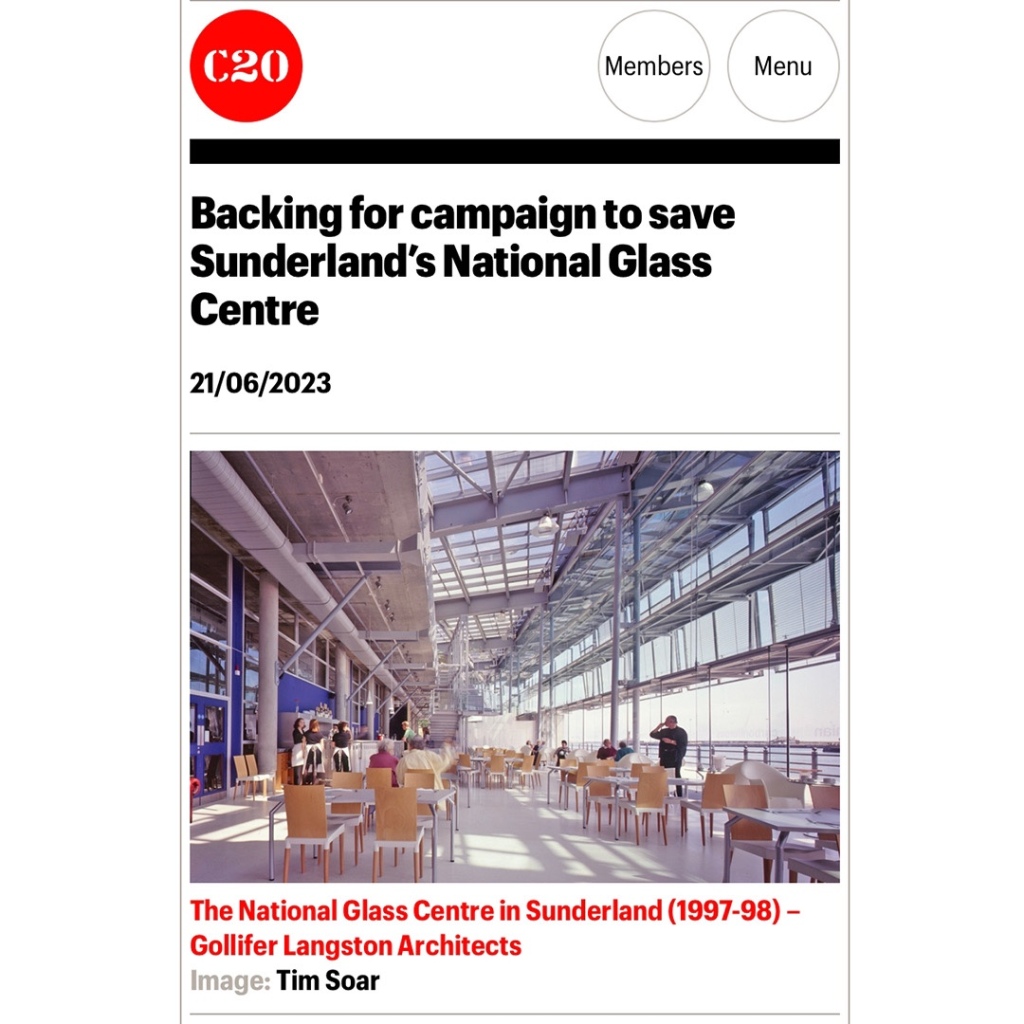
Screenshot of article from C20society about save the National glass centre 2023
Public meeting tomorrow at St Peter’s church 7pm
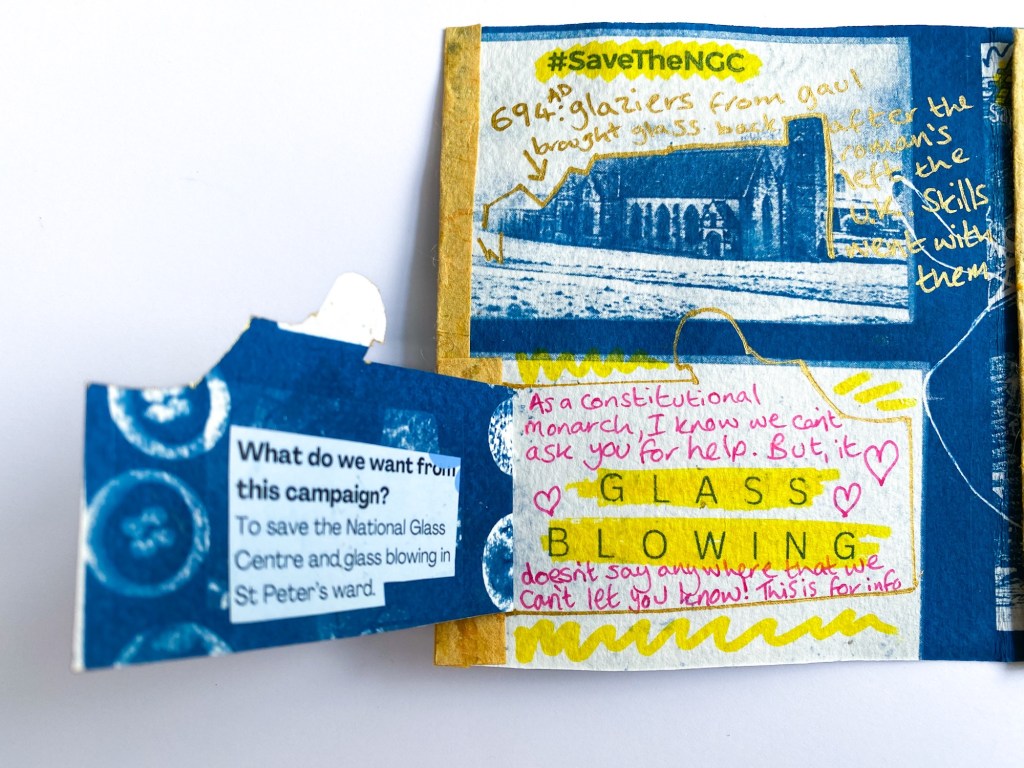
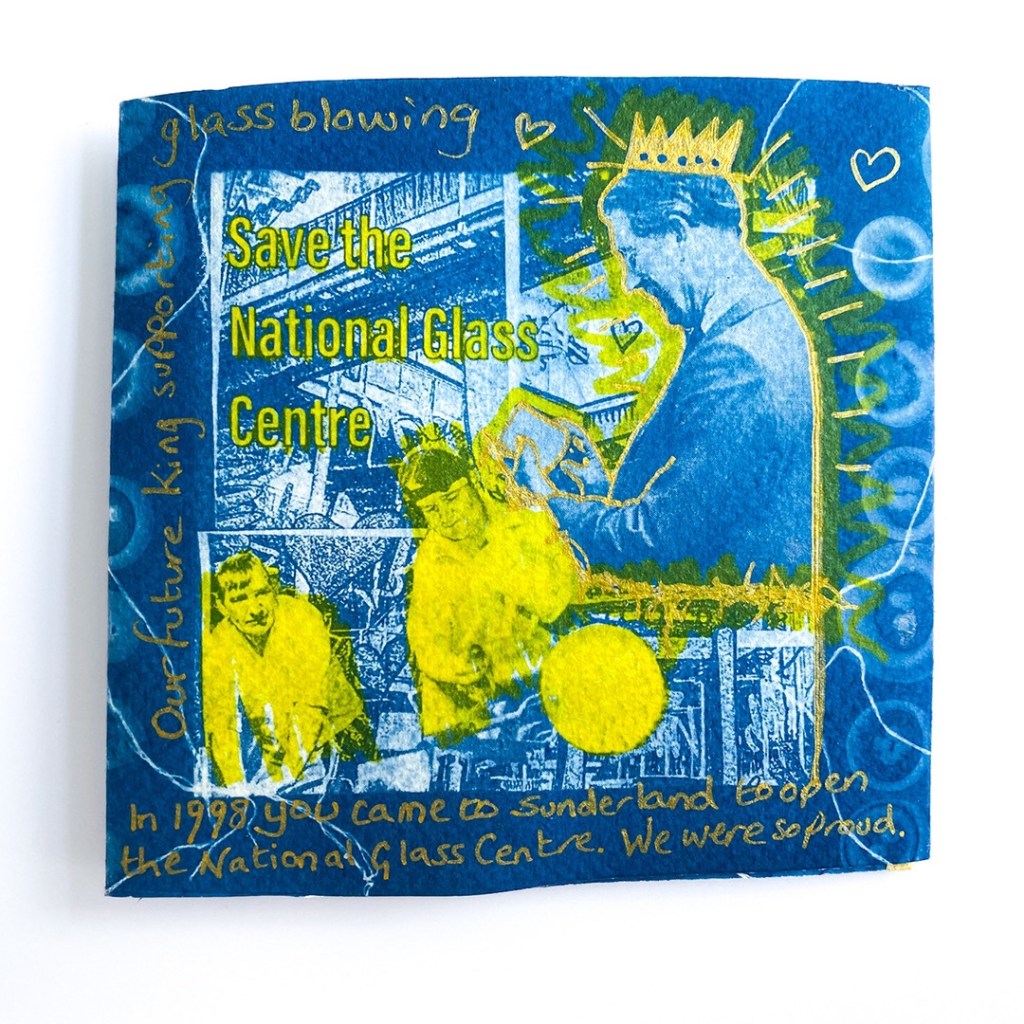
Detail shot of the letter to King Charles
After the meeting tomorrow I will post off our letter to King Charles. Hopefully a uniquely crafted artwork will help demonstrate the importance of the National Glass Centre to everyone involved.
Retired planning inspector, and staunch supporter of #SaveTheNGC
Welcome, by David Vickery
I decided to revisit the National Glass Centre for the first time since the University’s announcement that it is to be closed. Well, reader, I was blown away!
The first thing to say is – admission is free. A bargain these days.
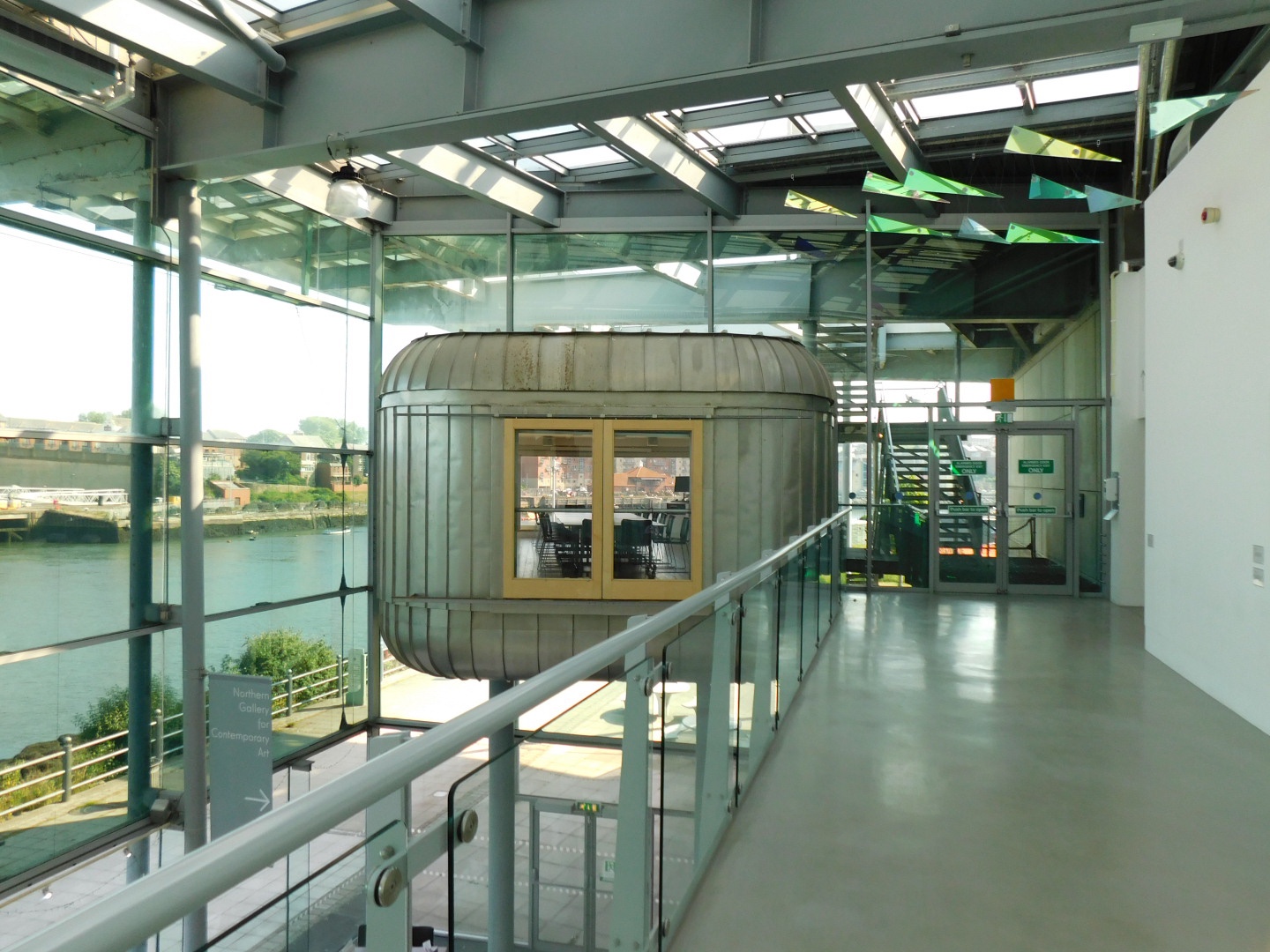
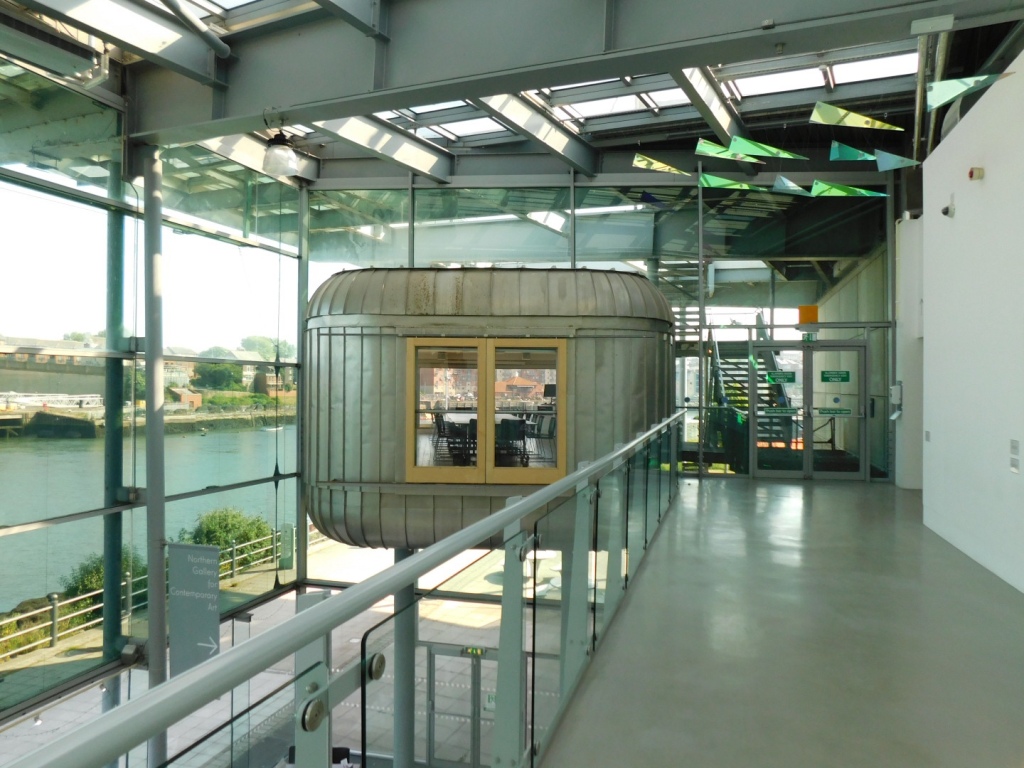
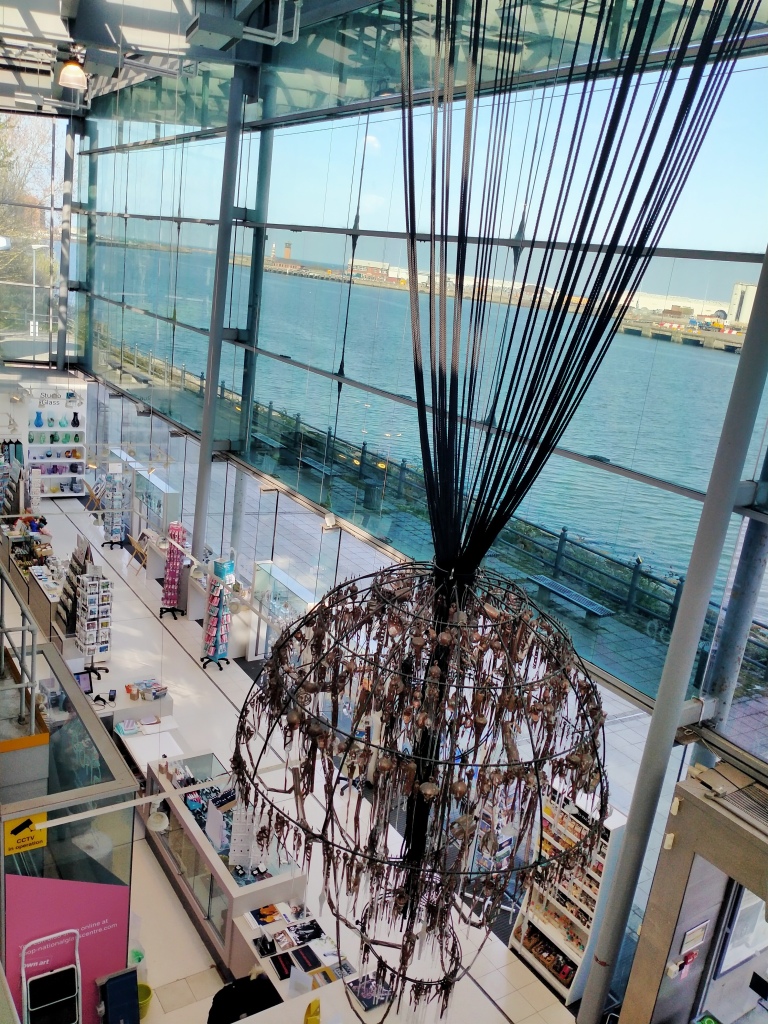
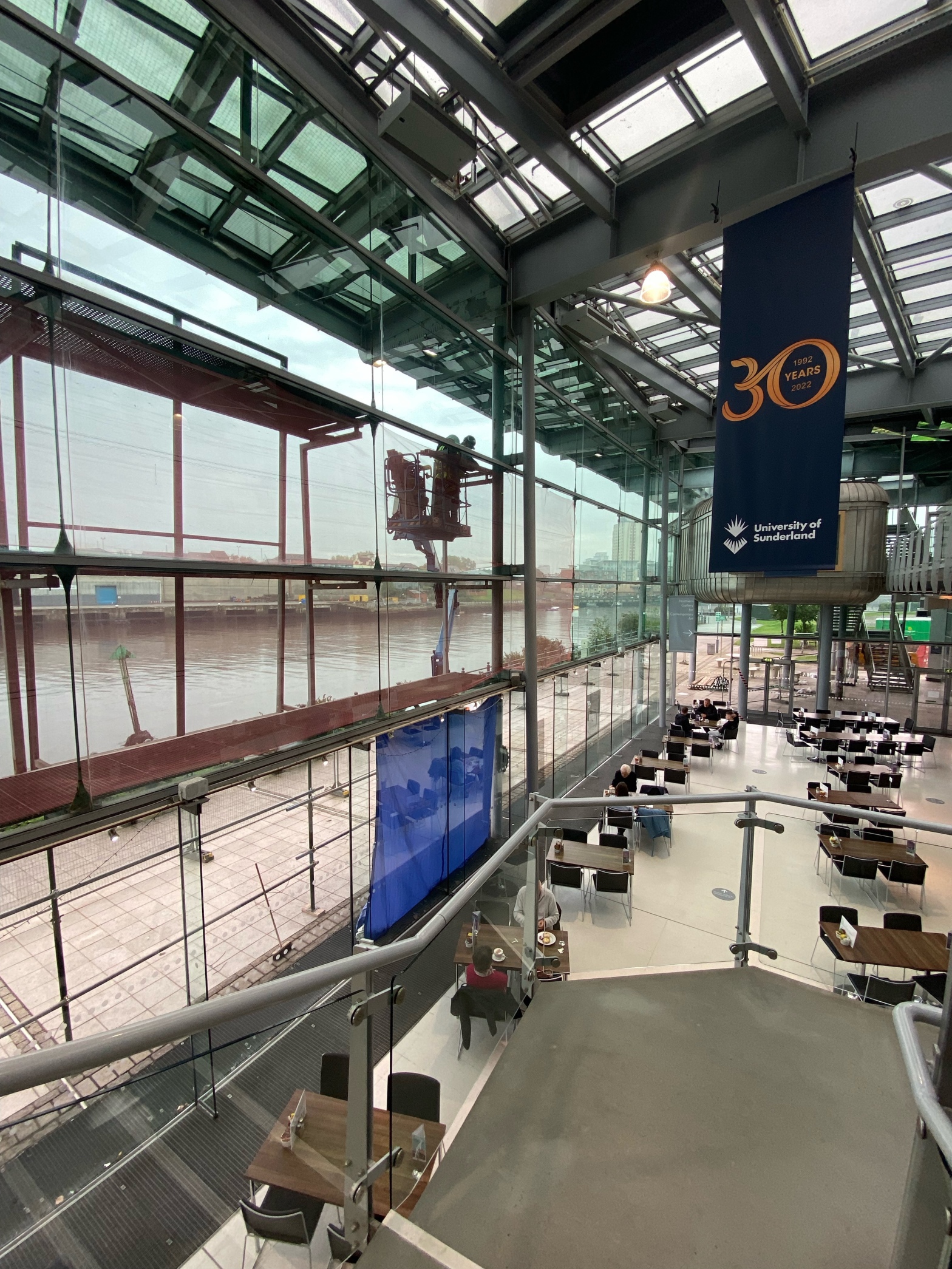
I entered from the car park and suddenly emerged at first floor level looking directly down onto the shop and cafe, and out towards the River Wear. The inside is vast and airy with breathtaking views through double storey high glass windows which are supported by steel girders. The panorama includes the harbour on one side and the city centre on the other. The place was quietly humming with people and purpose.
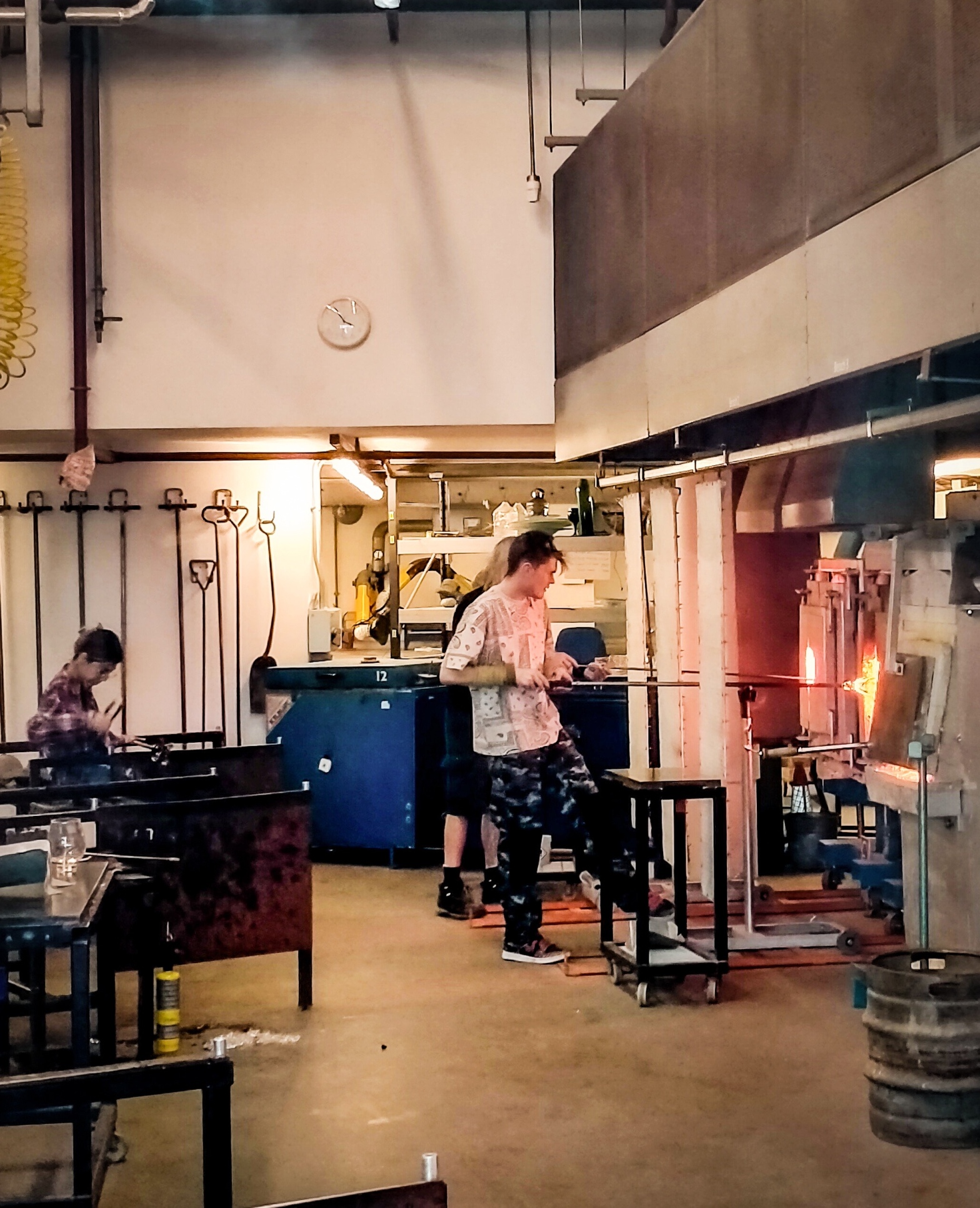
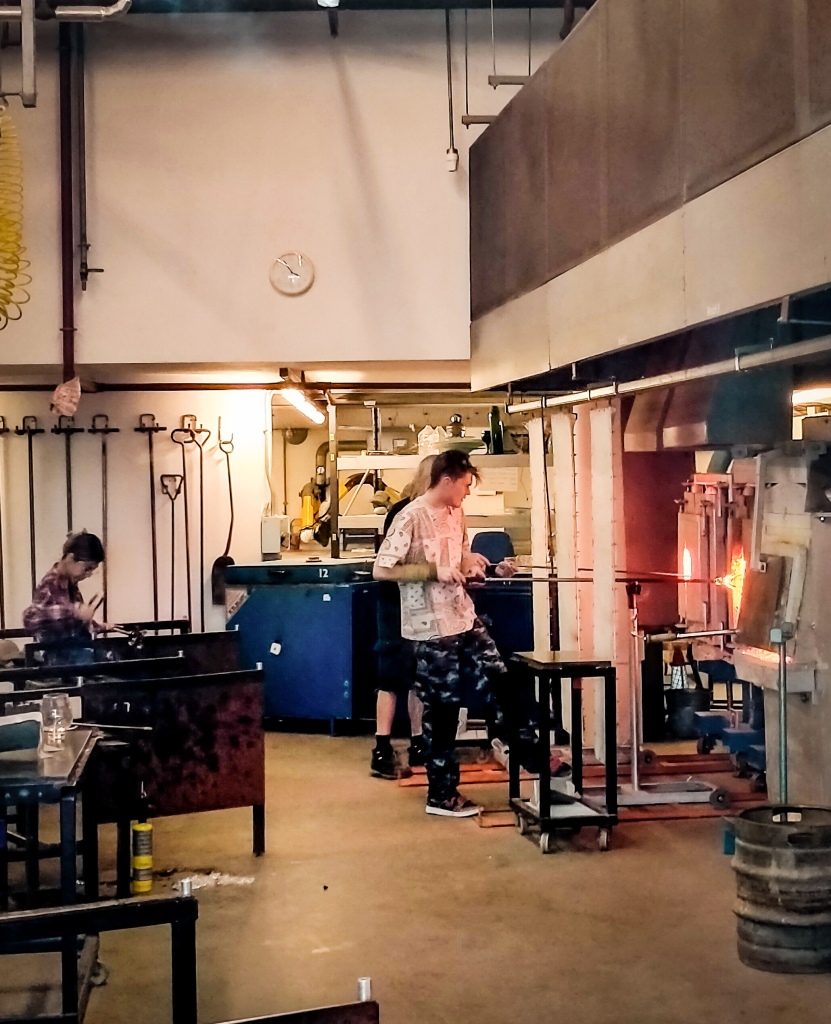
Whilst I was there, a party of awed primary school kids were being shown around, their crocodile file politely giving way to other visitors. The cafe and shop were busy and clearly well used. The glass demonstrations, especially the glass blowing, were brilliant. Students and researchers were in the learning areas and research library. And the exhibitions were interesting, beautiful and informative. What more could anyone want?
View across the shop looking towards the sea, by David Vickery
I was entranced and amazed.
And, judging by the many positive reviews on Tripadvisor, so too were many other visitors: “an extraordinary building … wonderfully light & airy”; “the glass demonstrations are always brilliant…the location on the side of the river is beautiful”; “wow what a place…” One comment that I especially liked: “Fell in love with a reptile skeleton made of glass.”
This is unlike any other visitor centre or exhibition space that I have ever visited. I had forgotten how unique and exciting it all feels. There is so much to do and to see. The huge glass building looking out onto the river, sea and Sunderland; the stunning exhibitions, including the Northern Contemporary Art Gallery and Studio Glass; the spacious cafe by the riverside; the glass demonstrations; the shop selling all sorts of local craft and gift products (NGC glass vases £40); the Research Library and more.
Glass blowing, by David Vickery
The two keys to the Centre’s popularity are its amazing harbourside location and that everything to do with glass making is all under one roof. Which is why the Centre is visited so much – 230,000 people a year. There is so much to do and see that visitors can spend a whole morning or afternoon there, if they want, and come back again. Some visitors have been 4 or 5 times.
I reflected that the University’s plan to dot just a few of the present facilities around Sunderland – with no glass blowing – was therefore almost certainly doomed to failure. Just another glass exhibition space on its own would attract few people, and small, isolated cast-offs from the Centre would very soon close for lack of support. Hardly the way to attract the “new audience” that the University proclaims is its intent. I’d rather keep the “status quo”, thank you.
I stocked up in the shop with gifts celebrating the Centre – tote bag, mug, tea towel, key ring, and some postcards. I was told that they are selling fast now that the closure announcement has been made, so I got as much as I could to remember the Centre by in future. Just in case, you understand.
Iconic, by David Vickery
Fellow visitors muttered over coffee about the proposed closure. One local said, “I can’t believe that it would cost £45m just to repair the roof. That’s more than Sunderland’s new City Hall cost.”
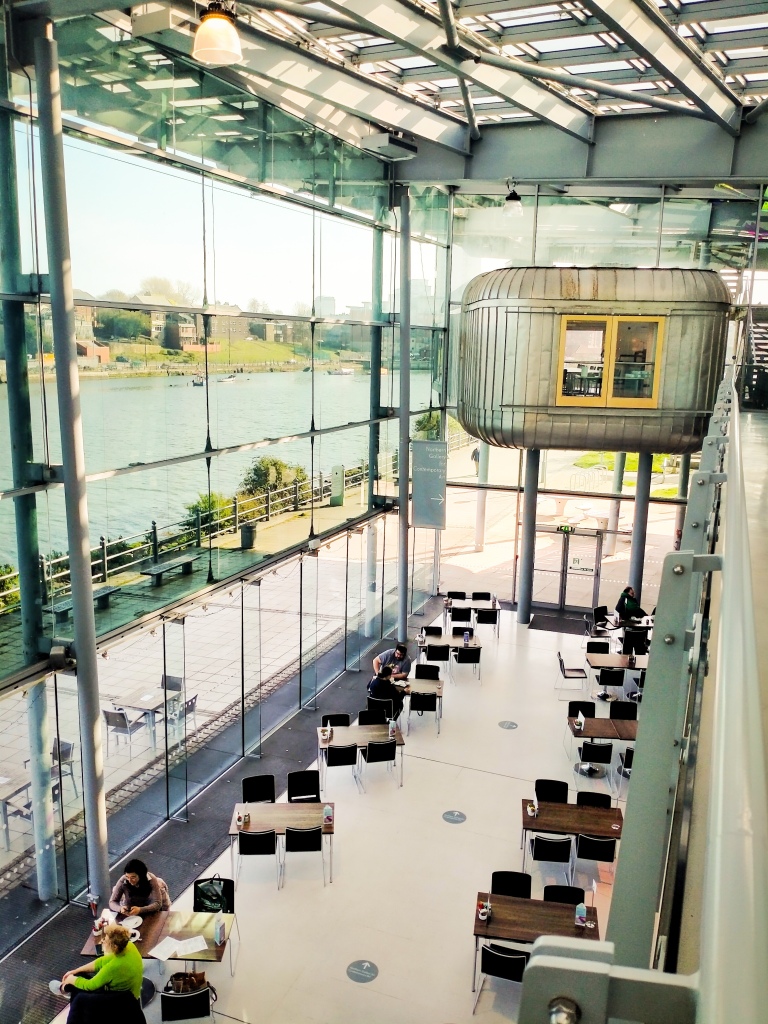
Looking towards the city centre across the top of the cafe, by David Vickery
I looked it up afterwards on Wikipedia, and they were right. City Hall, completed in November 2021, cost £42m which is £3m less. And for that £42m Sunderland got two large glass and steel office blocks, one of five-storeys and the other of six-storeys (190,000 square feet), connected by a glass atrium. How can it cost £45m just to repair a roof?
Even the University’s lowest estimate, which is hardly reported, of £14m for the roof repair is over-inflated. Even so, the University is sticking officially with its highest £45m estimate, hyped up with as many optional extras as it can find, such as solar panels. I can see why it has done this – it’s called shock and awe.
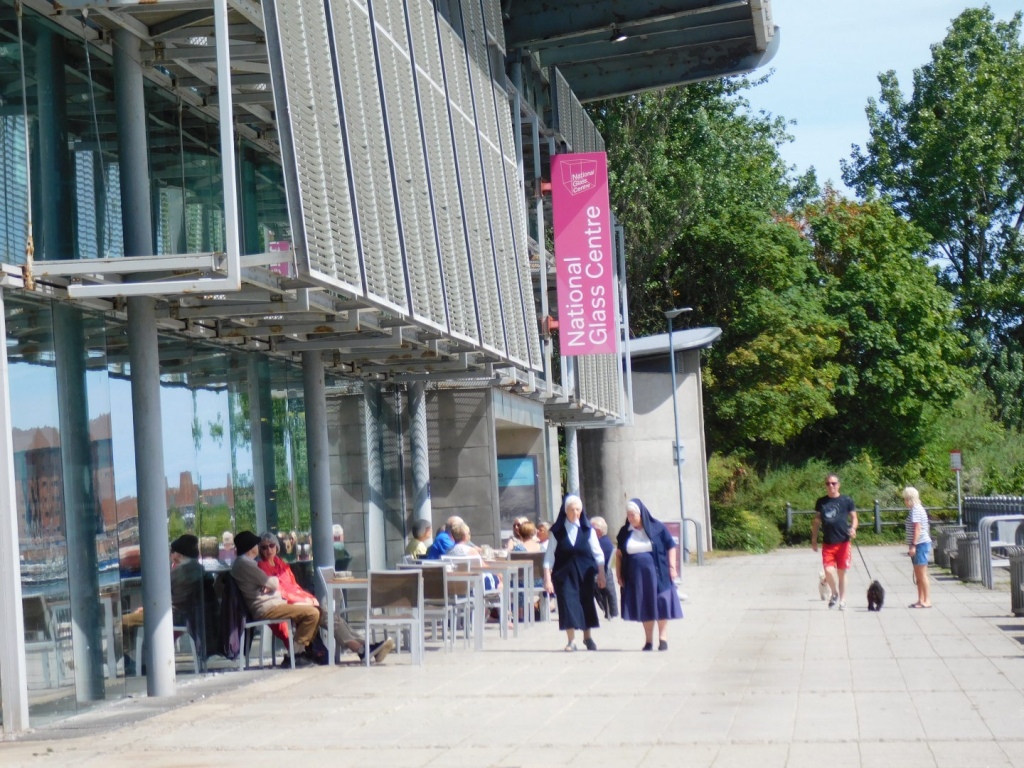
I wandered outside onto the wide, paved public footpath that runs in both directions along the river’s edge. People were sitting on the benches admiring the view and cyclists were whizzing past in the bright sunshine. Idyllic.
Evidence of neglect, by David Vickery
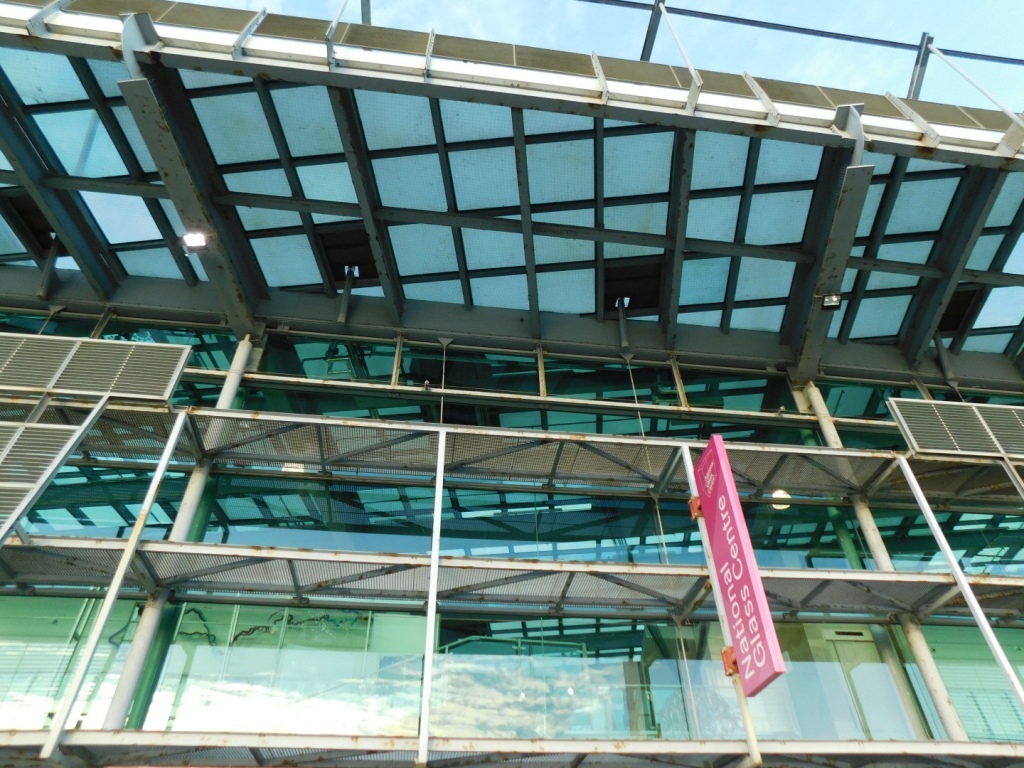
Looking up, I could see evidence of the dreaded corrosion problem which is the cause of the proposed closure. It looked bad, with large areas of rust underneath the girders and chipped support pillars. It must have taken years, I thought, for the large rust spots to have gotten into this terrible state. What, I wondered, was the University doing allowing the building to degenerate so badly over all those years?
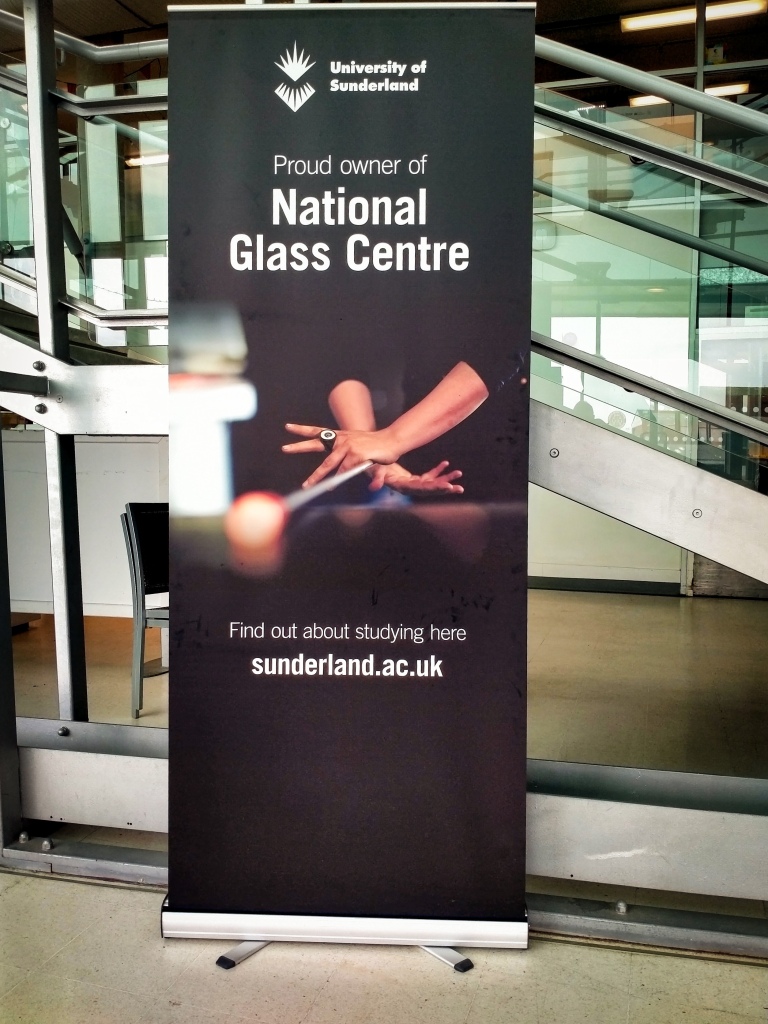
I went back into the building to finish my visit, and was confronted by a bold sign saying that the University is the “proud” owner of the National Glass Centre. You could have fooled me.
Signage, photographed by David Vickery
By David Vickery, retired planning inspector and staunch supporter of #SaveTheNGC
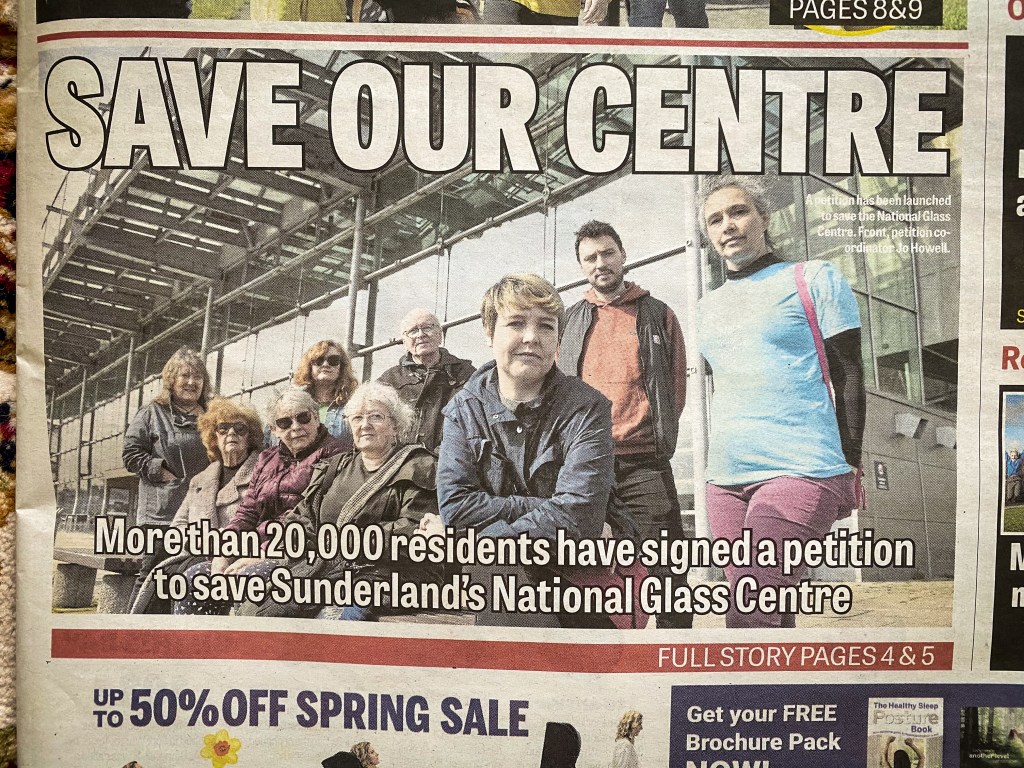
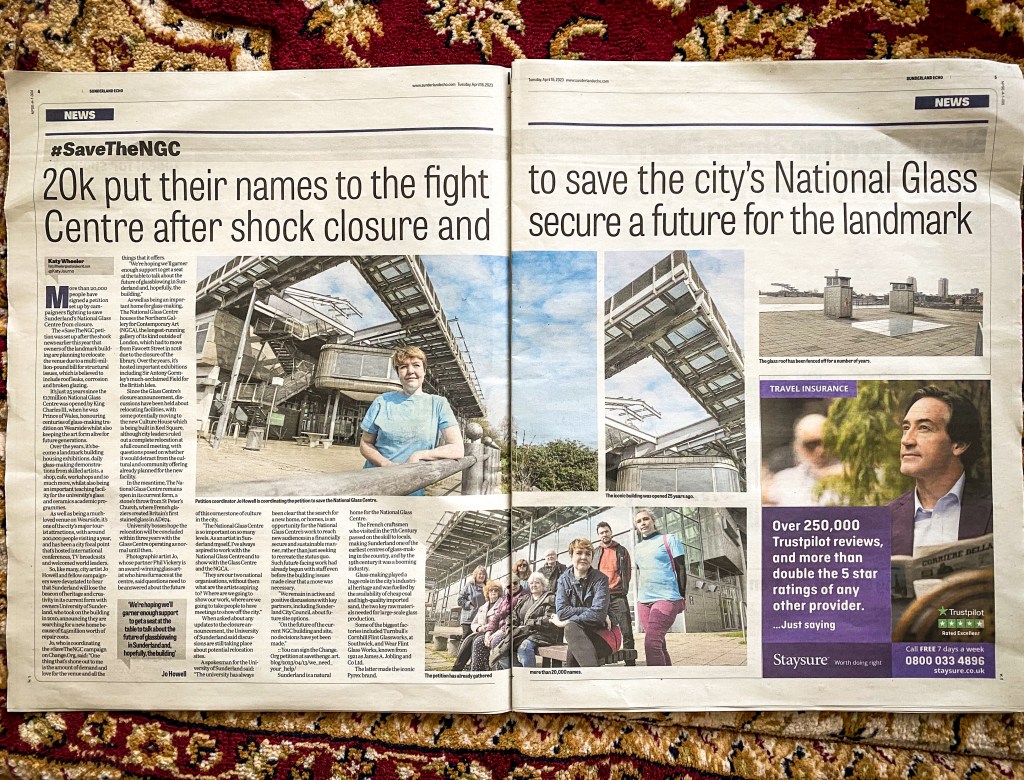
My mind has been blown! The overwhelming support that we have received in the last few days has been amazing. When we met with the the photographer, and Katy, we found out that the petition was nearly at 20,000 signatures. Today we are at over 25,000.
I think it safe to say that there is a lot of support for the national glass centre to continue on in it’s current format. The loss of glass blowing would be untenable by all the signatories. We have been inundated with testimonies about how important the centre has been to people. Reasons ranging from fantastic career opportunities the NGC and NGCA have offered artists, to the importance of its role in mental health and wellbeing. The National Glass Centre is a source of great pride.
In other news, we have set a public meeting for June 2023 at St Peter’s Church. I need to approach some key speakers, and to organise the format. So, more details will soon follow.
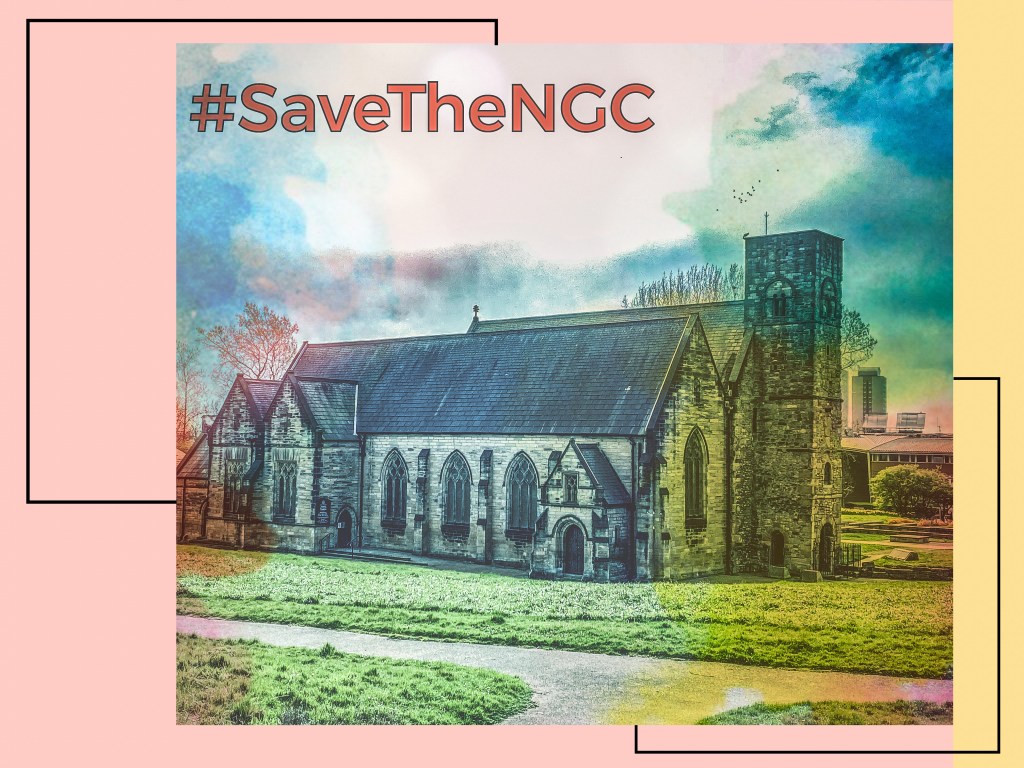
St Peter’s church by Jo Howell
Keep sharing the petition, and if you haven’t written to our MP yet, neither have I! So we had better get on with writing emails, letters, and organising the public meeting.
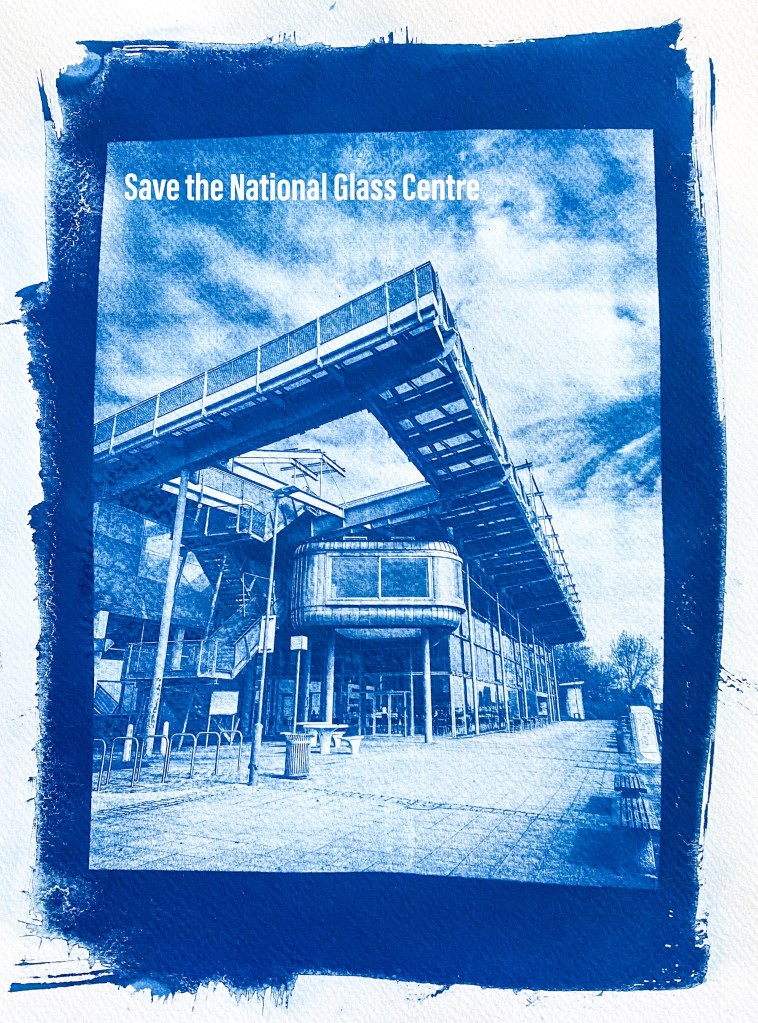
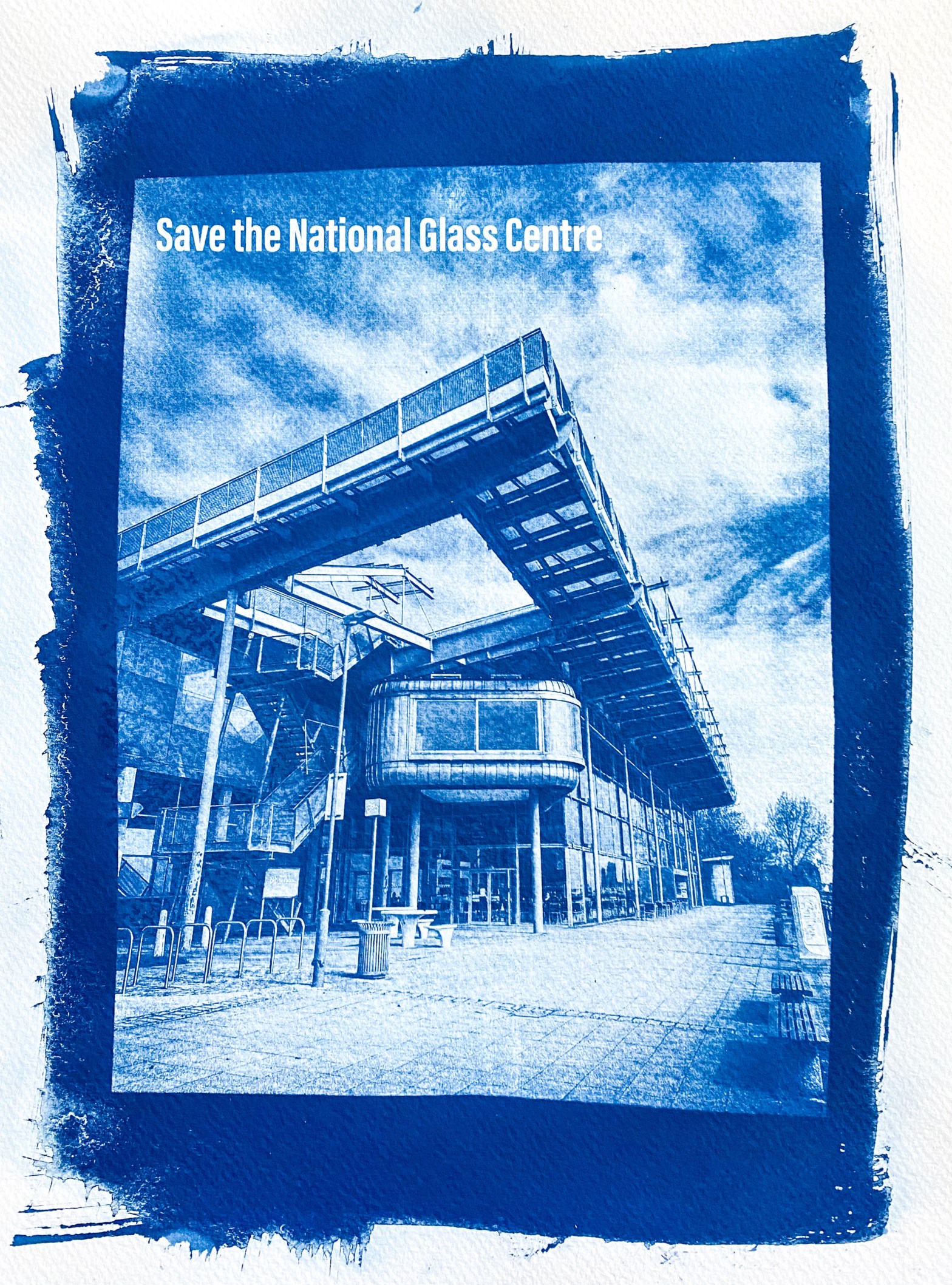
I will also hand print cyanotype versions of the below design in a made to order format.
All proceeds will go towards campaign costs like signage and mail outs. The campaign is run by volunteers made up of concerned locals, and people whose businesses are likely to be affected. We encourage you to sign up for our mailing list, and to follow our blog for updates.
Save the National Glass Centre original made to order prints
The petition is nearing 20,000 signatures. We have cross party support. Now we are going to take this to the Sunderland MPs. There is definitely a need and a want to save this important asset.
Save the National Glass Centre photo by Jo Howell 2023
We are so close to 5000 signatures! I’d love to hit 5,000 for when I eventually sort out meeting wor Julie (Elliot). I also need you all to put pen to paper and write to or email wor Julie stressing how wrong she is about the will of the people.
Let her know that we love our heritage and all of the wonderful opportunities that the National Glass Centre brings with it! Julie Elliott
Send your post, emails, tweets and calls to wor Julie. Information below:
Telephone 0191 5655327
Email julie.elliott.mp@parliament.uk
Post
Julie Elliott Member of Parliament for Sunderland Central Suite 204 The Place Athenaeum Street Sunderland SR1 1QX
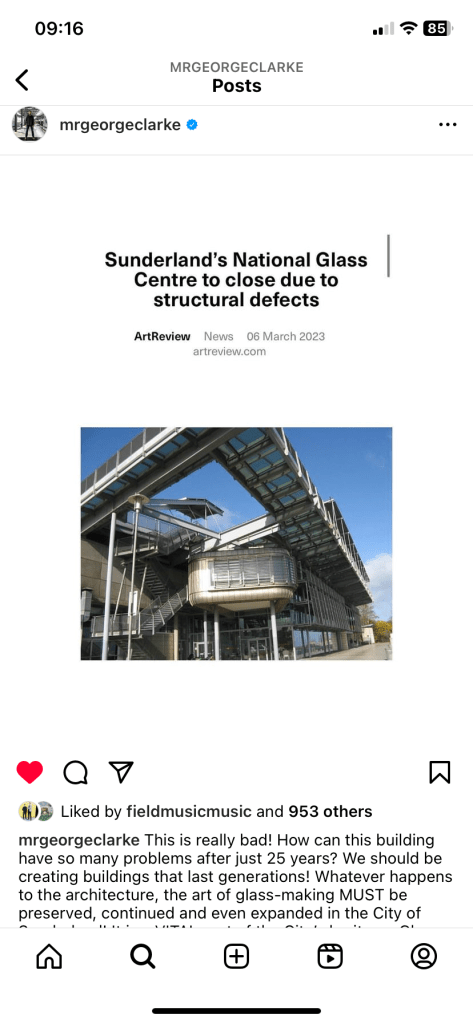
Screenshot from Instagram April 2023 showing George Clark’s support
Shy bairns get nowt!
The wonderful George Clark is an architect, a TV personality, and he was raised a mackem in Sunderland. Lots of people in the area look up to George as a beacon of success, and he still talks very fondly of Sunderland. Bearing all of this in mind, I thought I’d try to reach out to him, and a couple of other local heroes via Instagram and twitter.
So far, George is the only one to have picked up our campaign. Thank you 🙏 that doesn’t mean that the other celebs won’t jump on board, they may just need a little more courtship.
Directly because of George’s post on Instagram we gained over 100 new signatures on our petition! And, lots of people learned of the #SaveTheNGC campaign via the comments underneath.
We need champions of all kinds to help us turn the tide to save the national glass centre and the national gallery of contemporary art (situated inside NGC). We need to show that value and cost are two entirely separate things. And, the value of what we currently have far outweighs short term commercial gain.
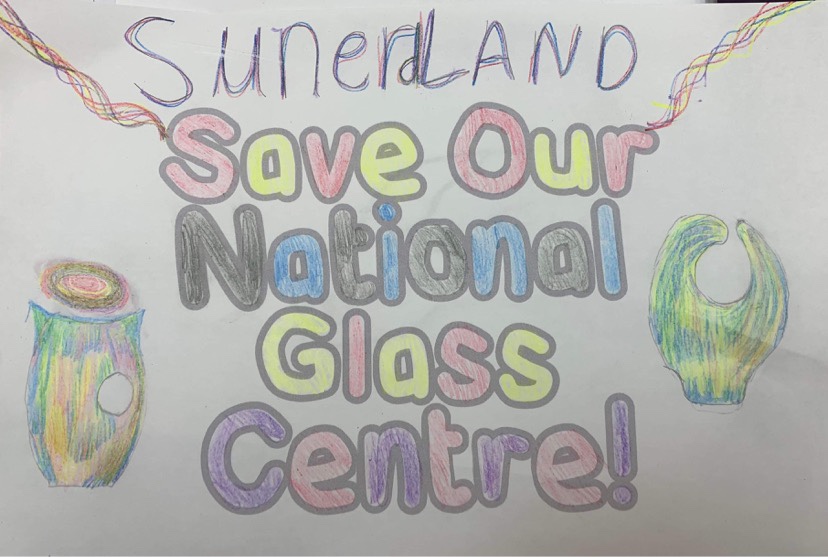
Artwork by Regeneration North East SALT art group 2023
Once it’s gone there will be no resurrecting it. The 25 years of kudos and excellence will go with loss of the artists and the skilled staff and the building.
Sign our petition. Write to your MP. Share far and wide. Ask your celeb mates to get in touch. Send me NGC art, stories, articles, films and whatever you have. Let’s prove the value.
Artwork by Regeneration North East SALT art group 2023Artwork by Regeneration North East SALT art group 2023Artwork by Regeneration North East SALT art group 2023Artwork by Regeneration North East SALT art group 2023Artwork by Regeneration North East SALT art group 2023
As the campaign reaches further and further afield, people from all over the world have offered their support.
Photo by Michael Janis 2012
The national glass centre in Sunderland has a global reach. The world of glass artists and artisans is fairly small and well connected. Many have reached out to tell us of their dismay at the peril the National Glass centre’s news of closure and relocation.
There is a lot of unrest and concern surrounding the loss of heritage craft. International researchers who the NGC and the university draw into the city, will no longer have any reason to come here.
Why is this important?
Back in 2011 Creative Cohesion headed a glass exchange program with Washington DC Glass, our sister City. The link between Washington DC and Washington in the North East goes back to the president, George Washington, for whom both were named. In conjunction with creative cohesion and the National Glass Centre lots of local artists benefited from the exchange, and we have kept lasting friendships with our Washington DC colleagues.
Without those organisations, and the magnetic draw of the national glass centre for research, we wouldn’t have had any of the opportunities that we have enjoyed since that program. International trade, introduction to the American market, skills shares, exhibitions, conferences and so much more.
Photo by Michael Janis 2012
Please read Michael Janis’ blog from the time. It has recently passed 11 years since their visit, and it still resonates with everyone who was privileged enough to be involved.
Besides working with the University students and faculty, we also were able to create informal workshops on how technology and social media is changing the art world. These talks were extremely popular – with the standing room only audiences that came from the student body of the University as well as working artists from Sunderland, Newcastle, and as far away as Edinburgh, Scotland. The audience stayed long after the talk, and topics from the discussions continued to come up during our entire Fulbright program stay (and indeed, afterwards via the internet) showing the strong relevance of the concepts.
Since our mission, we were invited to show as artists at galleries in London and at the Sunderland Museum, and we had the Sunderland artists featured in an international exhibit held in Washington, DC the following year.
While our mission as Fulbright Scholars was to impart information, we left having learned many lessons.
Michael Janis, Fulbright Scholarship
Photo by Michael Janis 2012
These artist exchange programs and research fellowships are the life blood of creativity in Sunderland. They are one of the few things that has global reach and appeal. Without this amazing national institution and it’s powerful ethos of exchange and support, how can somewhere like Sunderland truly level up?
We don’t pick and choose our heritage or our culture. It grows as a natural response to our history and how we view our future. Up until last year the National Glass Centre was still being billed as the gem in Sunderland’s crown. There have been many recent project’s highlighting our glass heritage People’s Pyrex, art deco Joblings glass, Love Pyrex. To name just a few.
Michael Janis 2012
Glass is still very much at the heart of Sunderland. We need to work together to make it known that the National glass centre, and all it embodies, is cherished and respected the world over.
To deny public consultation on such important local issues is culturally insensitive at best, and woefully ignorant of the community’s they serve at worse.
Do you have a story about the National Glass centre? We are actively looking for articles to publish on the blog to keep up the momentum we have built so far.
Thank you for reading! Sign our petition. Share far and wide!
A brief history of the National Glass Centre Building
by David Vickery, retired senior planning inspector
The National Glass Centre (NGC) celebrates its 25th anniversary this coming October under threat of closure and likely demolition. It was opened by HRH Prince (now King) Charles in October 1998.
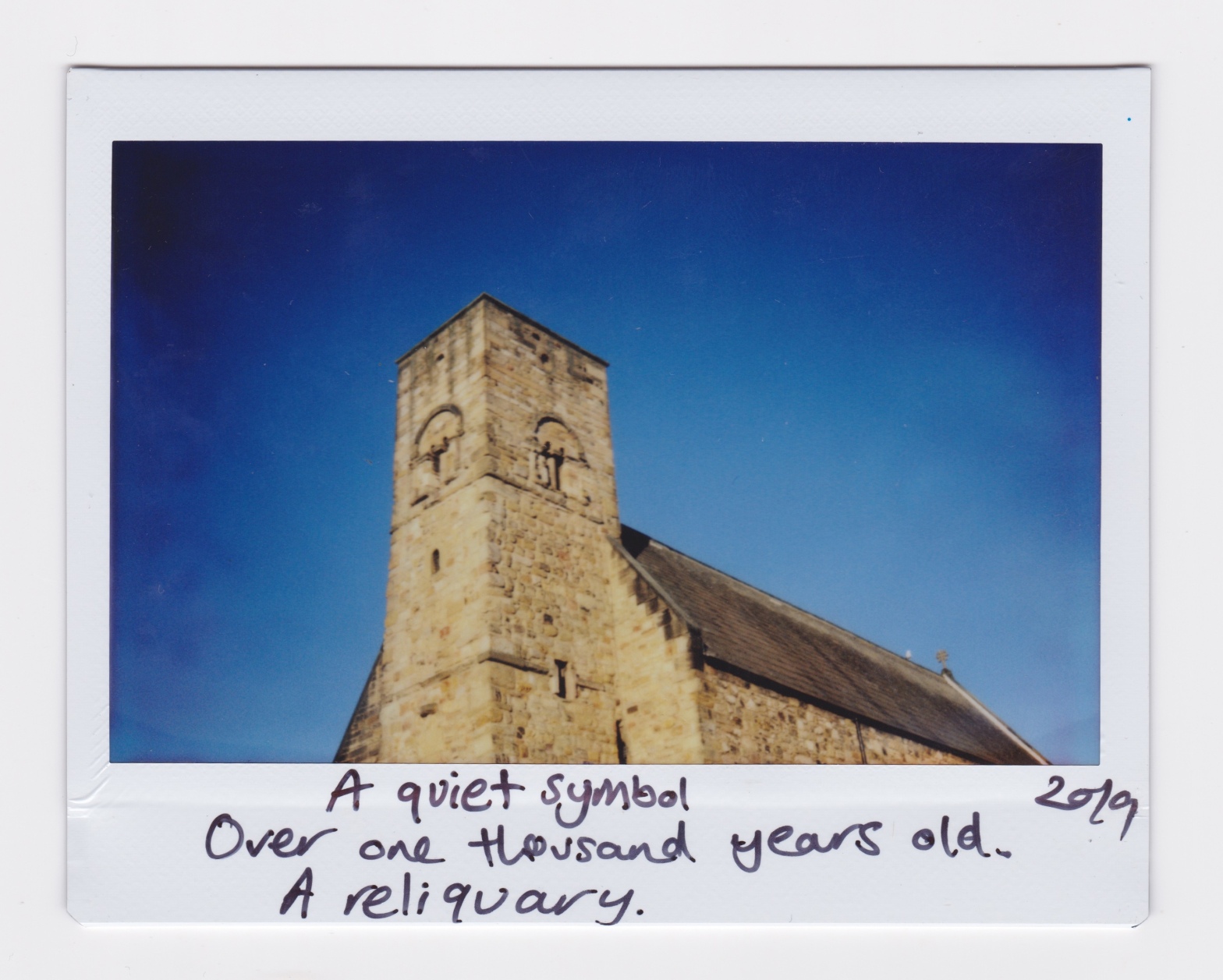
This amazing building lies on the north bank of the River Wear on the former site of the J.L. Thompson and Sons shipyard, facing the mouth of the River Wear and Sunderland’s port. It is close to the site of St. Peter’s Church, built in 674, where Abbott Benedict Biscop instructed French craftsman to glaze its windows, starting Sunderland’s long connection with glass making.
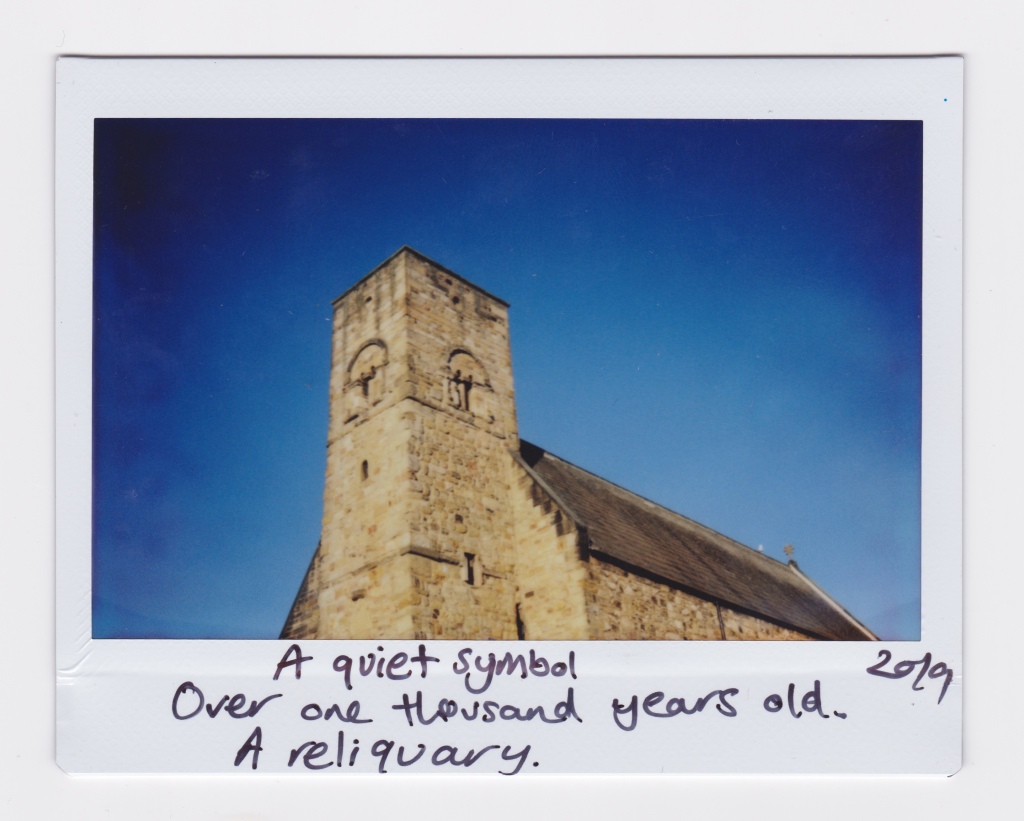
Instax haiku about St Peter’s Church, photo by Jo Howell 2019
In 1994 the Tyne and Wear Development Corporation held an open competition for the design of the NGC, with the objectives of celebrating the heritage of glass making in Sunderland and to support the development of new glass production for the 21st century. This competition, with over 80 entrants, was won by the London architectural practice GolliferAssociates Architects (now Gollifer Langston Architects). Their proposal aimed to make the activities and production going on inside the building visible to visitors.
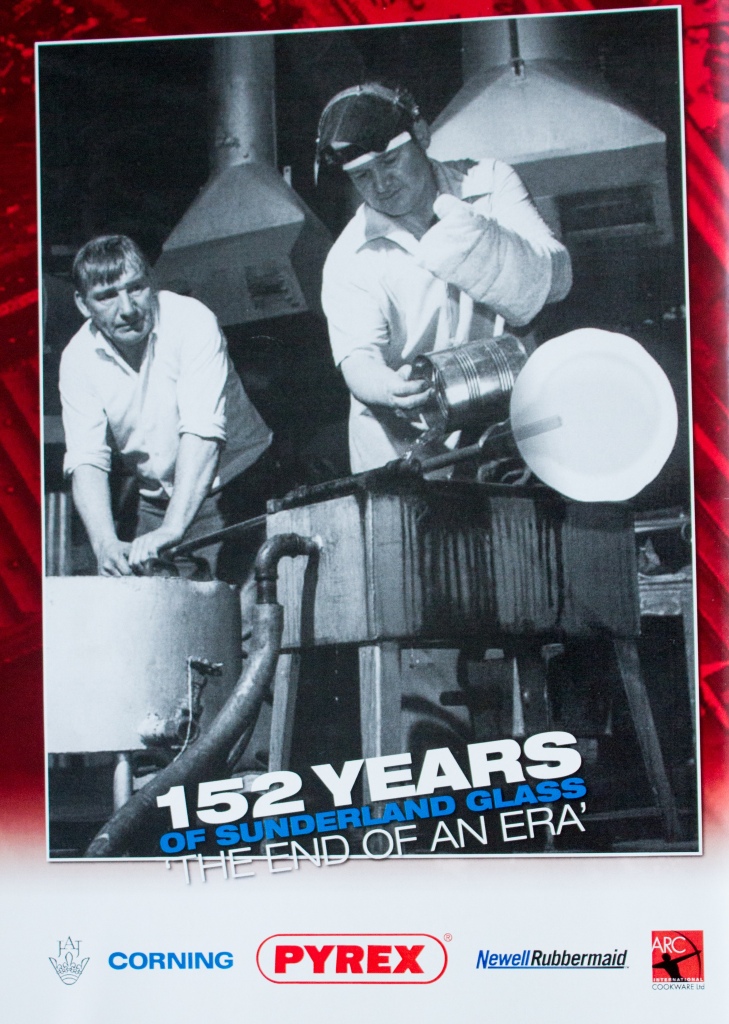
Front cover of Pyrex magazine, courtesy of Tyne and Wear archive, scanned by Jo Howell
The NGC was the recipient of the first major Arts Lottery Award in the North East. It was also funded by the Arts Council, the University of Sunderland, Tyne and Wear Development Corporation, the European Regional Development Fund and Sunderland City Council.
The building was one of the first in Sunderland to mark the beginning of the city’s regeneration, breathing new life into the depressed docklands area.
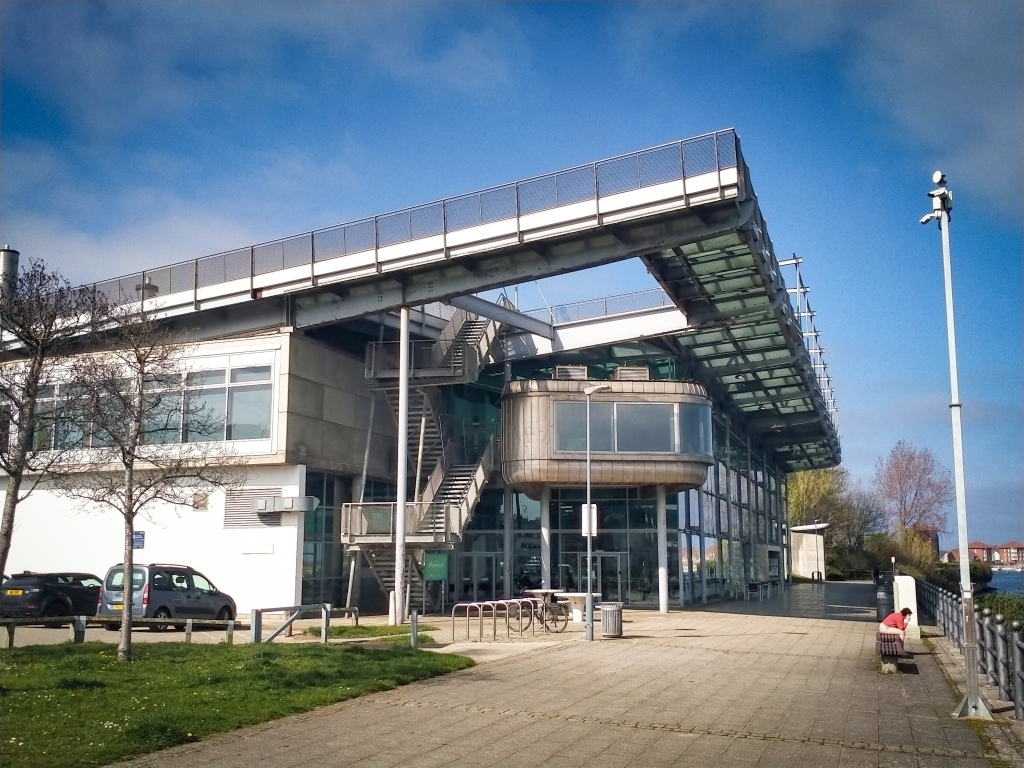
The complex design incorporates all the various uses into a glass envelope, supported by an exposed steel shell. The industrial finish looked striking and unusual when it opened in 1998, and it still does so today.
The NGC almost looks as if it is leaning towards the water, like a ship being launched. This is because the architects wanted the building to resemble a sea-bound vessel.
The building is built into the slope as the land runs down towards the river, with the public areas located to the south looking onto the riverside. The “back of house” areas are located to the north of the building, built into the slope.
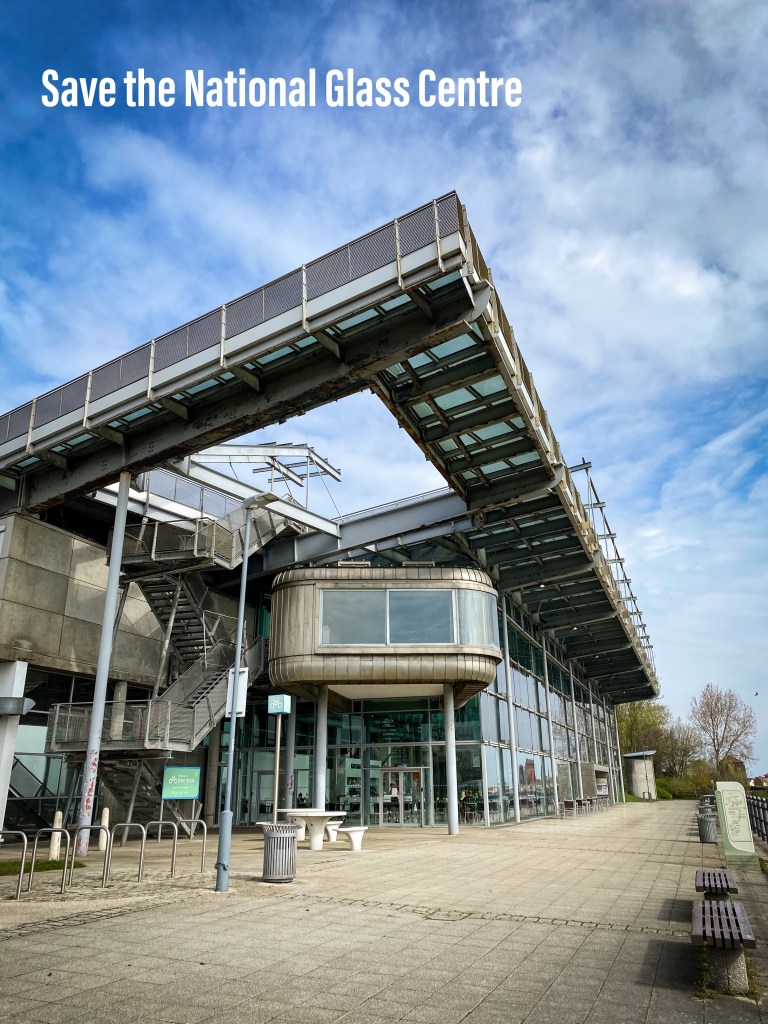
Along the riverside the building has a long length of tall steel and glass walls, with an overhanging glass roof, exposed steelwork and external stairs.This modern, bold design means the NGC is instantly recognisable from the riverside public footpath and from the opposite river bank.
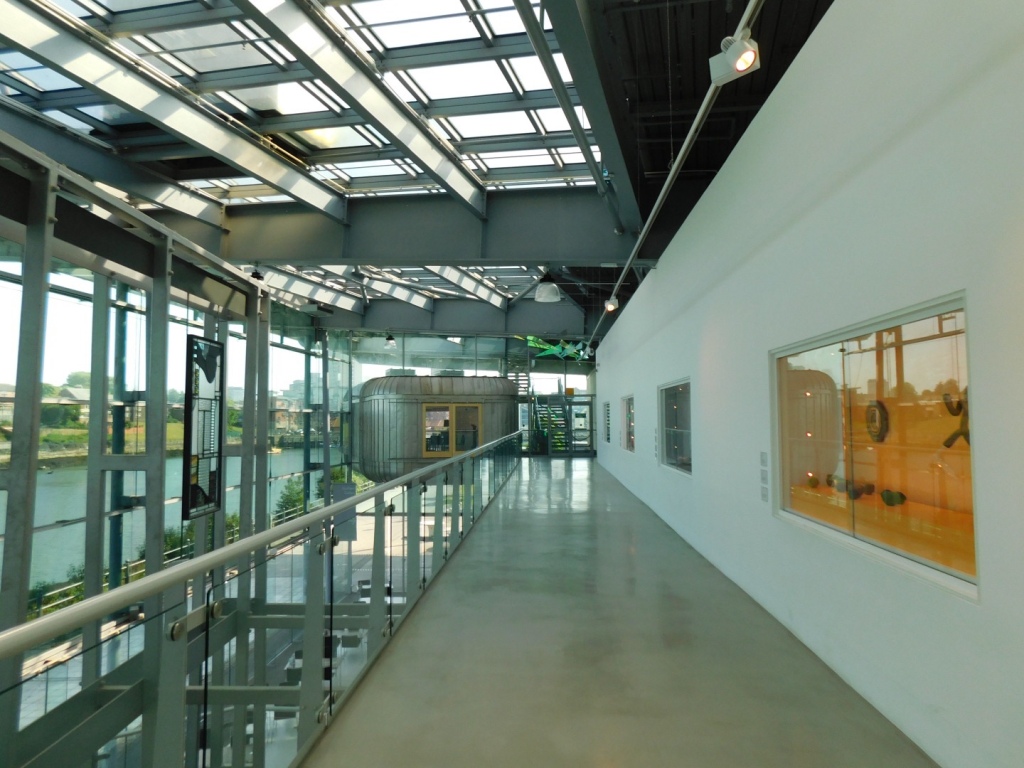
Inside, the high glazed walls and roof, mezzanine, open stairs, exposed steel work and ducts, and a concrete lift shaft give the visiting public a uniquely open, futuristic, brightly lit experience with views through the glazing to the river beyond.
The building looks fantastic when it is lit up at night, with light streaming out through the huge glass walls and roof.
The building was awarded Millennium Product status by the Design Council in recognition of its creativity and innovative environmental approach. It was one of the first buildings in the UK to use an earth tube to bring pre-cooled air into the public areas while the excess heat from the factory was recovered to heat public areas in the winter months.
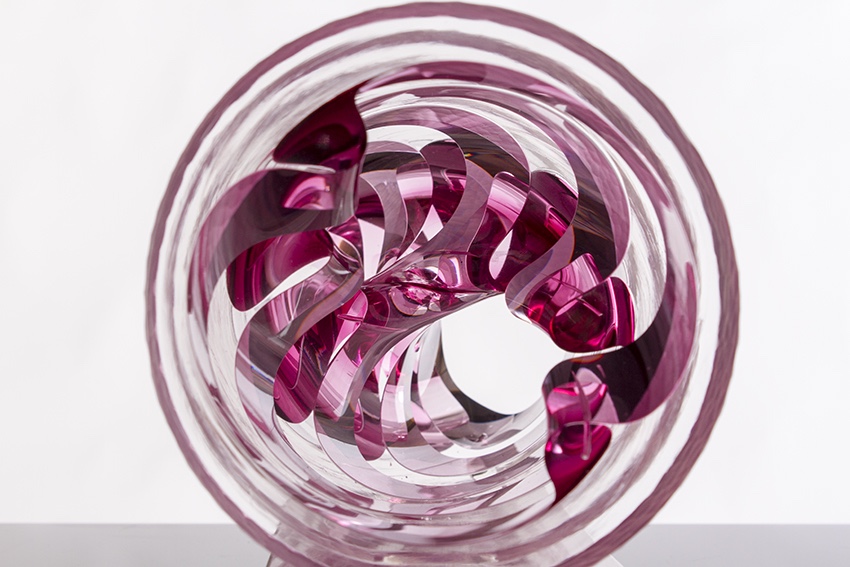
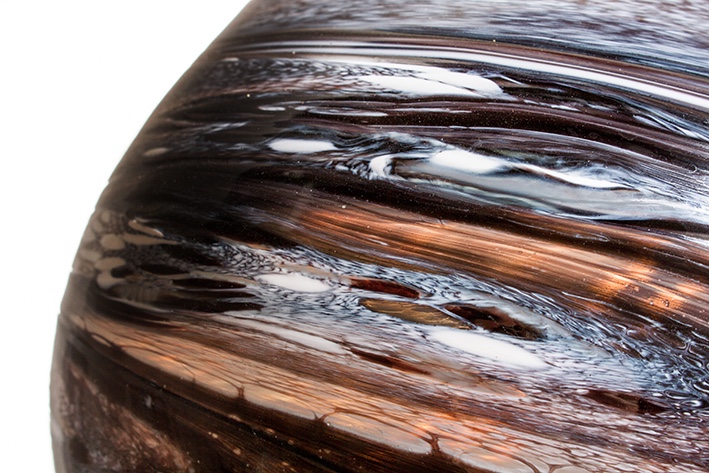
Detail of Phil Vickery blown glass made in the National Glass Centre hot shop, photo by Jo Howell
It cost £7.2m to build in 1998, and was “revamped” by the University in 2013 at a cost of £2.25m with a new gallery, restaurant, remodelled glass studio and shop.
It is open to the public, and around 230,000 people visit it each year, making it a major cultural venue and visitor attraction in the north-east. So go and see it while you can…
I make ceramics, I’m not awell-knownartist, I don’t sell anything, I don’t make money from it and my careerwasin computing as an I.T. Manager.
Sadly,my ceramics journey started with someone’s death. It wasn’t just anyone’sdeathbut mymother’smy “Mam” as we call them in the North.
In 2001 my Mam suddenly passed away. The shock and loss of a parent is always hard to cope with and I wasn’t doing it very well at allandIwas at a loss at how to stop feeling so sad allofthe time.
My life at that time was basicallygo toworkandsolvecomputerproblems,then come home and just think about missing my Mam. There seemed to be no way out of the sadness I felt. This couldn’t go onandafter a few weeks of this misery I decided something had to be done and I needed to break the cycle.
I thought perhaps an evening class would give me something to occupy my mind. I sawa Ceramics class advertised.Not only had I never done pottery before,but even better the course was free.I went along withsometrepidation, thinking“what have I signed up for?”After all,Iconsidered myselfto be a “techie”rather thanan“artist”.
In the class I was seated with 4 fantastic ladies who were around the same age as my Mam and they laughed and jokedthe whole time. They reminded me so much of my Mam, but in amuchhappier time.
They brought laughter back into my lifeand the sudden realisation that I enjoyed ceramics helped me to cope with grieving for her,byremembering the good times rather than her death. Suddenly life seemed awholelot better.
More importantly,every time I startedmakinga ceramic piece it always remindedme of my Mam.21 years later it still doesand Ihave a hugesmile thinking of her.
After a while I signed up for even more eveningcoursesbut this time at the National Glass Centre. Wow I was so overawed at their facilities and couldn’t believe I was making things there, me a mere hobby potter.
How proud I was that I was not only going to a centre of excellence but even more than that myDadhad been a “Plater” at the very shipyard which was situated on the site of the National Glass Centre. Even he was proud of me, a tough no-nonsense northern shipyard worker was impressed with his son’s creations,
what a surprise in my life.
I evenmanaged toappearin the University’s learning booklet.
The professionalism ofthestaffteaching me,thechance to meet other students at the Glass Centre and being able to see what I could achieve eventually led me to purchase my ownkiln.ContactsImade on the coursesalso led to the purchase of myfirstpottery wheel.
Every time I either make a ceramic piece or look at the many pieces either in my house or the homes of people whohave myart,I think of my Mam. Not with sadness but with ahugesmile andI saythankyou toher.
So,this story isn’t really about me it’s about my Mam, who sadly never got to see any of myceramics or my journey fromanevening classin alittleschool through to thecountry’samazingNational Glass Centre.
The National Glass Centre was key to changing large parts of my life, all linked with someone sadly passing away and enabling others to smile when they receive a piece of my amateurish pottery, who would have thought it!!
My career was in computing, did I like it, well yes but my soul is in ceramics, do I like it, just ask my Mam she knows.
This iswhy all of myceramics are dedicated to her.
#SaveTheNGC #SaveTheNGCA
Do you have a story about the National Glass Centre?
After the stinging news that the National Glass Centre (NGC) is under threat of closure, many people have come forward to share their memories and concerns for the future of glass in the City of Sunderland. Here are my thoughts.
In 2012, I arrived at the NGC to do a Foundation Degree in Art and Design. I made friends and lots of good memories. I went on to do a B.A. (Hons) Illustration and Design, then an M.A. Design (Illustration) on the University of Sunderland’s City Campus. In fact, I returned to the NGC to work with the technicians on some glass sculptures for my final exhibition. In January 2018, I founded Regeneration NE Community Interest Company with my long-term friend, who himself studied Ceramics at the NGC.
In 2019, The Art Studio, a mental health charity in Hendon, closed down due to lack of funding. Having volunteered and worked as a tutor there, regular service-users, who were living with serious mental illness looked to me and Regeneration NE for help. It was the NGC where we would meet up, have a coffee and perhaps do some sketches overlooking the river.
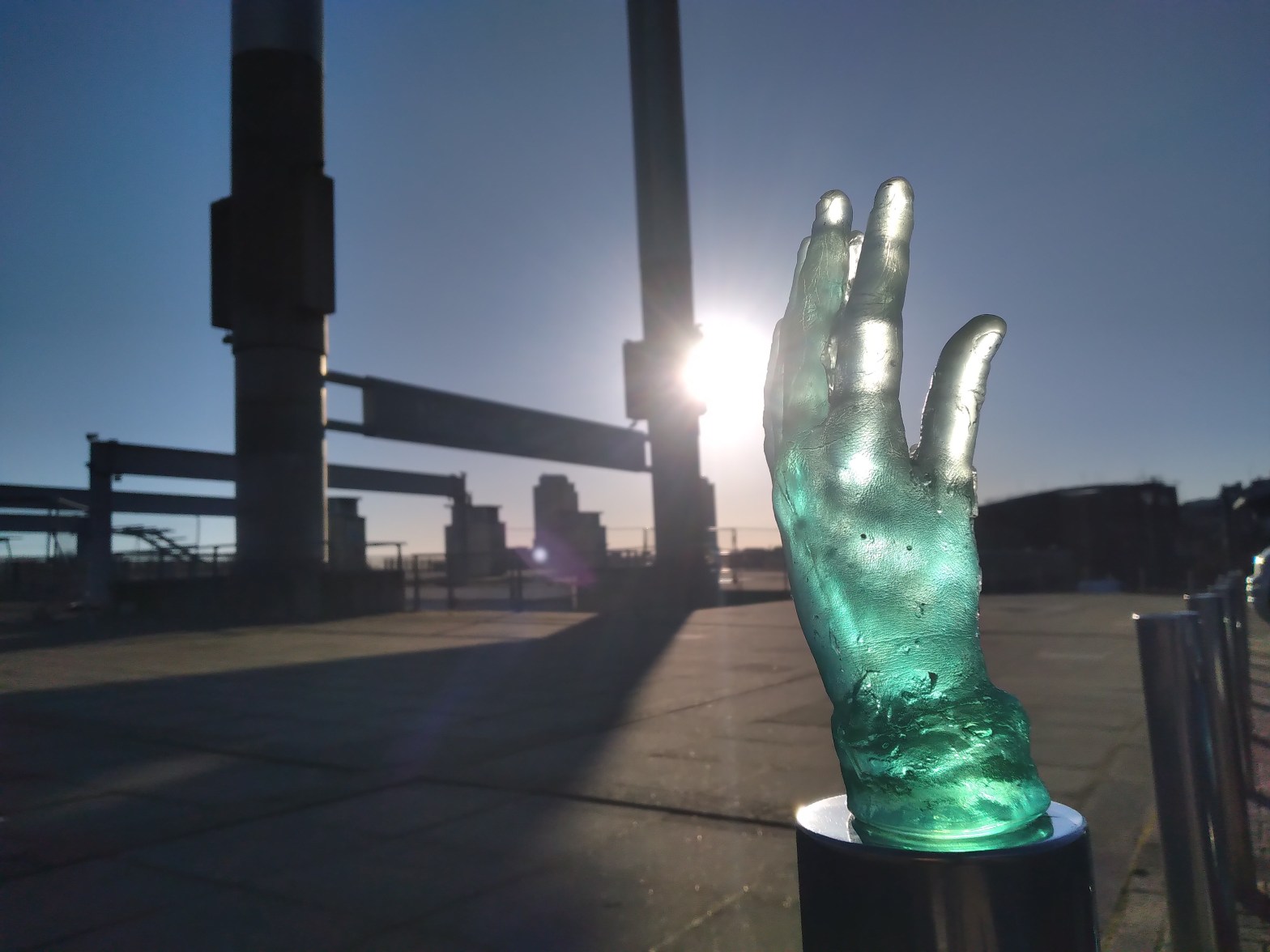
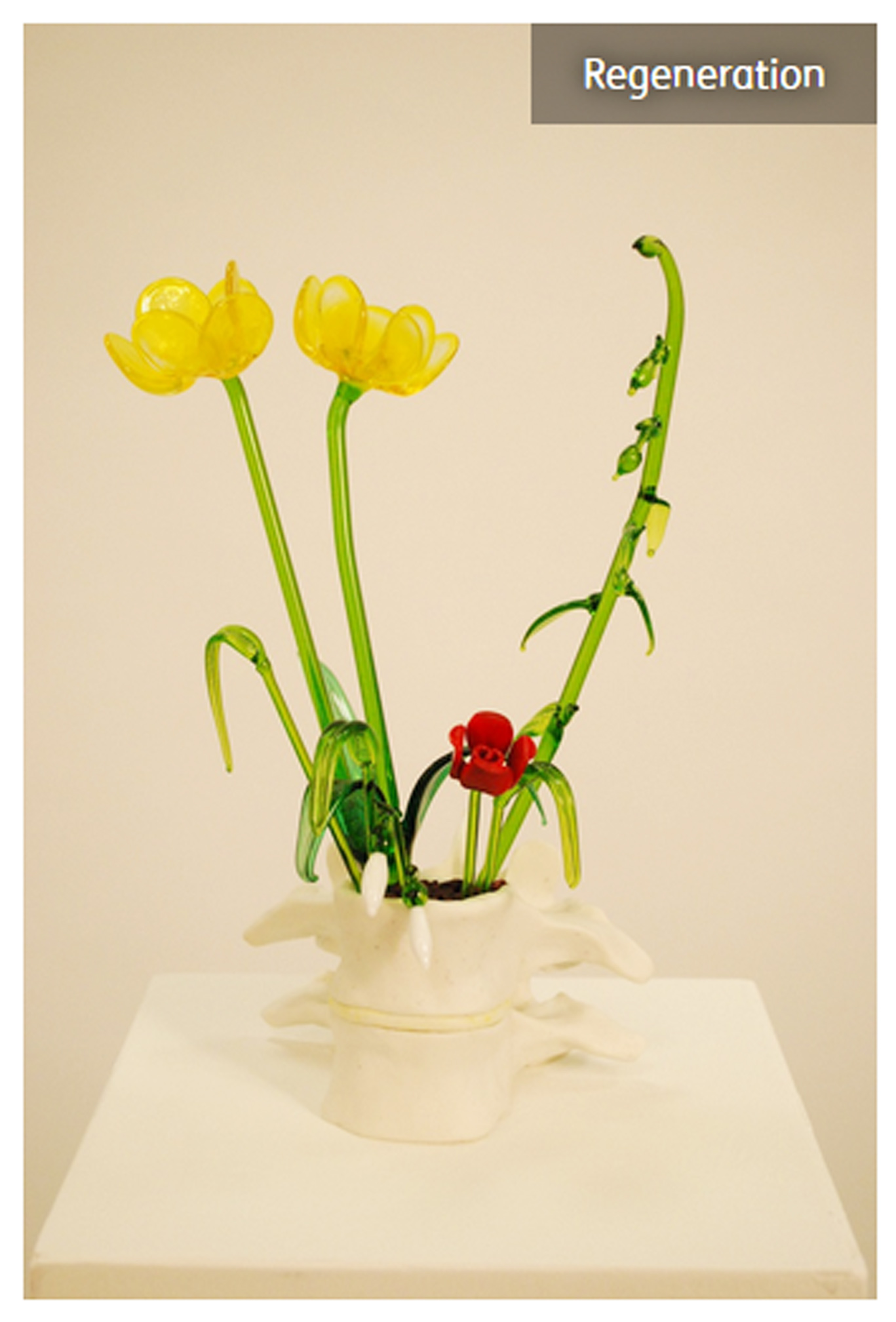
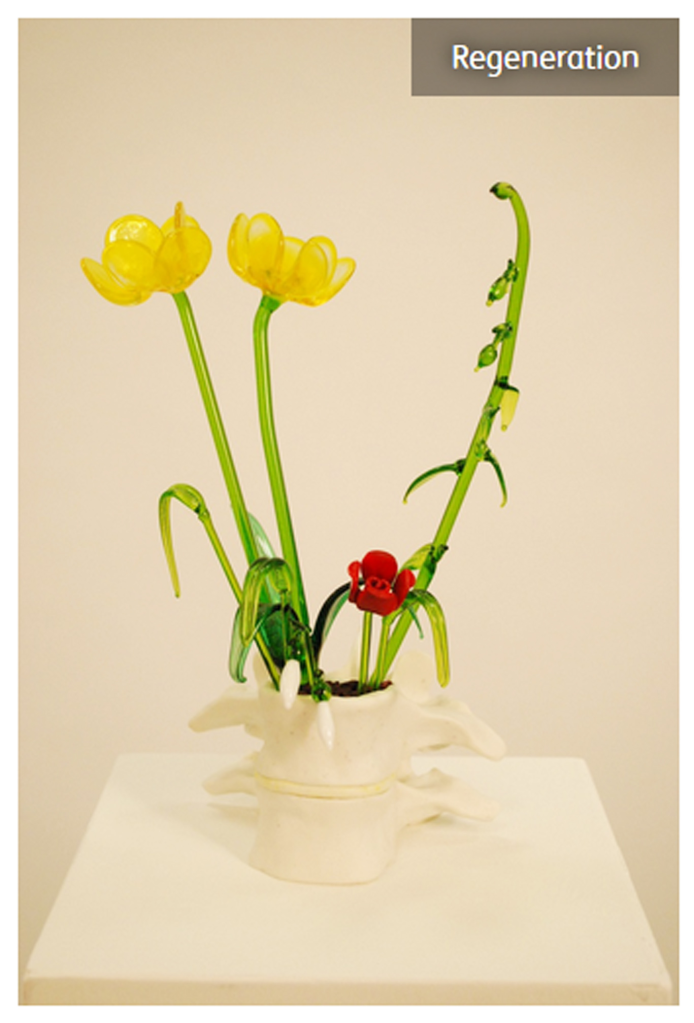
Above: The glass sculpture, Regeneration 2017, created by Gary Nicholson at the NGC.
Among the meeting rooms in the NGC, I attended Artworks-U Networking and Support meetings which gathered local artists to discuss projects, problems, new ideas and potential collaborations. It was a safe place for new graduates like me to watch and learn from more experienced creatives who travelled from across the region to be there. Kids and families often head over to the building to see the exhibitions and amazing glass-blowing demonstrations as an educational and cheap day out. Local artists can also hire the facilities to create and run their businesses. You can even buy affordable and unique glass pieces created by the artists on site.
The NGC is a landmark and a place of education, history, heritage, community and culture. It links modern Creative Industries with the City’s proud industrial past. It has impacted the local economy by attracting students who want to study Glass and Ceramics. In the past 10 years, other universities have dropped Art, Glass and Ceramics courses from their prospectus, (e.g. Falmouth, Kent, Roehampton, Wolverhampton), which makes the dedicated centre for the tuition of Glass and Ceramics all-the-more precious at a national level.
It’s true, sentimentality won’t pay the NGC bills. However, the same Sunderland people had the self-belief, business and creative expertise to be shortlisted for City of Culture 2021. Regeneration NE urges them to now work on saving the NGC. It will be a logistical and safety nightmare to squeeze everything into shared spaces in the City Centre. It would be just plain wrong to let it slip away without a fight.
We need your memories! Would you like to know how to help our campaign? Well, we would love to publish your articles on our blog! Let us know how the National Glass Centre has helped or influenced you.
If you want to remain anonymous, that’s ok as well. The campaign is about saving these much loved national organisations, so keep it clean, concise, and cheerful.
Phil Vickery Glass in 2012 working with Roger Tye in the National Glass Centre, Sunderland
The University of Sunderland is running a slick public relations campaign to rid itself of the prestigious National Glass Centre (NGC) at little cost. It may even make a good profit. It no longer wishes to have a large public exhibition space, café, shop, expensive glass furnaces and multi-purpose teaching facilities which attract hundreds of thousands of visitors a year. The University considers that the NGC no longerforms part of its key academic objectives.
The University’s strategic aims, as set out in its Annual Report and £250m Investment Plan(January & February 2023), is to concentrate on technology and health. It’s the white hot heat of technology and not the heat of outdated glass furnaces that it desires. And the University wants to ramp up its politically sexy Canary Wharf London campus, close to Government and the country’s financial centres. Perhaps it should now be called the University of London and Sunderland?
To justify its closure proposal, the University commissioned in early 2022 architectural, structural and cost reports (published in March 2023) which artificially inflated the cost of bringing the NGC up to modern standards. Instead of the report’s lower £14m estimate, the University has chosen to go with a much higher £45m estimate, partly by including the replacement cost of 25 year old mechanical and electrical plant which has already been written off over 5 years of depreciation.
Studio glass detail shot from NGC 2021
Having inflated the cost, and before publicly announcing the imminent closure of the NGC in early January 2023, the University convinced Sunderland’s local MP, Julie Elliott, Sunderland Culture, and Sunderland City Council that the NGC’s retention was not economically feasible. And, no doubt, that keeping it could prejudice future University investment in its St Peter’s campus and elsewhere in the city. All have, in consequence, accepted the NGC’s closure in principle.
The University have made a small gesture by saying it might be possible to retain some glass “academic work” and exhibition display space elsewhere in central Sunderland (no glass furnaces). But at the same time it hedged the retention possibility by saying this would only happen “as far as it is practically possible and viable”. No-one knows where a reduced NGC could go. The proposed Culture House has been mentioned as a possibility, but it is relatively small and already has much of its recently reduced floor area pre-allocated for a library, café, local history collection and other cultural uses. It is unlikely glass teaching and exhibition space, let alone furnaces, could be fitted into the building on a sufficient scale to justify calling it a“National” glass centre.
Dotting the NGC’s present functions around the city would destroy its attractiveness as an institution and visitor attraction. The joy and unique selling point now of the NGC is that you can visit everything in one place – see an exhibition, watch glass being blown, have a meal or drink, and take a course.
What no-one has so far mentioned is what the University will do with the vacated NGC site, which is in a much sought after riverside position, just right for luxury residential development. And the University has not said whether any of the funds from the disposal or redevelopment of the NGC site will be returned to Sunderland people.
Detail shot of studio glass made in NGC 2021
A number of important questions remain to be answered:
– Why has the University artificially inflated the cost of retaining the existing iconic and nationally regarded NGC building?
– How much money is the University prepared to “gift” towards the alternative NGC provision that is currently being sought?
– Why have the City’s representatives so quickly accepted the NGC’s closure withoutclosely examining the University’s cost figures and without having any confirmed alternative provision?
– What happens to the NGC site?
And, lastly, the most important question:
– Will Sunderland’s representatives agree to the plan by a financially driven University, keen on increasing its liquidity level and being net cash positive, to close down and divest itself of a cultural, artistic and architectural jewel which provides work, education and pleasure for many thousands of people, both locally and nationally?
At best, at the end of all this, what will be left will be just a small and inconsequential glass exhibition and teaching space, possibly scattered throughout the city. It would be a forlorn shadow of its present greatness.
At worst, an alternative site(s) for the NGC will not be found.
Whatever the result, the University will congratulate itself on having successfully removed an unwanted liability from its books whilst at the same time making a financial killingto add to its existing £51.5m cash reserves.
This is not the way for a renowned and rich“anchor” institution to treat Sunderland’s people, or its artistic community, or its proud history and heritage.
As the uk government pulls apart our right to protest, this merry band of believers begins in earnest to try to save our riverside arts venues: the National Glass Centre, and the National Gallery of Contemporary Art.
Sunderland has a great history of successful protest. Apparently, we were the home of the first strike. We also have a great history of art. The university building in back house park is the oldest purpose built art school. We are a city of innovators, engineers, artists, and grafters.
We are often misrepresented in the press with negative views like it’s grim up north. We are a city targeted by right wing propagandists, and the military always comes here to recruit.
Photo by Hester Dowling 05/03/23
We are a City that is trying to change its fortunes. There has been a lot of investment driven to the riverside with our new City Hall, and a big film studio about to to be developed. There are good things happening here that make us hopeful for a richer future full of opportunity. Unfortunately, it seems we can’t find the motivation to invest in the cultural successes we already have.
We see the National Glass Centre and the National Gallery of Contemporary Art as two of our most important cultural assets. We have other great things going on but I think if we let them go that they will be replaced with a subpar offering.
Should the next 3 years see the end of our longer than 1300 year love affair with glass blowing and making? If cared for and invested in, these organisations would surely compliment the new investments?
Glass art is often used in filmmaking. If there’s a period drama or fantasy (think Game of Thrones) they need glasses to drink from. An artisan blower is who they go to. Or, what about science fiction? There is always some unusual glass art in sci fi. Our film studios would have the additional bonus of having high end prop makers right next to them!
It’s a lot of money and responsibility entailed in saving, and future proofing, this building. But, it can be done. If we commit wholeheartedly, and do it right, a massive investment now could save it for another 25 year’s minimum. Bare minimum.
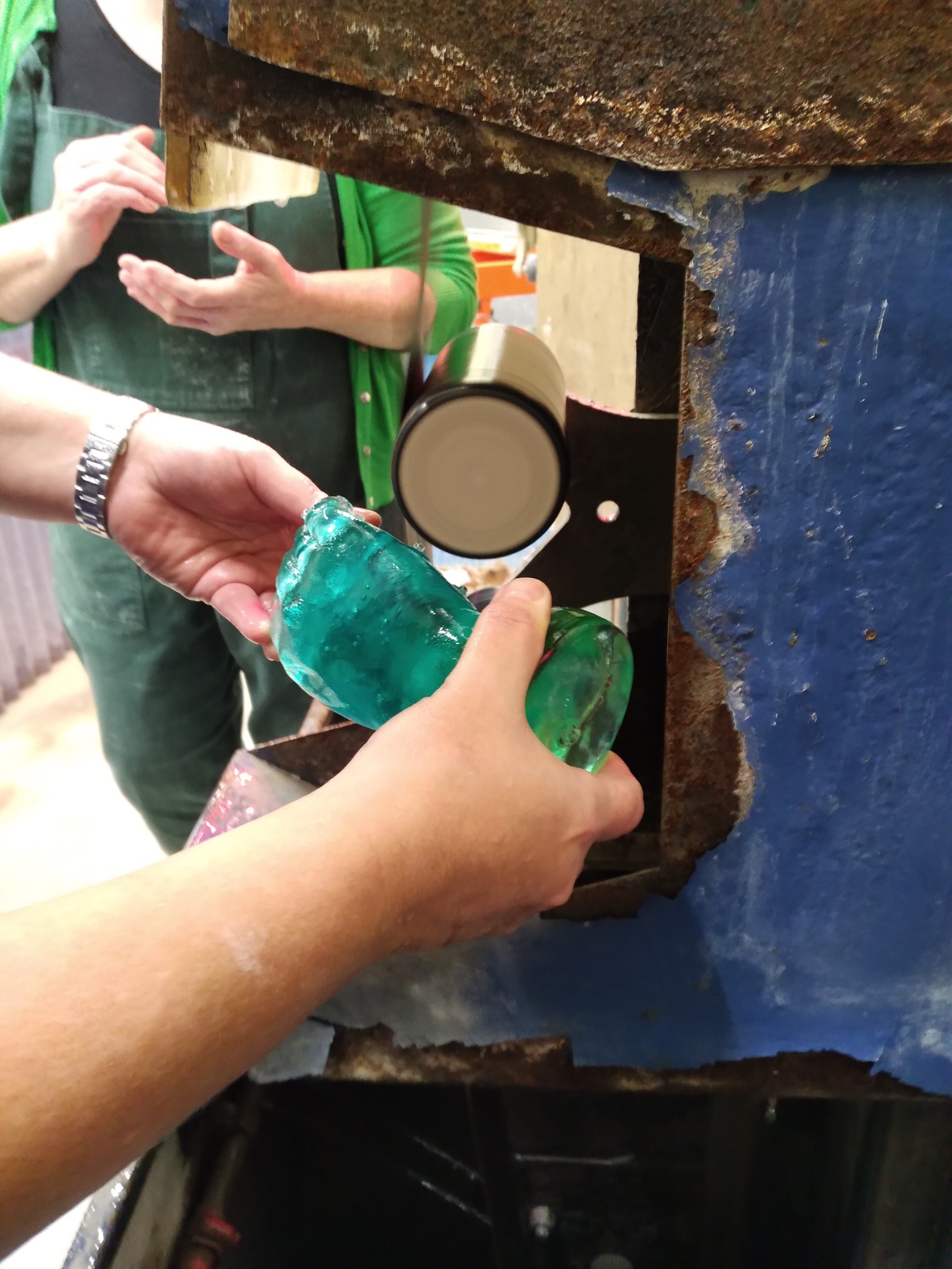
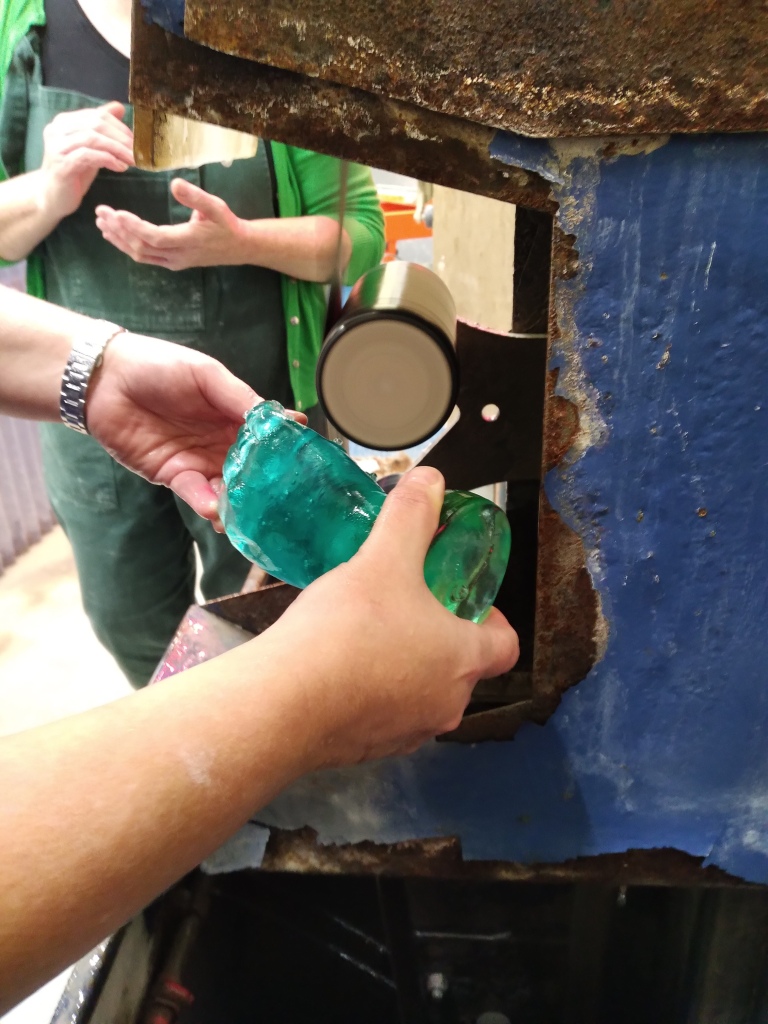
Linishing glass, by Jo Howell 2022
The steel structure need’s stripping and re-galvanised to stop it rusting further. Can the port help? They may have specialist knowledge about saving steel from the corrosive effects of sea water.
The building is thermally inefficient, and will not be able to contend with the energy crisis unless another round of investment includes some very clever green technologies. Photovoltaic panels, wind power, heat exchange, battery storage, and any other innovations that take us towards real efficiency.
We’re aware that we are asking a lot, but shy bairns get nowt.
A community campaign to gain access to the current plans for the continuation or closure of the National Glass Centre building
What do we want from this campaign?
Ideally, we want to find a way to save the building as it is. To do that we need to know what it needs. That way, we can try to formulate a plan of action for both organisations to be saved, and for the building to be improved. This could be an opportunity to radically address the problems, including the extreme energy consumption, to make both of our national organisations leaders in the cultural sector.
Information about long terms plans, time lines, and the recent consultation report about the building, has not been released.
< Edit this has been released but we want more clarity. See the consultation on our links page.
Naturally, this has left local businesses and creatives wondering about the future of these two National organisations.
We seek to gain information, and an audience with the custodians of the building, Sunderland University; with an intention of saving the skill of glass blowing in St Peter’s ward.
Email, logo and hashtag
How can you help?
You can join our mailing list, and give us a testimonial that we can use to demonstrate public love for the NGC and NGCA.
We are going to need active participation in lots of different ways. We are going to need organisers, event coordinators, social media content and management, councillors, MPs, governors, and cultural organisations to support us.
#SaveTheNGC
Link to article below:
The closing of Sunderland’s National Glass Centre
We need all the help that any of you can offer. #SaveTheNationalGlassCentre #SaveTheNGC









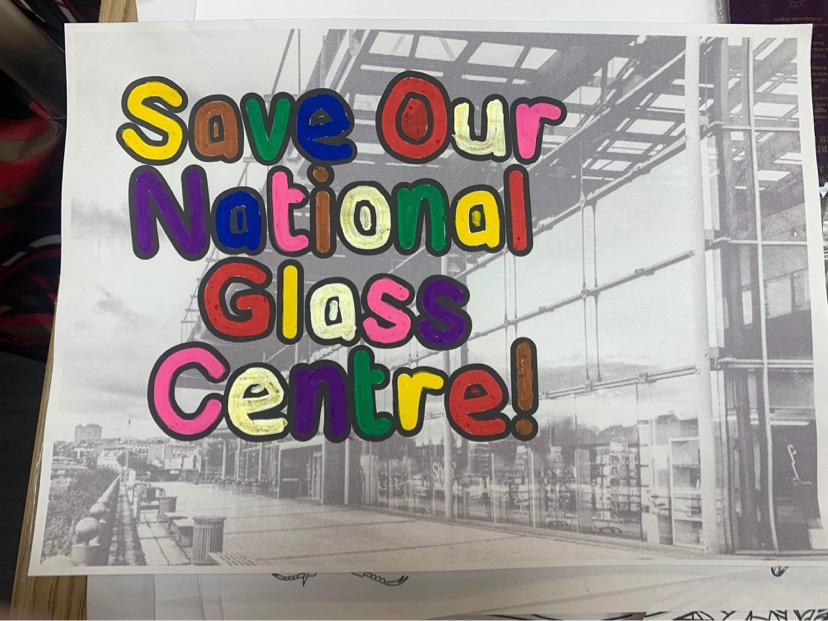
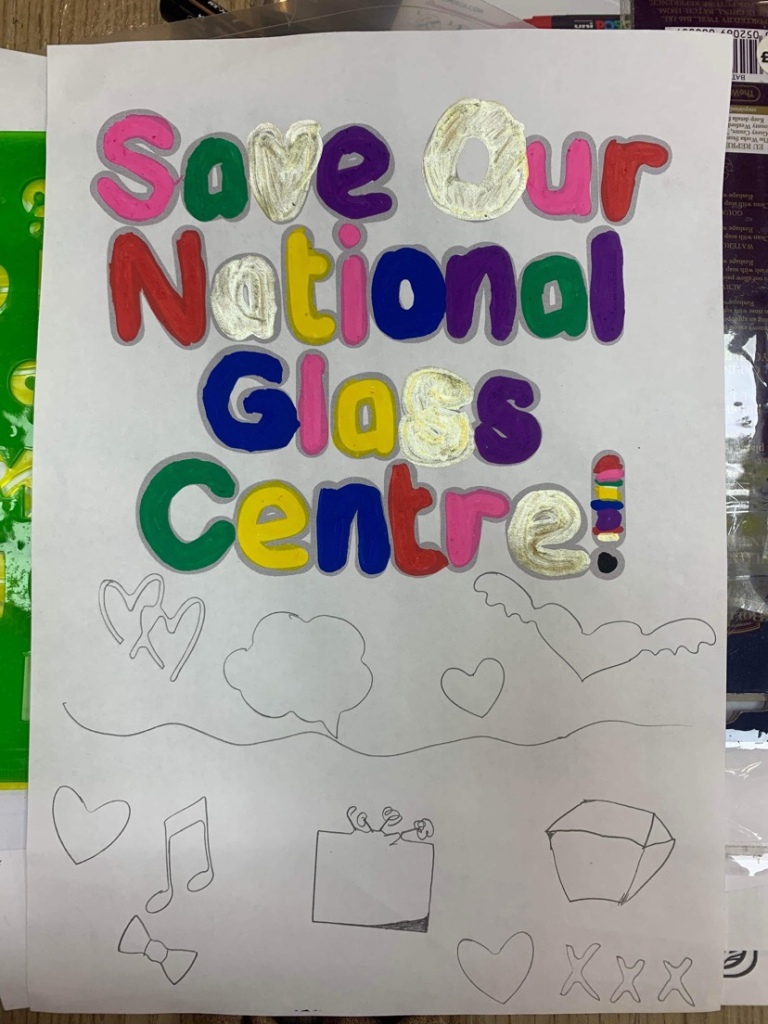












 Save the National Glass Centre