thanks for your support. On Wednesday, 25th March, Sunderland City Council will debate a motion which could help to pause demolition and save the National Glass Centre. If you still feel strongly about this, please could you write to your local councillors and MP to express your concerns. This will help the campaign enormously. If you live in Sunderland, consider attending the council meeting in person (4pm at City Hall, Sunderland) to show the strength of public feeling.
By Jo Howell Sunderland based photographic artist and save the National glass centre activist
Save the National Glass Centre needs you to share the petition!
2024 marks 1350 years of glass making on the banks of the river Wear. A humongous triumph to be celebrated.
Yet there is silence.
The cathedral for glass is no longer permitted to shine with pride. This is a great tragedy that we have the power to stop.
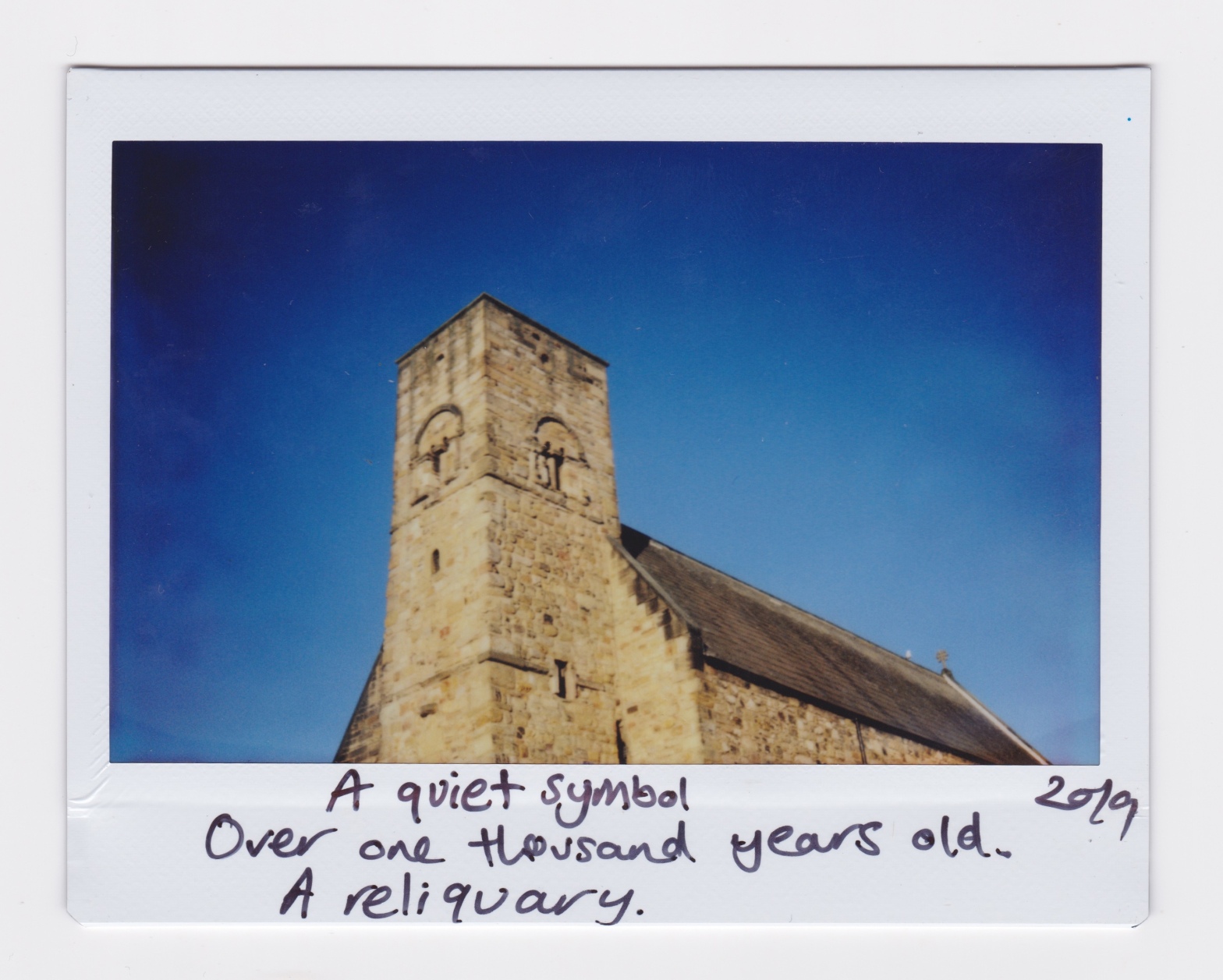
Glass heritage on the river Wear, St Peter’s
We need radical change. Right now. To stop the cultural vandalism that is going to be inflicted on Sunderland. The City builds towards net zero and digital infrastructure whilst denying the people their authentic cultural identity.
Now is not the time to divest in our unique skills and throw away more than a millennium of prestige. As we move away from plastic towards sustainability we need to be investigating the potential of glass in future technologies.
The City is enjoying success for the local film industry after the chancellors budget announcement allows for the Crown Studios to go ahead. It seems crass to allow the decline and disappearance of a unique building with such specialist artisans inside. Let me propose a UK blown away! Let me suggest that we may need glass for props in period dramas and science fiction productions.
The National Glass Centre 2024
We are a City of scientists, artists, engineers and innovators. Let’s innovate and not capitulate ❤️
Our campaign is still here and we think it’s time to supercharge it to maximum effect. Whilst we are extremely proud and grateful for every single one of you. That’s 33,000 inclusive of our local paper based petition. We want 100,000 of you on board so we can take this to government level.
I know you all agree to the vital part that the National Glass Centre has played in all of your lives is worth saving. Whether you live in one of the 78 signing countries, or right on the doorstep this legacy means something to all of you.
Please get sharing across social media ❤️ the longer we wait the harder the fight will be. Let’s get a wriggle on!
All our heartfelt thanks from everyone at
Save the National Glass Centre campaign
If you can help further please email us. We are calling all hands on deck ❤️
Save the National Glass Centre campaigner Keith Brown explains
On the 8th of December 2022 the University of Sunderland announced its shocking decision to close the National Glass Centre (the NGC) on the banks of the river Wear in Sunderland.
The campaign to reverse that decision and to keep the NGC open in some form is gathering momentum. Campaigners have highlighted the NGC’s iconic architectural status; the devastating cultural and artistic impact of the NGC’s work, not only upon Sunderland but also upon the north-east and the entire UK. People need to be made aware that the cost of repairs widely broadcast by the University are grossly inflated.
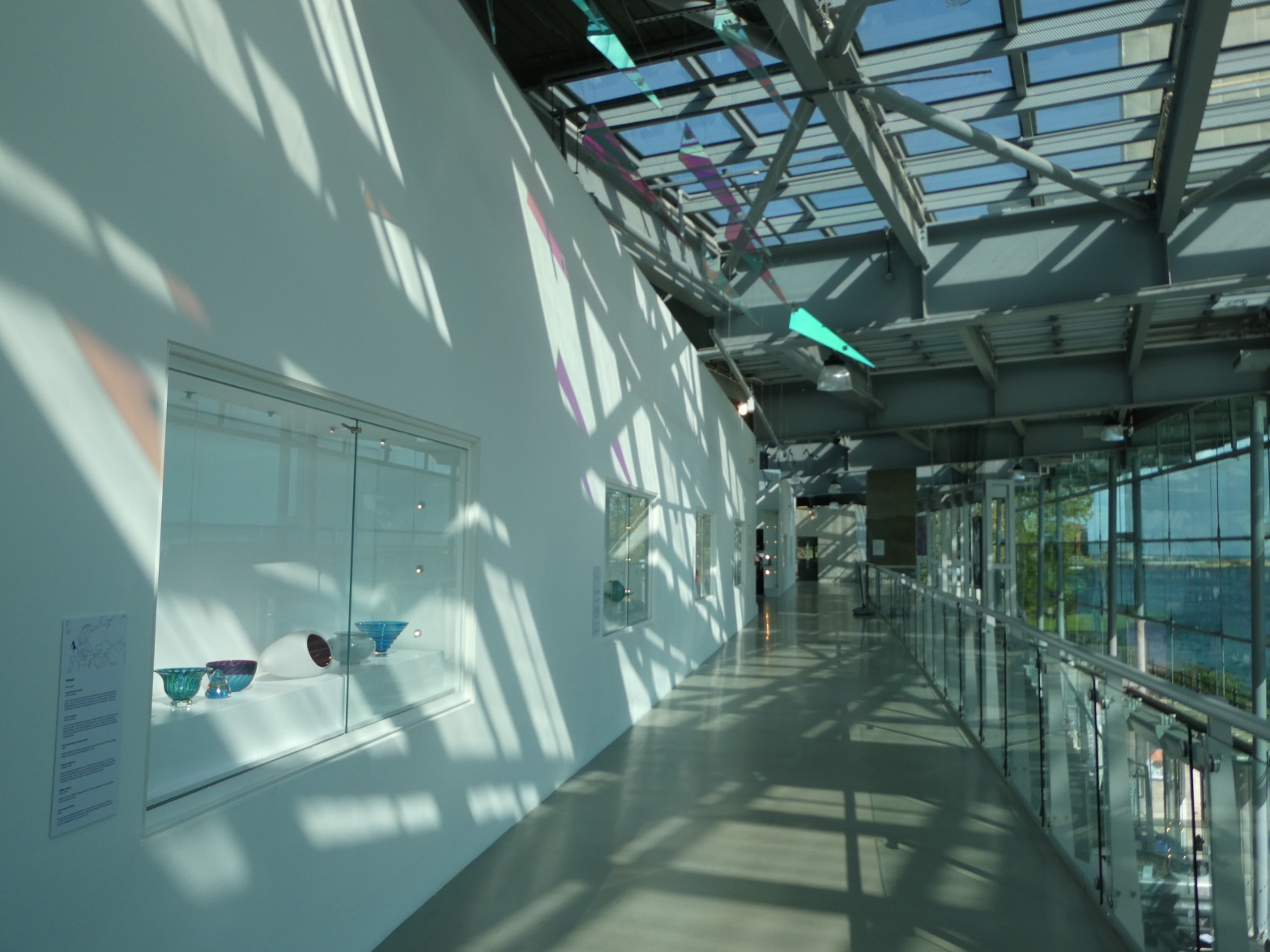
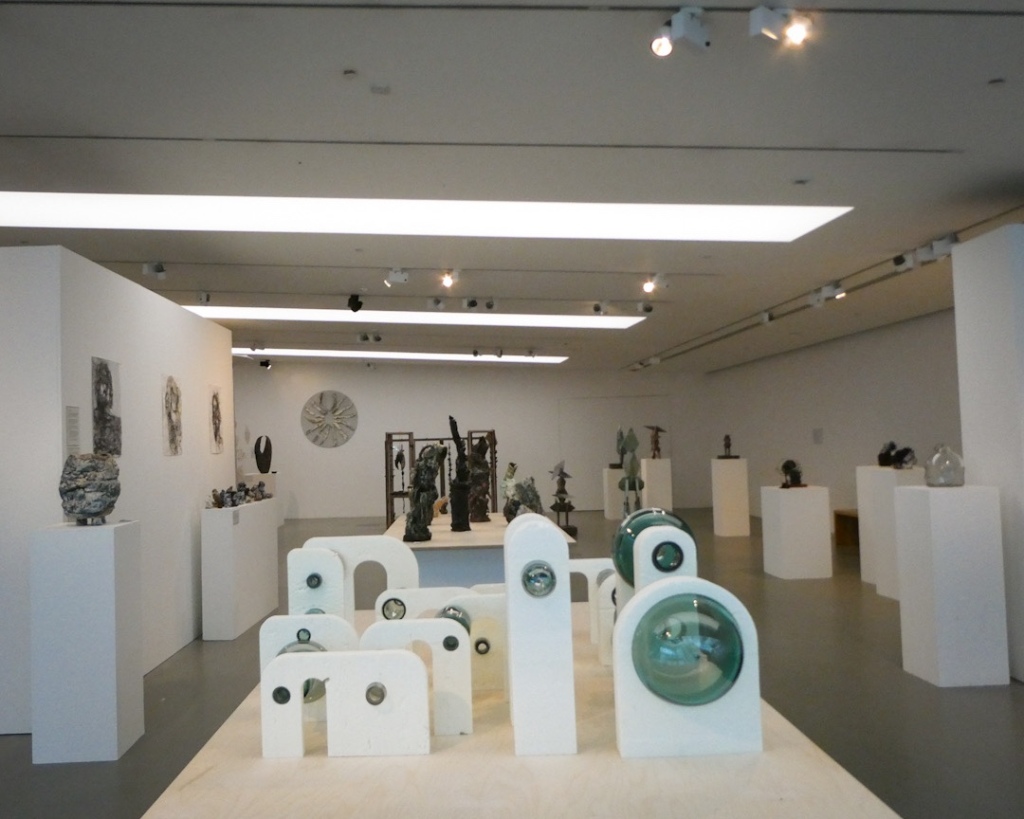
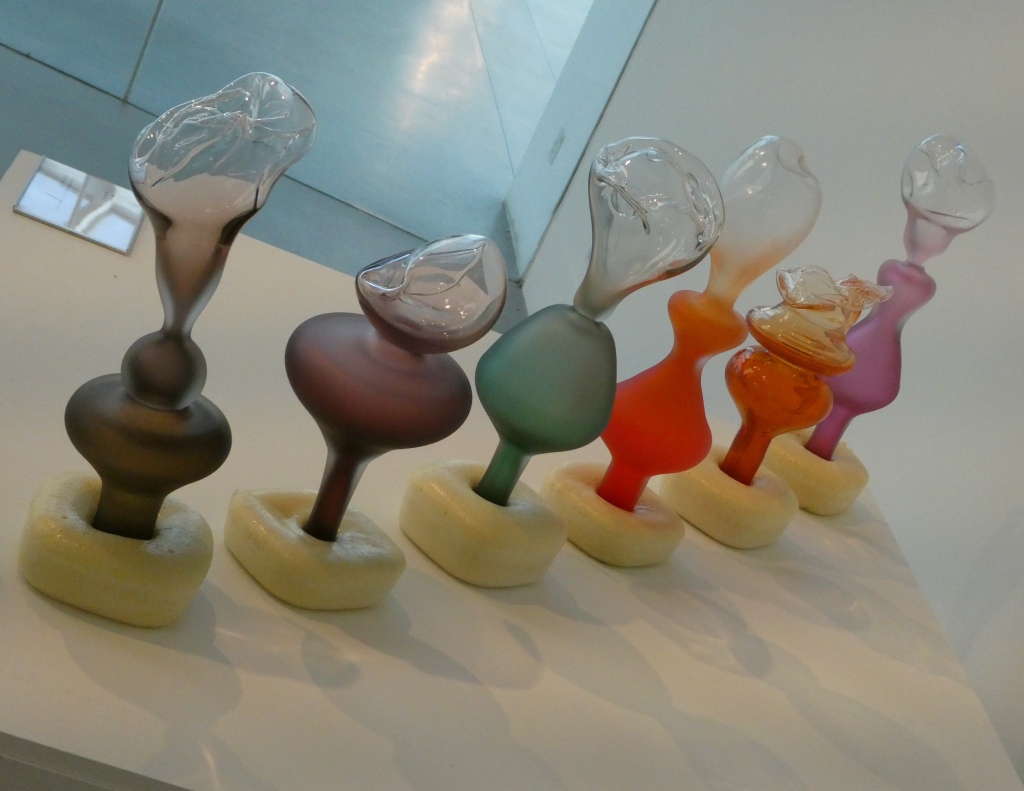
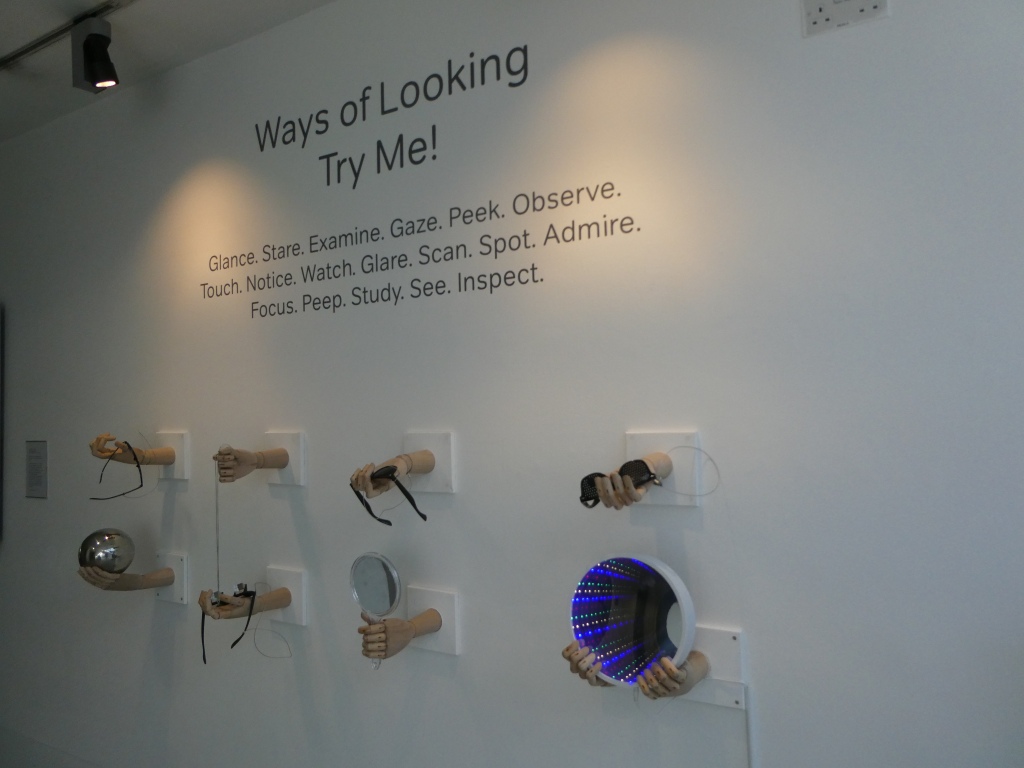
MA exhibition photography by Gill Helps
Well-over 31,000 people have signed a petition against its closure and demolition. Campaigners are now calling for more people to help save the award-winning NGC, cited as a “World-class cultural asset” in Sunderland council’s 2021 UK City of Culture bid. The campaign already involves many local people, and also receives support from key national bodies.
Renowned international architect Piers Gough in the 20th Century Journal has said that
“Sunderland cannot afford to lose such an icon. It would seem ideal for a forward-looking University to use or repurpose, but should it be superfluous another more appreciative owner should be found.” He also stated that “the NGC references Sunderland’s shipbuilding heritage as well as glass making past, making this unique building special to its particular location. It is the best and most apposite 21st Century Building of the region“.
Architect Piers Gough in the 20th Century Journal
The 20th Century Society (C20) , the professional organisation which saves endangered buildings, has sought independent advice from experts in building lifespan and sustainability. They have cast doubts on the figures quoted for repair and renovation.
“condemning this landmark building that’s barely 25 years old and in the process losing one of the few purpose built glass blowing facilities in the country, is unconscionable“.
C20’s article 21.6.23
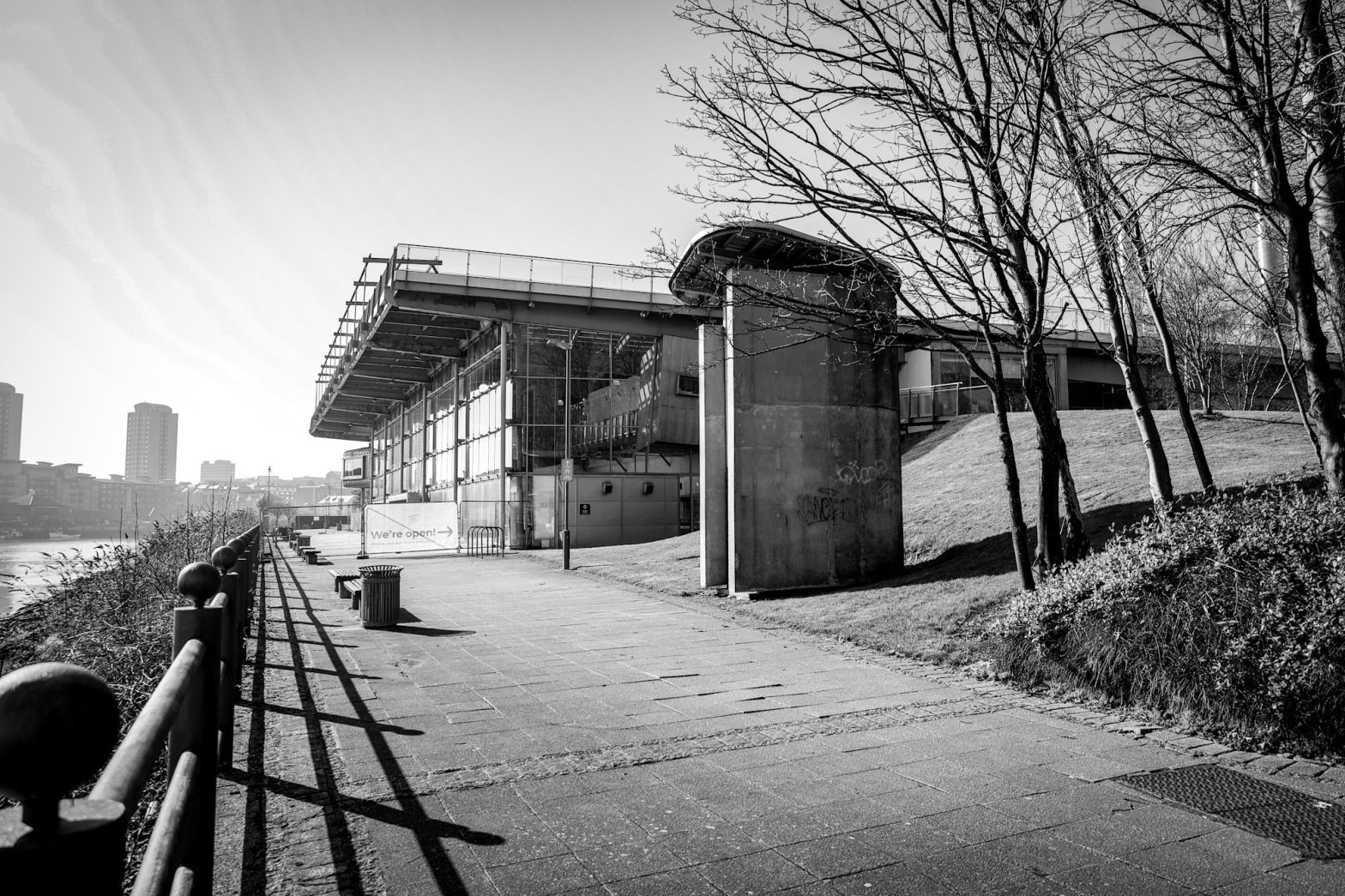
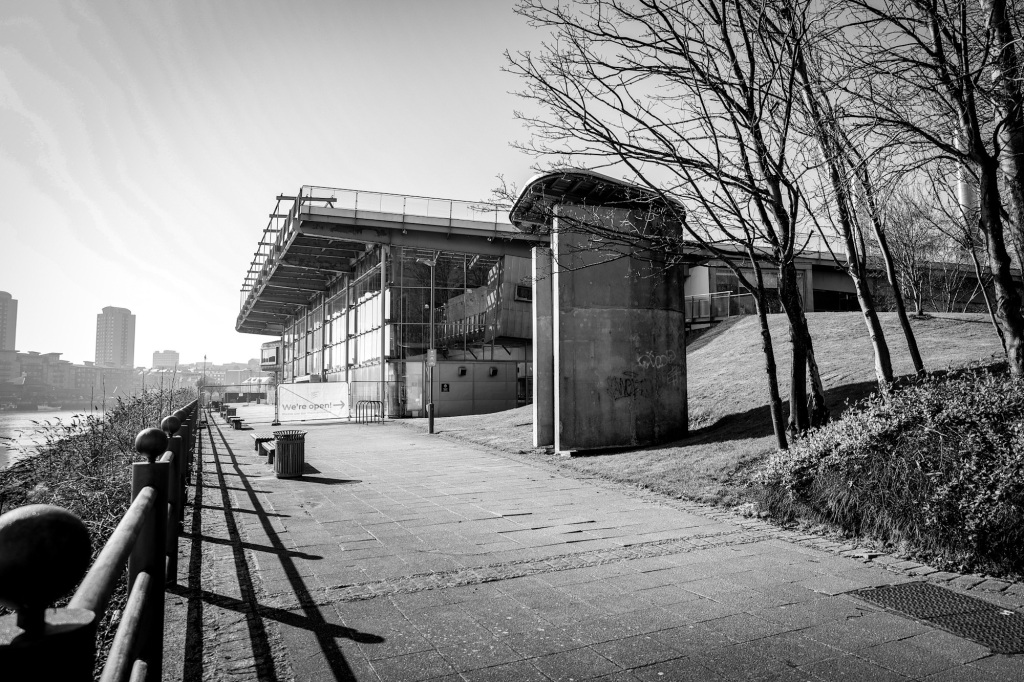
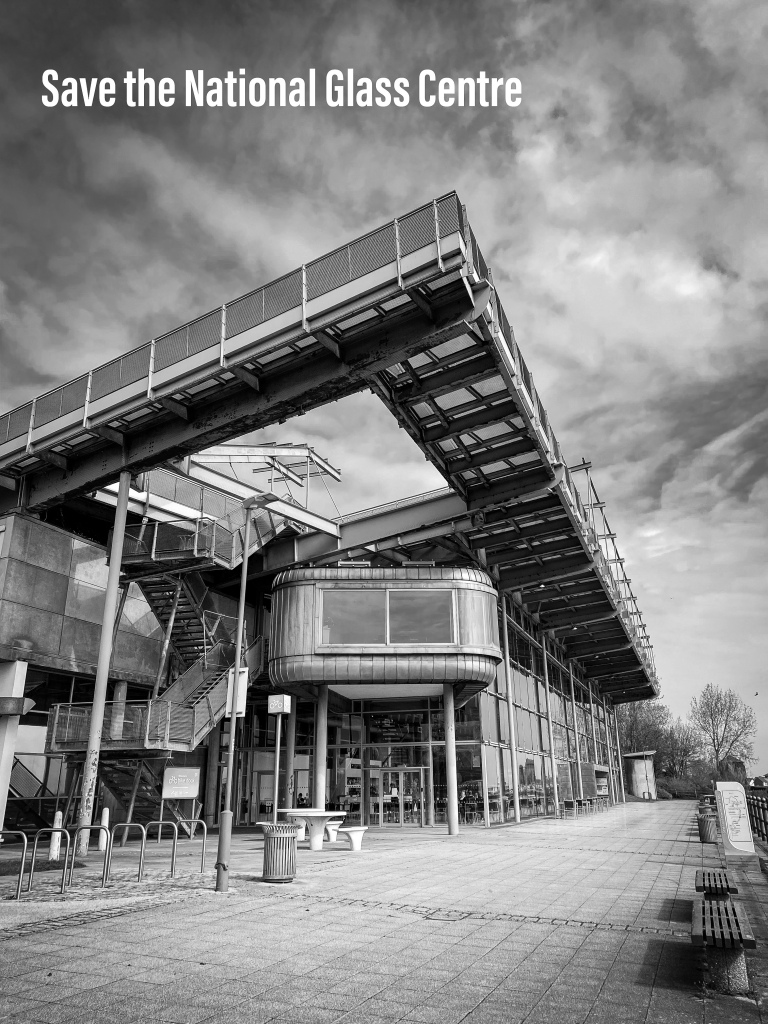
Architecture photography by Gill Helps
In 2000, the Design Council awarded this unique building Millenium Product Status in recognition of its creativity and environmental approach. The building also received commendations from the Craft Council, the Victoria and Albert Museum and the DTI.
The National Glass Centre is owned and maintained by the University. Sir David Bell, the vice chancellor and chief executive stated in May 2023 they could close it as early as 2025, he also stated, without any prior consultation, that the National Glass Centre will be demolished.
The building sits adjacent to the University campus where the University is planning to undertake significant capital works over the next five years. This suggests it intended all along to expand onto the NGC site.
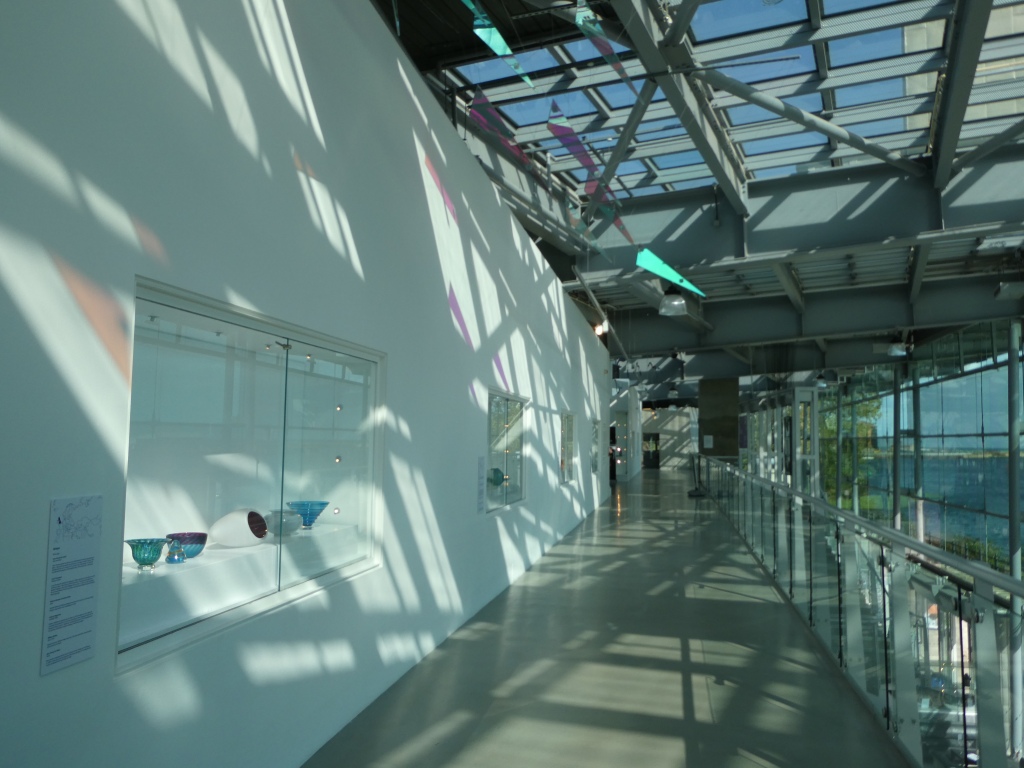
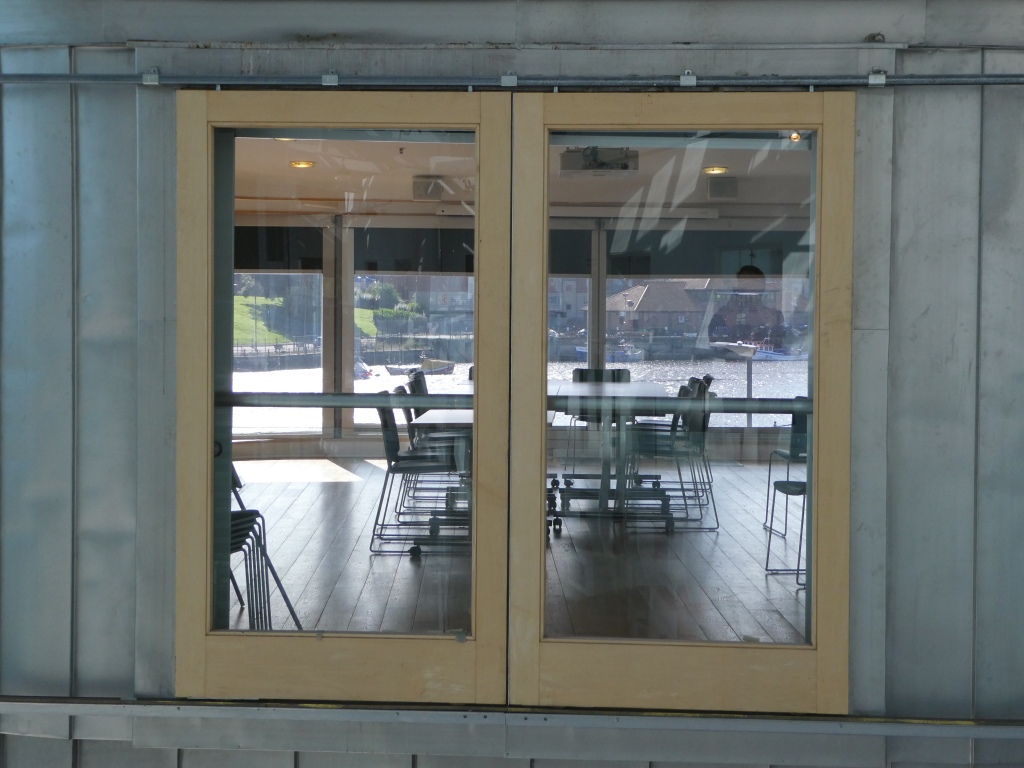
National Glass Centre photography by Gill Helps
The University’s Intention to demolish and redevelop, releasing embodied carbon in the process, is the wrong decision given the concern over accelerating climate change. Retro fitting is by far the best solution. This academic institution should focus on STEM subjects and treat The National Glass Centre as a case study for sustainability and growth rather than managed decline and potential destruction.
The repair costs of £45m broadcast by the University are now widely believed. How the costs can be so high for what essentially should be the refurbishment of the existing building needs further clarification by the University because such an inflated figure is guaranteed to deter any potential funders.
The published costs are not for repair alone, but for an array of other enhancements including replacing the entire roof (solid & glazed) all the glass curtain walling, installing photovoltaic panels, and replacing all the mechanical and electrical systems. Even with these enhancements the reported figure appears seriously inflated, particularly when the construction cost for Culture House, a brand new building in the centre of the city, is reported as being £25m.
MA exhibition photography by Gill Helps
Retired planning inspector David Vickery wrote in a recent campaign article: “Sunderland City Hall was completed in November 2021 costing £42m (which is £3 million less) and for that £42 million Sunderland got two large glass and steel office blocks, one of five storeys high and the other of six storeys (190,000 square feet), both buildings connected by a glass atrium. How can it cost £45 million just to repair a roof?”
Early in 2023, the campaign gave the University a Freedom of Information request to enquire how the University had come to their decision to close the National Glass Centre.
In March 2023 the University published documents online, showing the consultation that they had based their decision on.
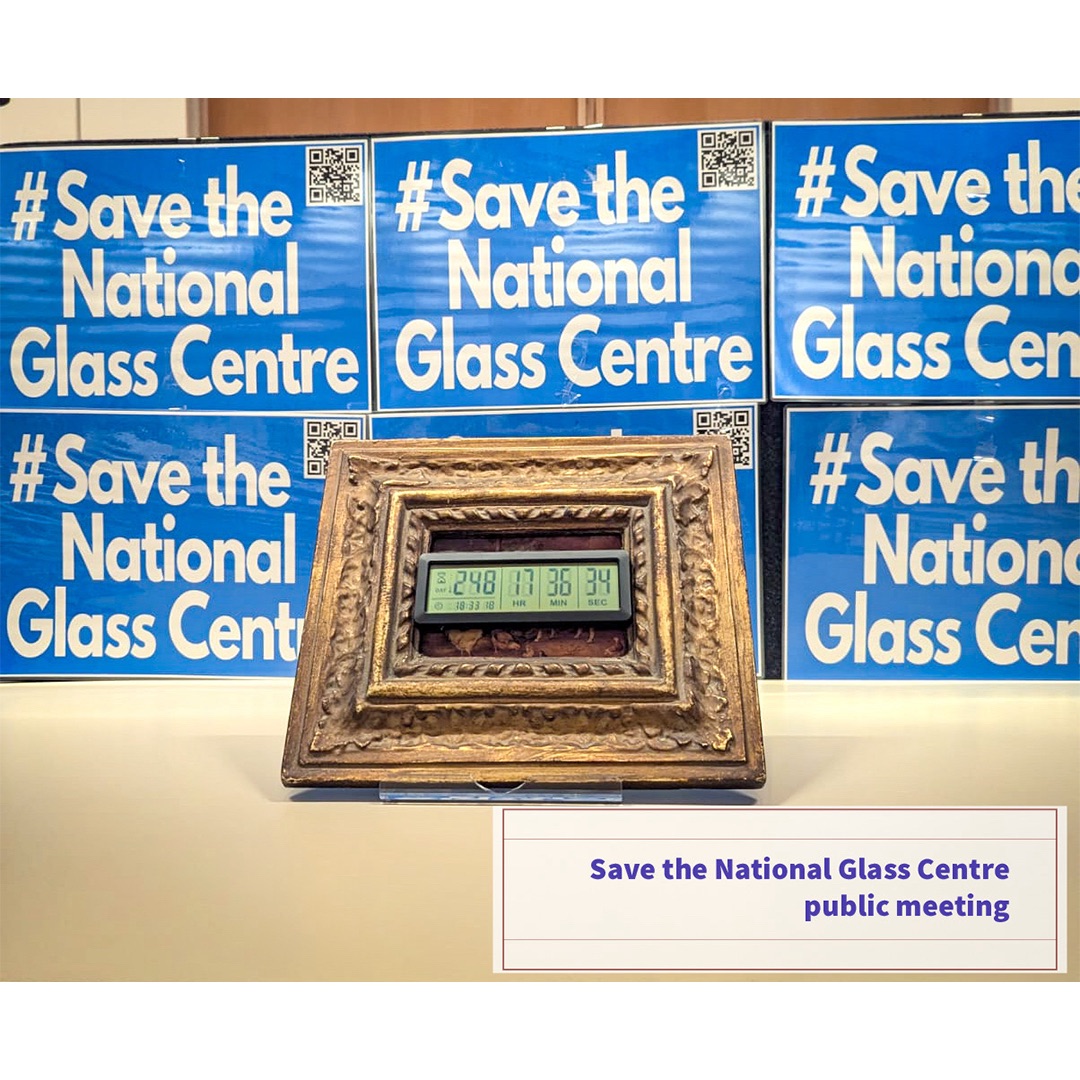
The campaign followed up by meeting in person with executives from the University on 22.06.23. (The day of the public meeting at Saint Peter’s church.) During this meeting the campaign requested access to all of the NGC’s maintenance records.
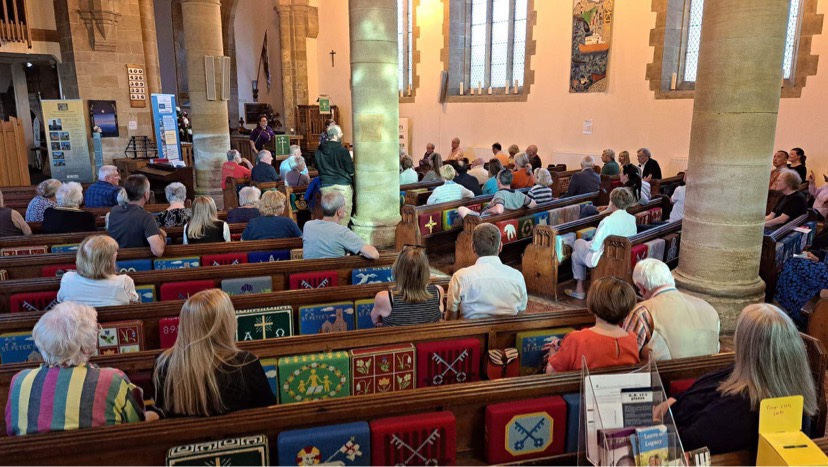
Save the National Glass Centre public meeting photography by Phil Vickery
In August, the University stated via email that the FOI was not received, the campaign issued a new FOI request on the 14th of August ’23 (FOI 2323/0814).
The University said they were gifted the NGC when it was 12 years old, however the land registry document appears to show they were given it for no recorded price when it was only 8 years old, (GOV.UK Title register for: National Glass Centre, title number: TY454590).
There is no doubt that the University has struggled to maintain the NGC, a fact that was recently noted in its Future Strategy Statement.
Also the University’s Head of Estates stated in 2013 ” the centre has suffered as a business and its maintenance regime hasn’t been as robust as it could have been.” Since then, the exterior has further deteriorated under their stewardship.
” The centre has suffered as a business and its maintenance regime hasn’t been as robust as it could have been.”
Future Strategy Statement. The University’s Head of Estates stated in 2013
Sadly, the deterioration and destruction continues and in January 2023, due to some corrosion and safety concerns the University removed and rapidly disposed of the massive heat sink (brise soleil) which was a superb and crucial design feature on the front of this monumental building.
National Glass Centre photography by Gill Helps
In addition, in 2013 the NGC received £2.5m for an internal refit. This grant aided alteration allowed the University to move their glass and ceramics course into the NGC, also Sunderland Council moved the Northern Gallery for Contemporary Art into the building. Two property moves that achieved substantial ongoing financial gains for the University and in particular Sunderland Council.
Opened on the 23rd of October 1998 by Prince Charles, now our King, this iconic building encompasses a vast array of crucial delights: substantial visitor experiences and facilities; brilliant collections and exhibition spaces; the Northern Gallery for Contemporary Art; workspaces for the academic courses, the tenanted artists’ studios; and the specialist facilities for the creation of ceramic and glass artwork – all housed within the building. Plus, there are numerous creative and constructive magical children’s workshops, some where children see their designs being cast in molten glass.
Also this extensive and marvelous property used to occasionally be used for weddings, and could actually accommodate many special events if properly managed and promoted.
National Glass Centre photography by Jo Howell
We cannot afford to let this delightful institution go, not just for the enjoyment of locals and many visitors, or even for its national and international status promoting glass and the Arts… but for the cultural heritage of our future generations.
Amid this tangled tale let us not forget that Sunderland is the birthplace of stained glass in the UK; The National Glass Centre can have a viable future and should be allowed to continue the tradition of glass making that was first started here in 674AD.
Please come and visit this unique wonderful place and see why it must be saved.
We strongly urge the University of Sunderland to reconsider their plans, and for local and national politicians to become actively involved. And you can help by supporting the campaign:
We are so close to 5000 signatures! I’d love to hit 5,000 for when I eventually sort out meeting wor Julie (Elliot). I also need you all to put pen to paper and write to or email wor Julie stressing how wrong she is about the will of the people.
Let her know that we love our heritage and all of the wonderful opportunities that the National Glass Centre brings with it! Julie Elliott
Send your post, emails, tweets and calls to wor Julie. Information below:
Telephone 0191 5655327
Email julie.elliott.mp@parliament.uk
Post
Julie Elliott Member of Parliament for Sunderland Central Suite 204 The Place Athenaeum Street Sunderland SR1 1QX
A brief history of the National Glass Centre Building
by David Vickery, retired senior planning inspector
The National Glass Centre (NGC) celebrates its 25th anniversary this coming October under threat of closure and likely demolition. It was opened by HRH Prince (now King) Charles in October 1998.
This amazing building lies on the north bank of the River Wear on the former site of the J.L. Thompson and Sons shipyard, facing the mouth of the River Wear and Sunderland’s port. It is close to the site of St. Peter’s Church, built in 674, where Abbott Benedict Biscop instructed French craftsman to glaze its windows, starting Sunderland’s long connection with glass making.
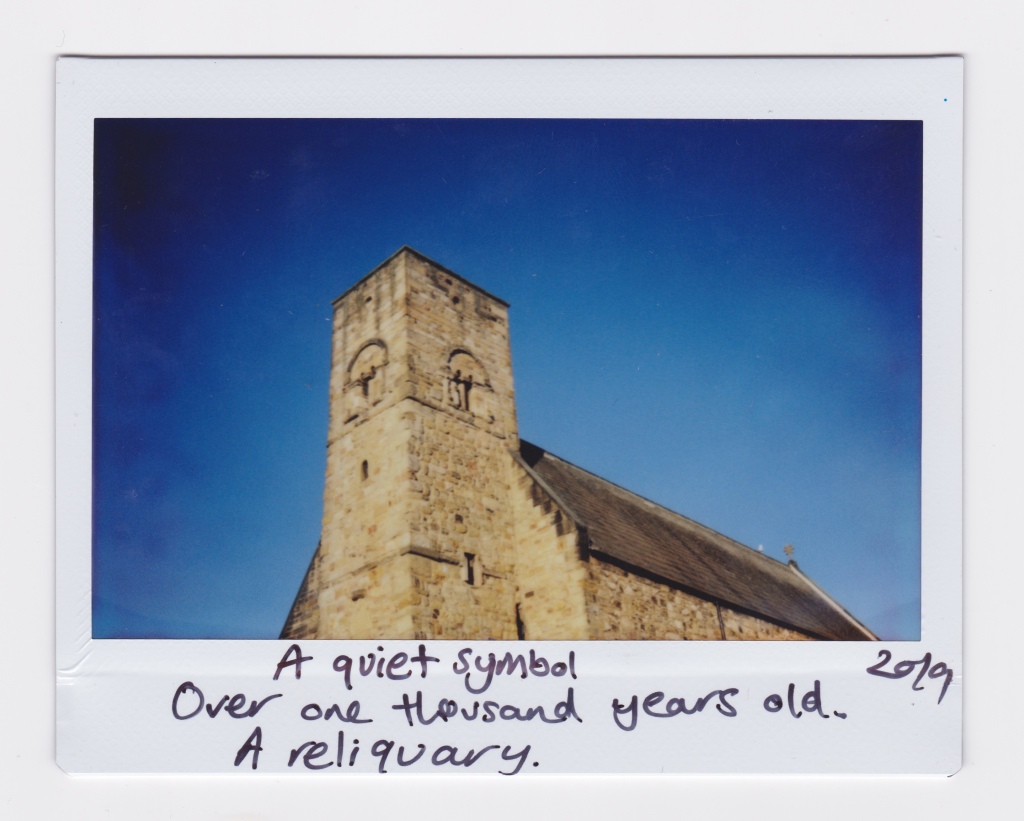
Instax haiku about St Peter’s Church, photo by Jo Howell 2019
In 1994 the Tyne and Wear Development Corporation held an open competition for the design of the NGC, with the objectives of celebrating the heritage of glass making in Sunderland and to support the development of new glass production for the 21st century. This competition, with over 80 entrants, was won by the London architectural practice GolliferAssociates Architects (now Gollifer Langston Architects). Their proposal aimed to make the activities and production going on inside the building visible to visitors.
Front cover of Pyrex magazine, courtesy of Tyne and Wear archive, scanned by Jo Howell
The NGC was the recipient of the first major Arts Lottery Award in the North East. It was also funded by the Arts Council, the University of Sunderland, Tyne and Wear Development Corporation, the European Regional Development Fund and Sunderland City Council.
The building was one of the first in Sunderland to mark the beginning of the city’s regeneration, breathing new life into the depressed docklands area.
The complex design incorporates all the various uses into a glass envelope, supported by an exposed steel shell. The industrial finish looked striking and unusual when it opened in 1998, and it still does so today.
The NGC almost looks as if it is leaning towards the water, like a ship being launched. This is because the architects wanted the building to resemble a sea-bound vessel.
The building is built into the slope as the land runs down towards the river, with the public areas located to the south looking onto the riverside. The “back of house” areas are located to the north of the building, built into the slope.
Along the riverside the building has a long length of tall steel and glass walls, with an overhanging glass roof, exposed steelwork and external stairs.This modern, bold design means the NGC is instantly recognisable from the riverside public footpath and from the opposite river bank.
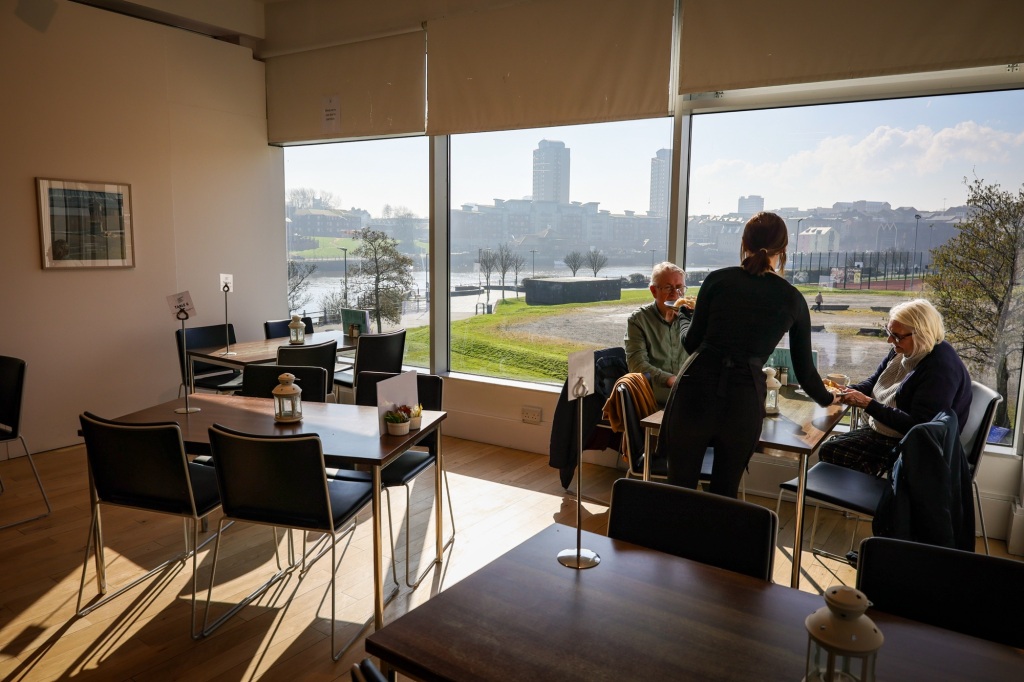
Inside, the high glazed walls and roof, mezzanine, open stairs, exposed steel work and ducts, and a concrete lift shaft give the visiting public a uniquely open, futuristic, brightly lit experience with views through the glazing to the river beyond.
The building looks fantastic when it is lit up at night, with light streaming out through the huge glass walls and roof.
The building was awarded Millennium Product status by the Design Council in recognition of its creativity and innovative environmental approach. It was one of the first buildings in the UK to use an earth tube to bring pre-cooled air into the public areas while the excess heat from the factory was recovered to heat public areas in the winter months.
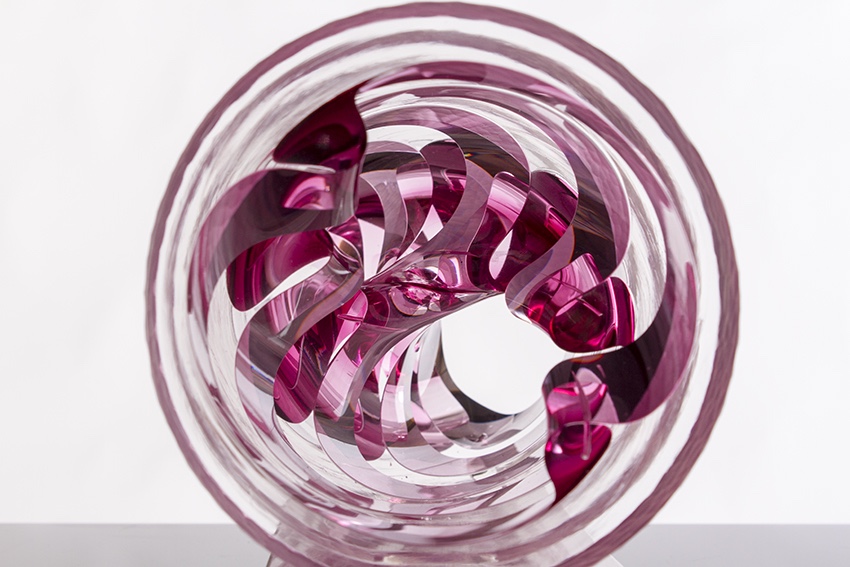
Detail of Phil Vickery blown glass made in the National Glass Centre hot shop, photo by Jo Howell
It cost £7.2m to build in 1998, and was “revamped” by the University in 2013 at a cost of £2.25m with a new gallery, restaurant, remodelled glass studio and shop.
It is open to the public, and around 230,000 people visit it each year, making it a major cultural venue and visitor attraction in the north-east. So go and see it while you can…








 Save the National Glass Centre