thanks for your support. On Wednesday, 25th March, Sunderland City Council will debate a motion which could help to pause demolition and save the National Glass Centre. If you still feel strongly about this, please could you write to your local councillors and MP to express your concerns. This will help the campaign enormously. If you live in Sunderland, consider attending the council meeting in person (4pm at City Hall, Sunderland) to show the strength of public feeling.
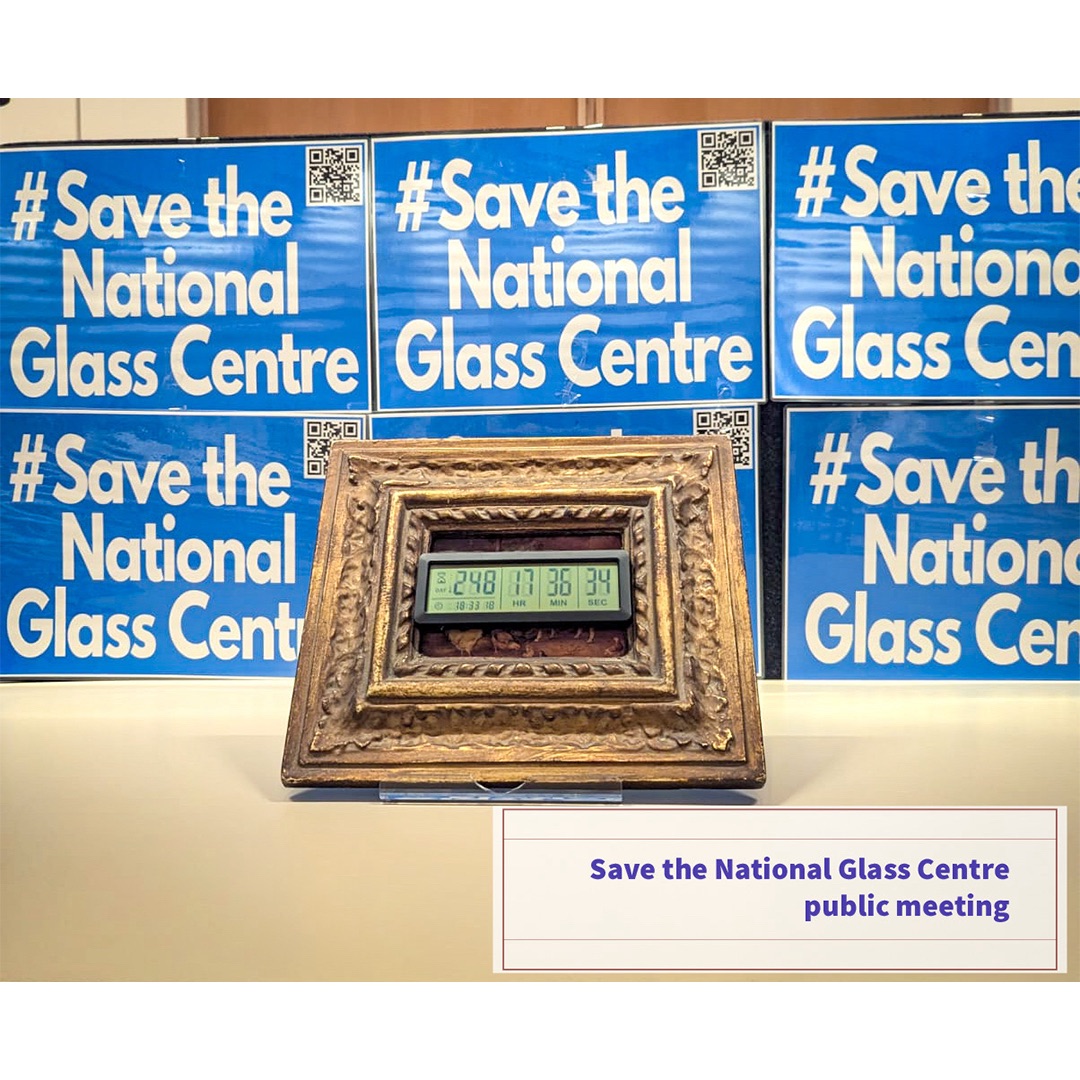
One year from today, they say the doors will close on the National Glass Centre. One year until we might stand beside a shuttered shell where light once poured through steel and glass, and say to a child:
“This used to be where we made beauty.”
You know this place. A place where art meets science, where play meets precision. A place where Sunderland shows the world what it can do. A skill honed over 1,350 years.
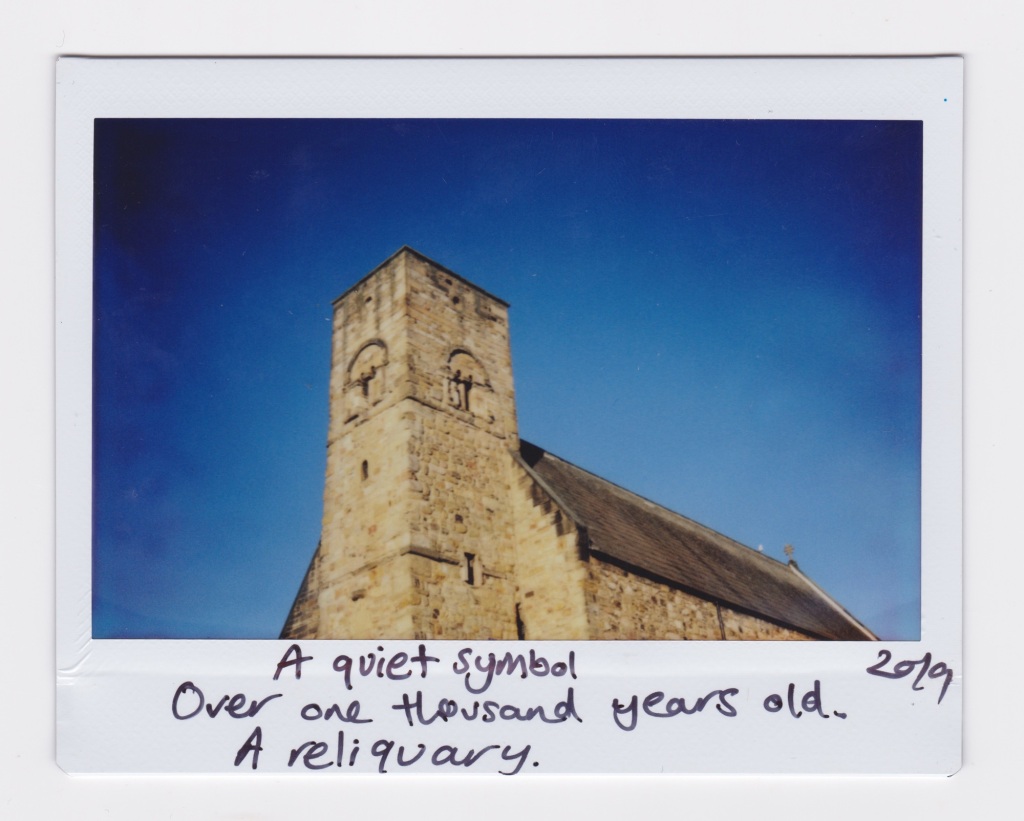
It stands in the shadow of St Peter’s, where stained glass began. Built on the site of J.L. Thompson’s shipyard, within sight of Wearmouth Colliery, the National Glass Centre honours them all.
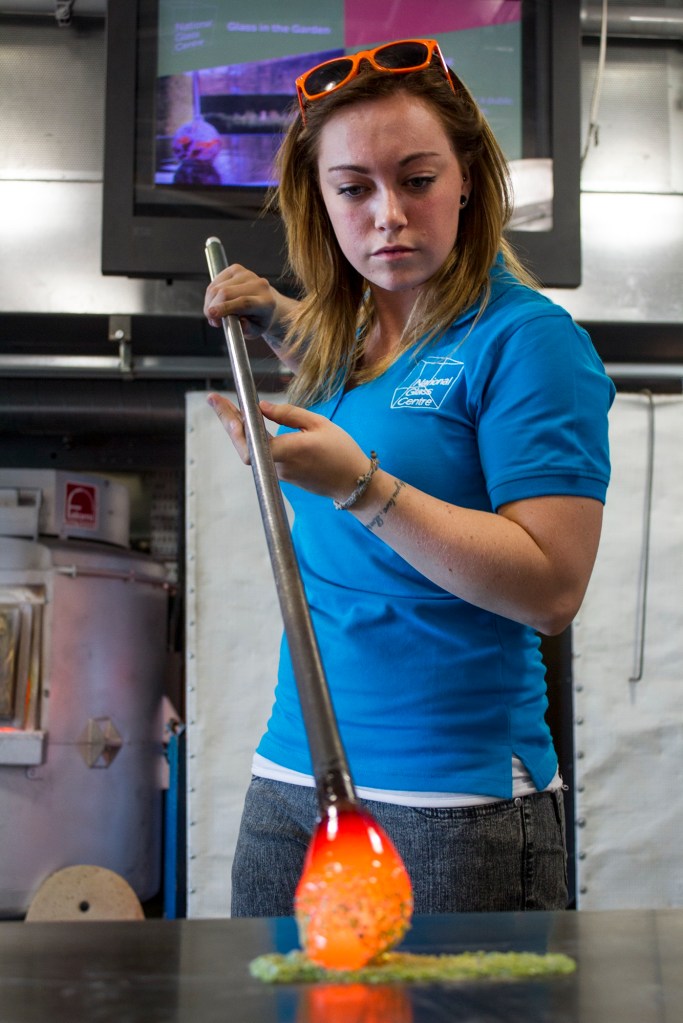
You’ve felt the heat of the furnaces. You’ve seen sand and flame become art. You’ve felt the cold river wind sweep up the Wear, where ships once brought ballast and carried coal.
School trips, weddings, lazy afternoons with family,international exhibitions; so many memories made in glass. You might have wondered, “How did they make that?” You might even have made a bauble, or a tile, yourself.
In twelve months, we risk losing it all—not just the building, but the stories, the skills, the sense of pride it gives us.
Sunderland, what will we tell the children then? When they ask what happened? When they ask why we let it go? When they ask if we even tried to save it?
Because once it’s gone, it won’t be easily replaced. Glass is fragile like that. Culture is fragile like that. But it can be protected—if we act now.
So today, we mark the beginning of a countdown—not to defeat, but to defiance. There is still time. Time to speak up, to celebrate, to shout louder.
Let’s not wait until it’s too late to remember what we had. Let’s fight for what we still have. The clock is ticking. Stand up, Sunderland. Stand up for your history, your culture, your soul.
With love, A Mackem who refuses to say goodbye just yet.
Do you want us to publish a memory, photograph or video about the importance of the National Glass Centre?
Article prepared by Save the National Glass Centres campaigner Jo Howell. Have you noticed this trend from UK Universities? Let us know in the comments.
Graduating class 2025 holding Save the National Glass Centres sign.
Across the UK, universities have evolved into powerful economic entities, not just centers of education but also significant players in the property market. With rising financial pressures and the need to secure alternative income streams, many universities have increasingly turned to land development and real estate ventures. However, this trend is not without consequences, particularly for arts and cultural organisations that risk being displaced or sold off to make way for commercial ventures.
One of the most poignant examples of this growing tension between university growth and cultural preservation is Sunderland University, where the development of property has raised alarms about the potential loss of cultural landmarks—particularly those that have long been vital to the upward social mobility of local working-class communities.
Universities as Land Developers: A New Financial Reality
In recent years, universities across the UK have sought to capitalise on the booming property market. With government funding cuts, higher tuition fees, and the increasing cost of running educational institutions, many universities have turned to real estate development as a lucrative means to generate additional revenue. Property projects, ranging from student accommodation to commercial spaces and research hubs, have become key parts of university expansion plans.
While these developments are often marketed as essential for the growth of the university itself—allowing for better facilities and more student spaces—the consequences for local communities, particularly arts and cultural organisations, are more complex. The land acquired for development is often situated in city centers or areas that are home to arts organisations that are vulnerable due to limited funding.
This trend has raised concerns that universities, once stewards of local culture, are now prioritising commercial interests at the expense of cultural spaces. In some cities, the push for university-driven property development has led to the closure or relocation of long-standing cultural venues—spaces that have traditionally provided a platform for creativity, community expression, and social engagement.
The National Glass Centre: A Cultural Anchor for Sunderland’s Working-Class Communities
In Sunderland, the issue has come into sharp focus with the case of the National Glass Centre (NGC), a cultural institution that holds immense significance for the local community, particularly working-class families. The centre, established in 1998, has not only been a hub for the arts but also a key vehicle for upward social mobility and aspirations in a city that has long struggled with economic hardship and social inequality.
For generations, Sunderland has been known for its industrial heritage, with shipbuilding, coal mining, and glass manufacturing at the heart of its economy. However, as these industries declined, the city faced significant social challenges, including high unemployment and limited opportunities for young people. In this context, the NGC became more than just a museum or gallery. It represented hope and possibility for many working-class individuals who had limited access to cultural or educational opportunities. The centre provides workshops, apprenticeships, and hands-on training in glassmaking—skills that have empowered local people to enter creative and technical fields.
The NGC is a place where many young people, often from disadvantaged backgrounds, are introduced to new possibilities that extend far beyond their everyday experiences. For these individuals, the NGC has been a critical part of building self-esteem, confidence, and career aspirations. It represents the kind of cultural resource that challenges traditional class boundaries and fosters a sense of belonging in a city that has long been overlooked.
However, as Sunderland University has expanded its footprint in the city, the NGC has faced increasing pressure. In recent years, the university has made moves to develop the surrounding land, raising fears that the NGC will be displaced in the name of progress. Local arts advocates worry that if this trend continues, the NGC may eventually cease to exist. Thus losing its community-focused identity, likely to be replaced by private development or luxury student accommodation.
The High Cost of University Expansion
The growing tendency for universities to act as developers has led to a broader debate about the role of these institutions in shaping the physical and cultural landscape of cities. While it’s undeniable that universities play a crucial role in regional economic development, their increasing focus on property development has often come at the cost of cultural assets that are integral to the local identity.
The National Glass Centre’s role in promoting upward social mobility highlights a crucial aspect of this debate: cultural institutions are not just places for artistic expression but vital vehicles for social change. They provide the working-class population with opportunities that would otherwise be inaccessible, offering not only educational benefits but also fostering community cohesion and pride.
For many in Sunderland, the loss of such cultural institutions would represent more than just the demolition of buildings; it would signify the loss of a unique cultural heritage that has allowed local people to dream beyond the limitations imposed by their circumstances. The National Glass Centre, in particular, provides a rare example of an arts institution directly contributing to the aspirations of its community for a better life, offering skills and opportunities that many other parts of the country currently envy.
The Balance Between Growth and Culture
The growing involvement of universities in property development raises an important question: How can institutions balance their ambitions for growth with their responsibility to protect and nurture the cultural assets that are integral to their local communities?
University executives are key decision-makers in this process and must consider not just the financial viability of their ventures but also the broader social impact of their decisions.
University-driven redevelopment should not come at the cost of the community’s cultural wealth.
A Call for Thoughtful Development
The case of the National Glass Centre in Sunderland serves as a poignant reminder of the importance of cultural spaces in creating pride and providing opportunities for young people. Moving forward, it is essential for universities to reconsider their approach to development strategies. Ensuring that the benefits of growth are shared equally with the arts and local communities, not just the commercial entities that stand to profit from redevelopment.
The challenge for universities is to find ways to grow without losing sight of their role as stewards of culture and community. It is possible to foster educational and financial growth while also safeguarding the cultural heritage that enriches local life. The time has come for universities to develop a more balanced approach—one that acknowledges that true progress cannot be measured in property alone but in the social and cultural impact they leave behind.
Please sign the petition and share the article with likeminded people.
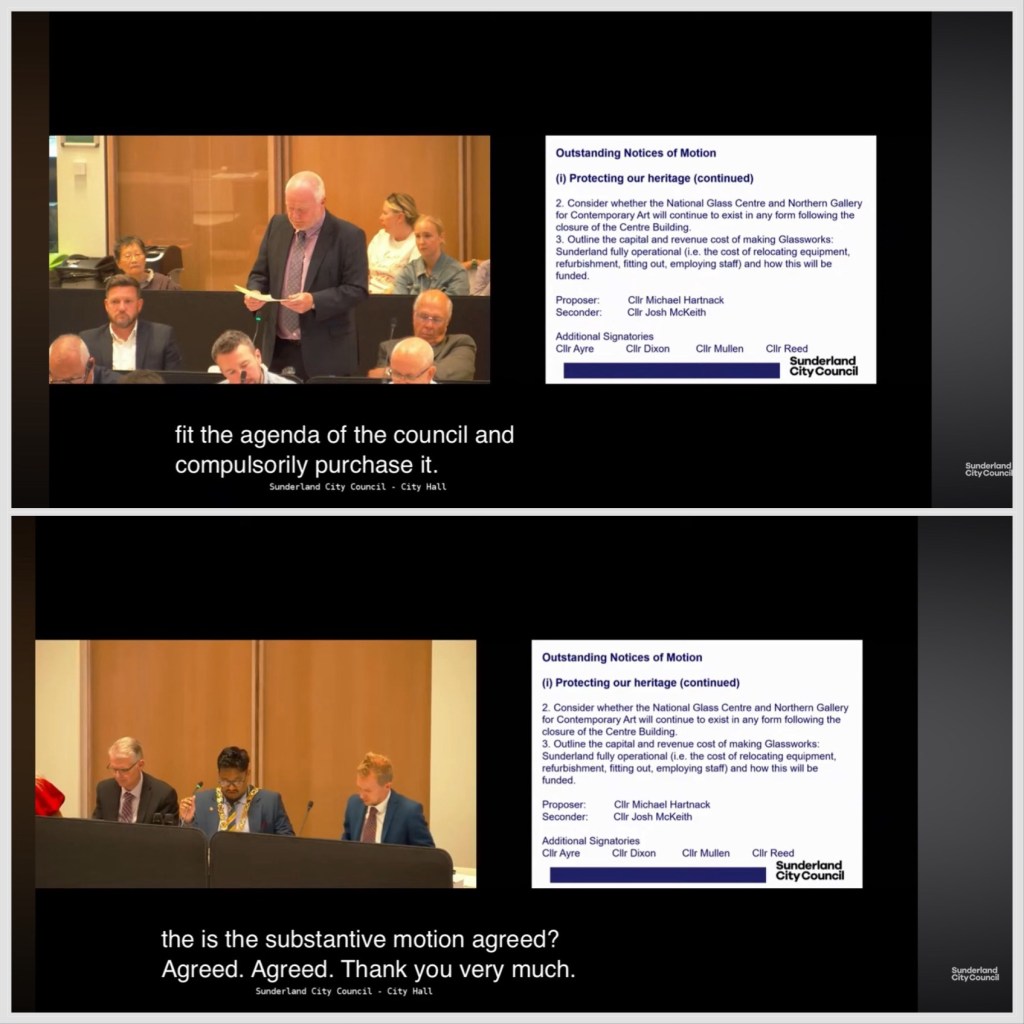
After a remarkable council meeting I thought I’d share some highlights. Cross party support for the motion requesting a more robust look at the presented documents from Sunderland University regarding the National Glass Centre and a call for compulsory purchase.
Labour representatives were reading from carefully considered scripts to spin the narrative towards Glassworks Sunderland whilst patronising us by suggesting we are ‘romanticising heritage’.
This is OUR CULTURE. This is our future. That’s why the fight will continue until common sense prevails. As proud working class people we cannot allow this top down dictatorship. We deserve our NATIONAL Glass centre. Not empty promises.
Save the National Glass Centre photograph by Jo Howell
You are invited to…
Sunderland City Council Meeting
At 4.00pm in City Hall, Sunderland on 25th June 2025
To witness the debate deciding if the Council will pass the Motion below and start the process of investigating the actions of the University of Sunderland regarding the decision to close the NGC, thereby ending 1350 years of glassmaking in Sunderland.
The Council Meeting is open for the public to attend, please come and show your support for the Campaign to Save the National Glass Centre.
Or follow the live stream of the Meeting at…
Notice of Motion – Protecting our heritage
This Council regrets the decision taken by the University of Sunderland to close the National Glass Centre in 2026.
Preserving Sunderland’s glassmaking heritage is vital to the city’s cultural offer as well as the Council’s economic growth ambitions.
The University has taken this decision due to what it claims are unaffordable repair costs and sustained operating losses. Council expresses concern regarding the accuracy of the cost estimates so far presented.
Council therefore resolves that the Chief Executive will write to the University’s Vice Chancellor with the following questions:
1. What is the scale of the Centre’s operating loss in the current financial year and the preceding 5 years?
2. Do those losses reflect the cost incurred when structural changes were made to the Centre’s main façade in 3. 4. 2022?
3. How does the University account for the Centre’s income and expenditure?
4. Will the University release all documents relating to its ownership of the Centre and confirm whether that ownership is subject to any restrictions?
The proposal to establish an alternative glassmaking provision in Sunniside in 2027-28, known as Glassworks: Sunderland, fails to address the loss of expertise caused by the Centre’s closure, ignores the economic implications for the surrounding area, and is itself only partially costed.
Council further resolves that the Chief Executive will prepare a detailed report, to be made public within 6 weeks, with the following terms of reference:
Fully explain the proposed ownership structure of Glassworks: Sunderland.
Consider whether the National Glass Centre and Northern Gallery for Contemporary Art will continue to exist in any form following the closure of the Centre Building.
Outline the capital and revenue cost of making Glassworks: Sunderland fully operational (i.e. the cost of relocating equipment, refurbishment, fitting out, employing staff) and how this will be funded.
Save the National Glass Centre photograph by Gill Helps
Make some signage or some fashion and pop down to City Hall with us on the 21st May 2025 at 5pm.
Show the love, save the national glass centre promoted by Sunderland Conservatives
What’s the crack?
We want you to come and show support for the National Glass Centre.
Make some signage or some fashion and pop down to City Hall with us on the 21st May 2025 at 5pm.
We want to save the building et al because it was purpose built for our glassmaking heritage as a regeneration project for the City.
We believe demolition is needlessly destructive and will have adverse effects on our delicate marine and coastal environment.
The most sustainable building is the one that already exists.
Add to this that National Glass Centre is situated in St Peter’s because glassmaking was known to have been brought to Sunderland and taught to others in 674ad.
That’s 1351 years of glass!
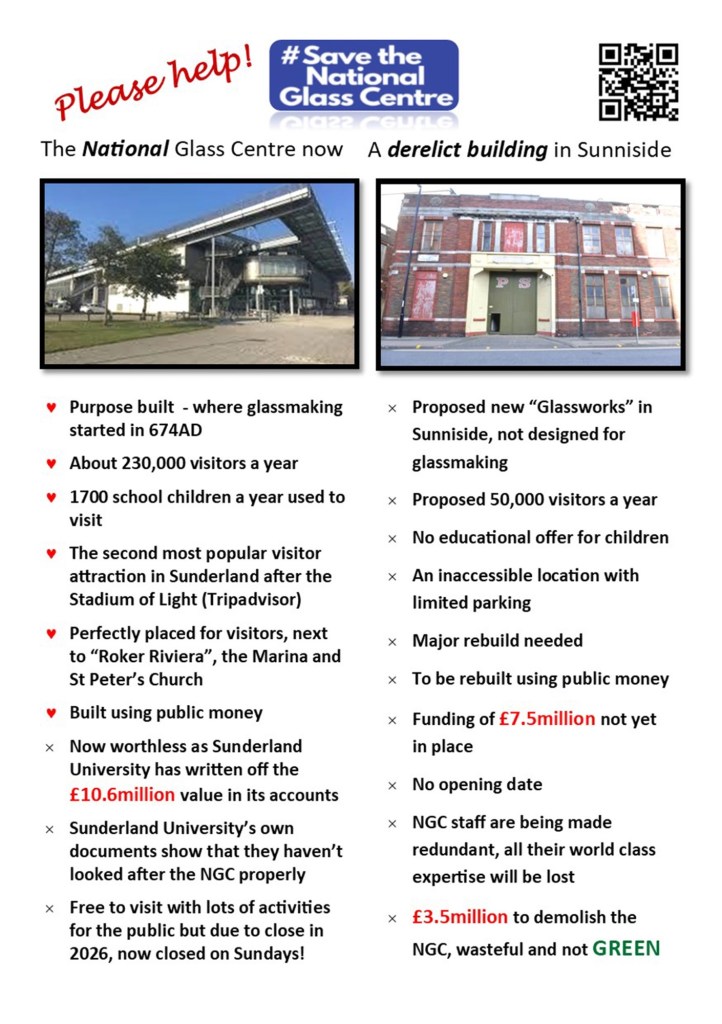
We want to save the National Glass Centre because it has inspired working class people to enjoy art and heritage. It brings 230,000 people a year and we believe it could command even more.
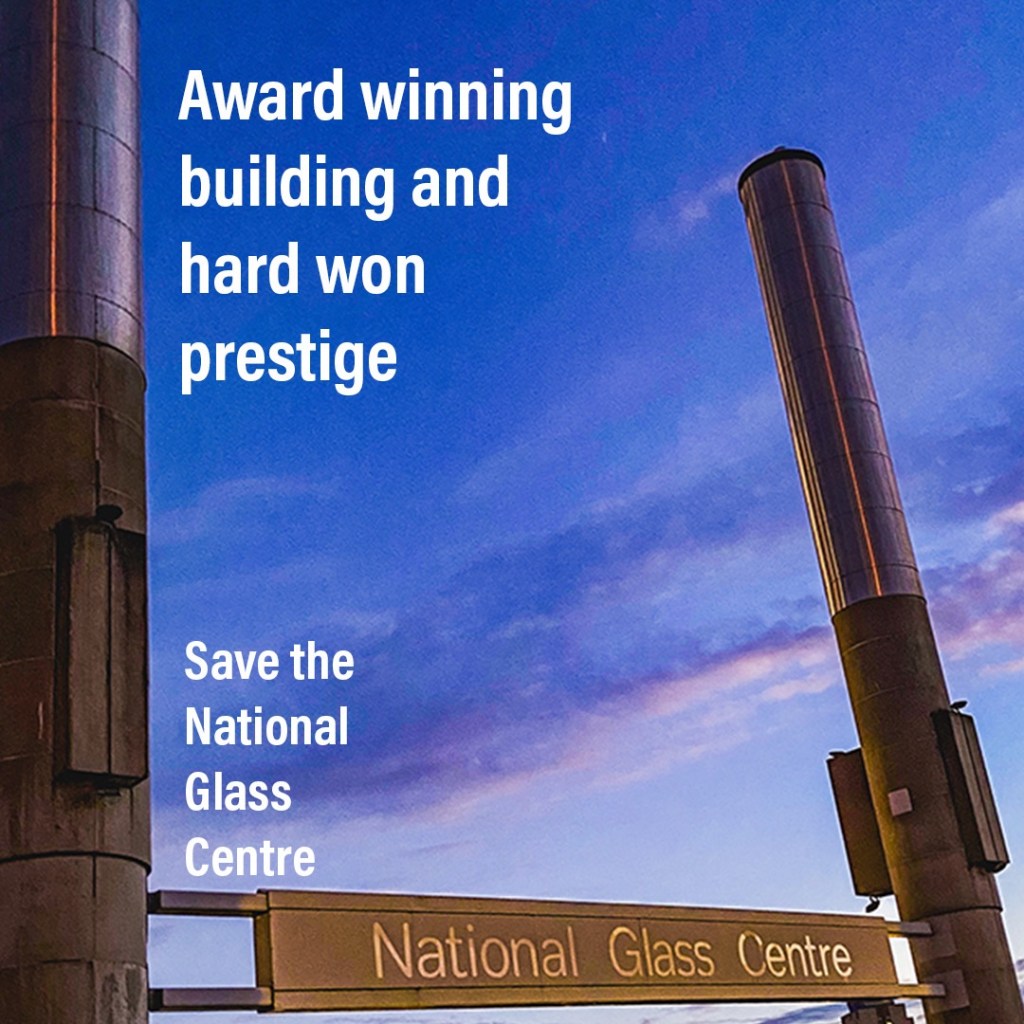
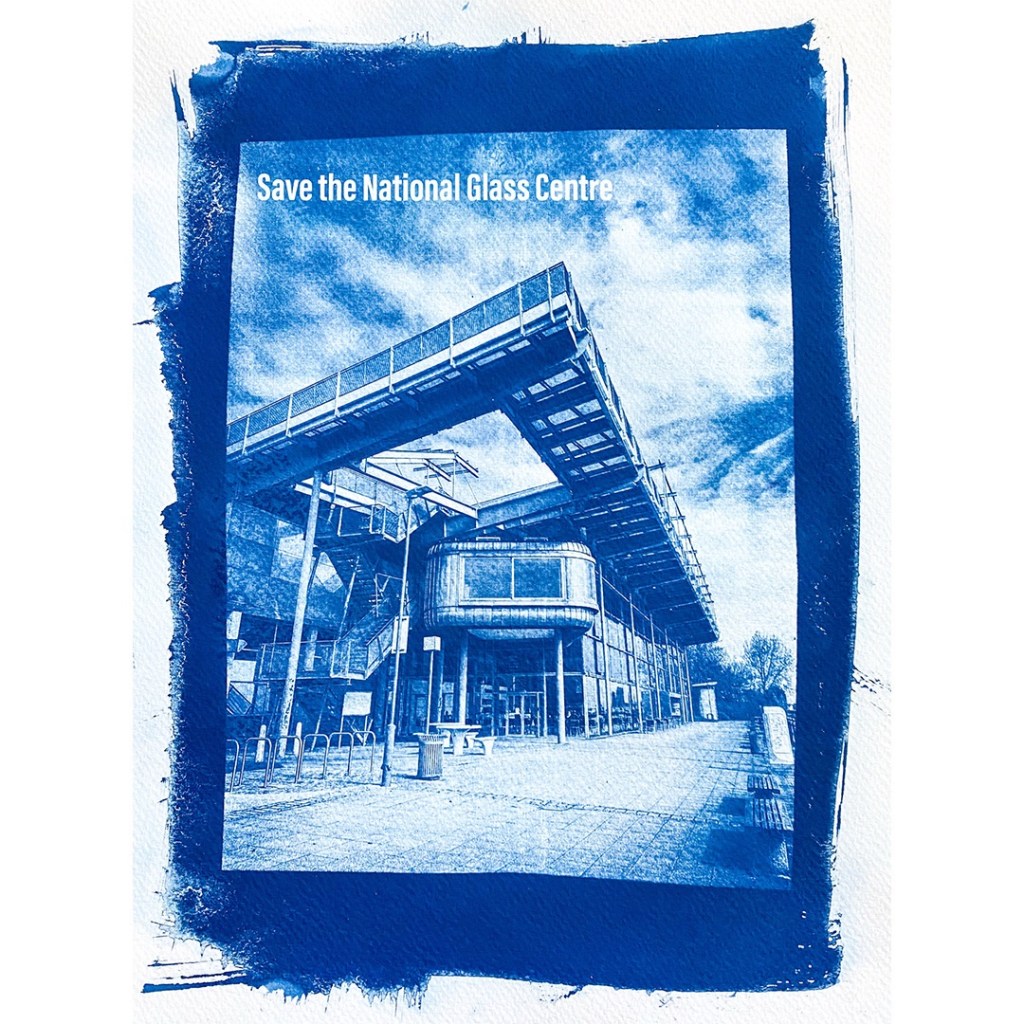
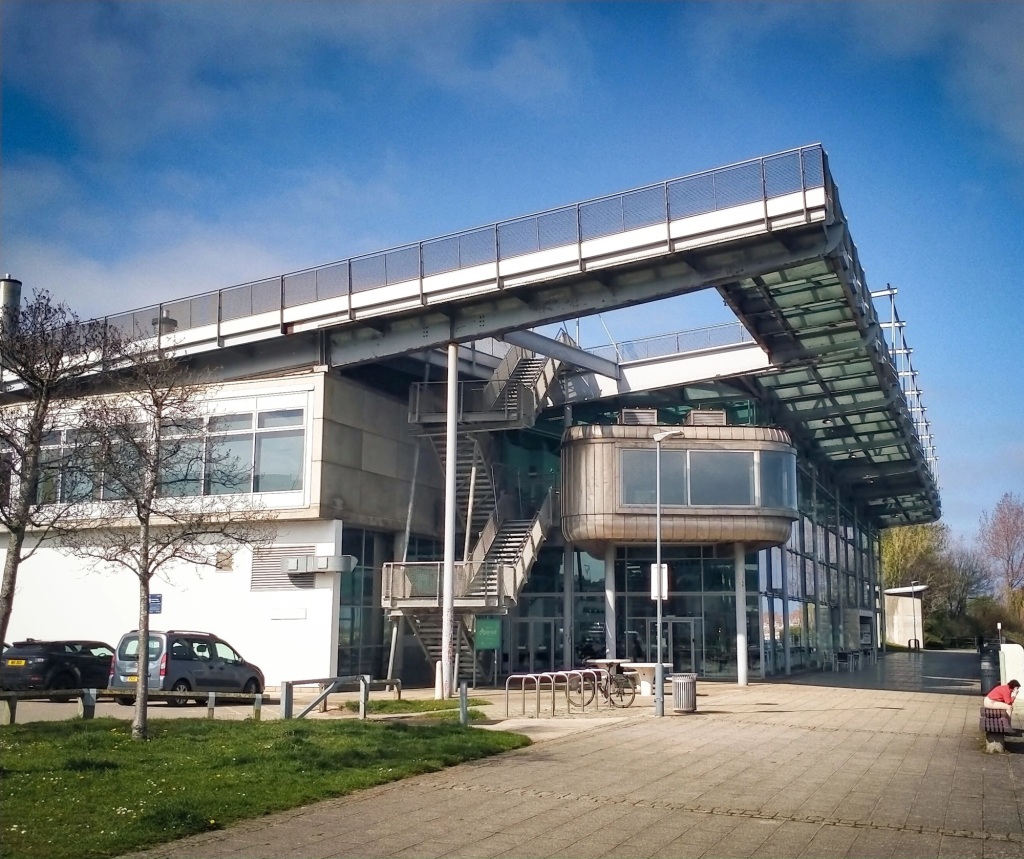
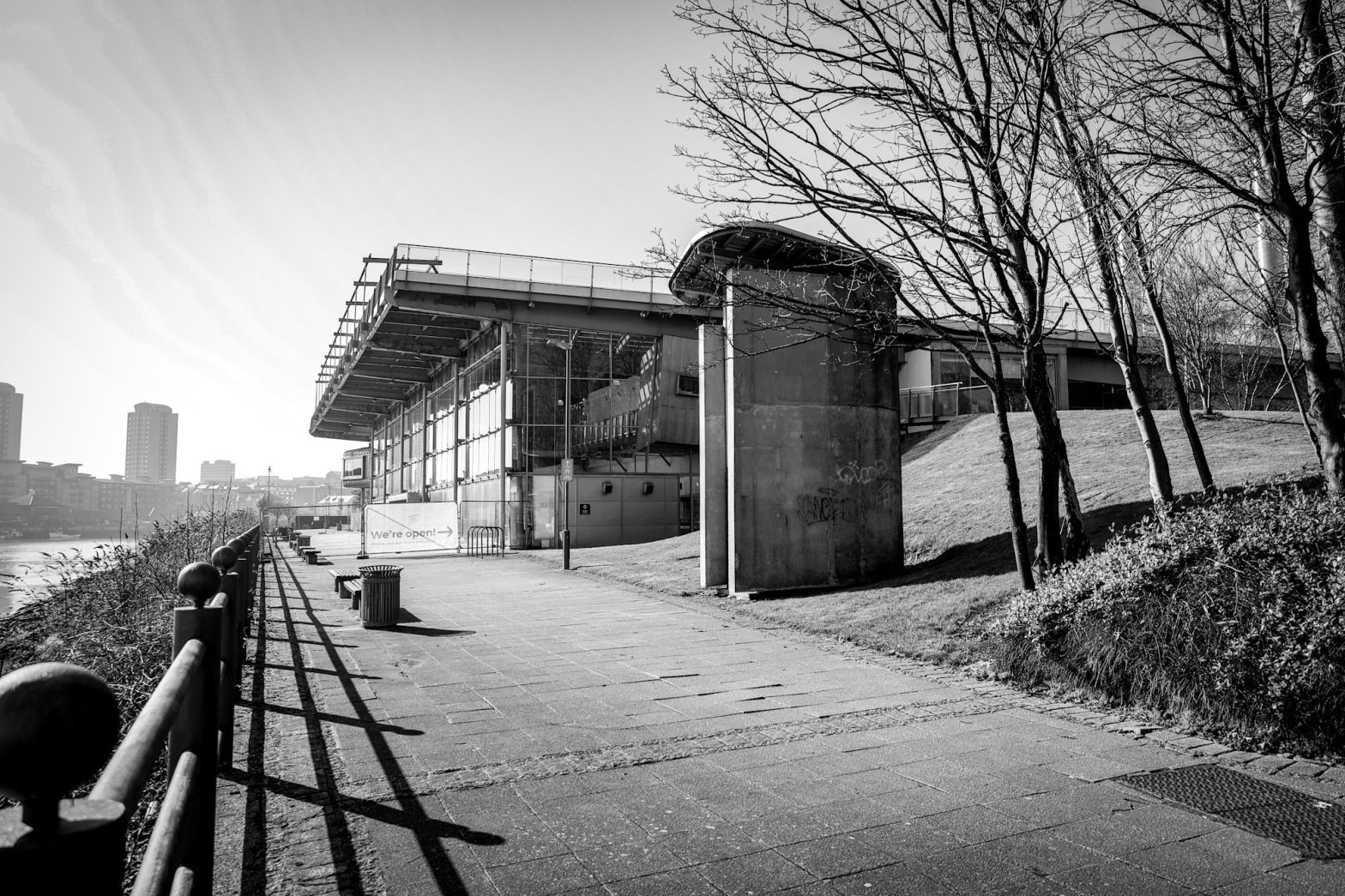
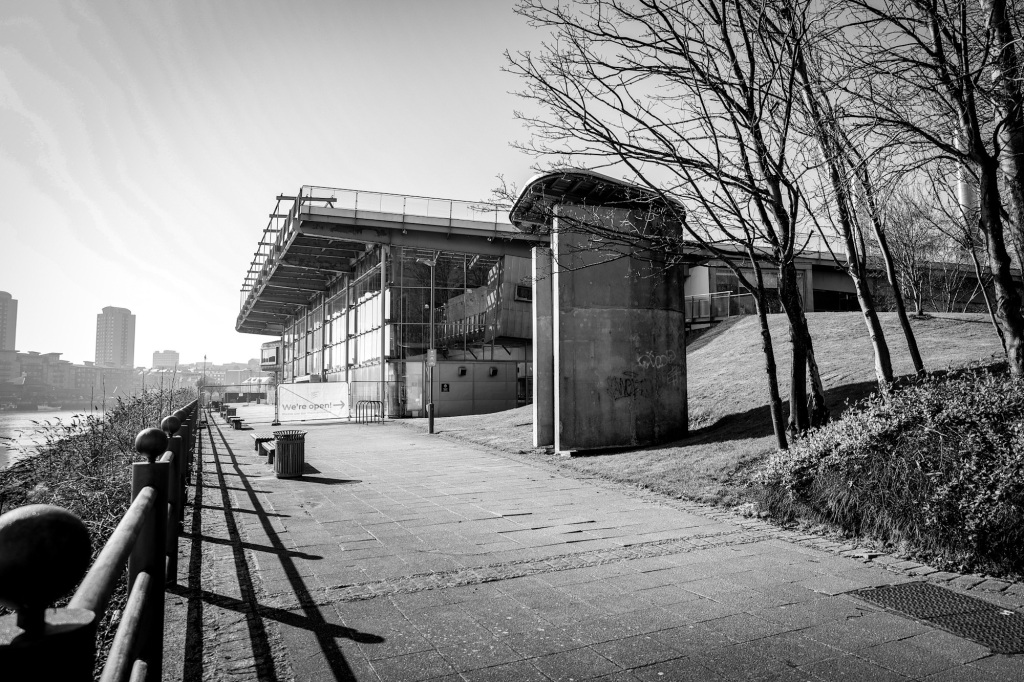
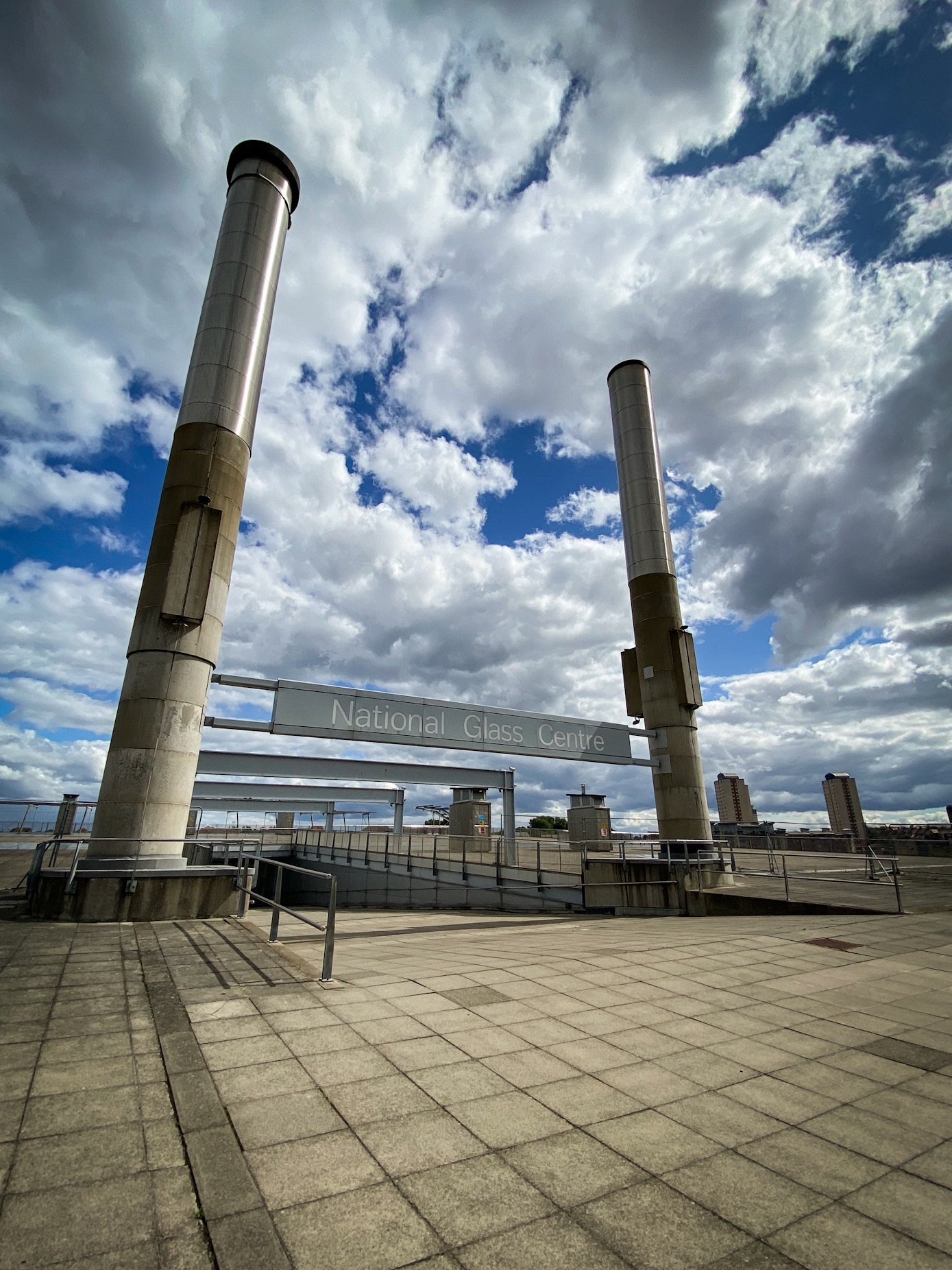
The National glass centre building is an iconic emblem on the riverside. A cathedral of glass. Its cultural wealth and impact upon the surrounding area should not be underestimated.
The prestige of the highly skilled glassmakers has made our city known across the world. It symbolises our rich creative past and could be a flagship of new science or technologies of the future.
This National Glass Centre of ours is uniquely Sunderland. Anywhere can make music. Obviously we’re glad that we make music too but we are about to concede to the destruction of our only internationally facing unique selling point.
Katy Wheeler has put it excellently in the Sunderland Echo read it here:
Meet us at 5pm on May 21st at City Hall in Sunderland. Bring signs!
We need you beautiful people with some hand painted signs to have a visible outpouring of public love for the National Glass Centre.
It won’t be long until the shutdown of the National glass centre begins in earnest. We are running out of time to press this issue with MPs, councillors and everyone who has sway in this City.
The National Glass Centre has over £30 million of taxpayers money invested in it over the years. This is our investment. Our National centre with global appeal.
If you can’t come in person then take your opinions and crowbar them in on every comments section of every post of the Uni and the council. Point out hypocrisies publicly.
And of course share all of our posts!
See you at 5pm on May 21st at City Hall! Bring posters, signs and righteous indignation.
After another shock announcement that the National Glass Centre will close on Sundays from March 16th Save the National Glass Centre Campaign calls for more boots on the ground.
Sign up for updates on how to help the campaign by emailing savethengc@gmail.com with Newsletter in the subject line.
Yet again the offer for locals and visitors is weakening with the University of Sunderland deciding that working families will only be able to enjoy a visit to the “world-class” cultural venue on one day of a usual working week – Saturdays.
Campaigners believe that the university should not have the sole responsibility for deciding the much-loved attraction’s future. They are questioning why Sunderland’s second most popular visitor attraction, after the Stadium of Light, (Tripadvisor) will be closing on Sundays, the second most popular day for visitors (according to Google).
Tenants have been told by email that,
“The decision has been taken by the University of Sunderland to balance the needs of students, staff and visitors to the NGC, with the University’s efforts to ensure the NGC runs as sustainably as possible until the planned closure of the building in July 2026.”
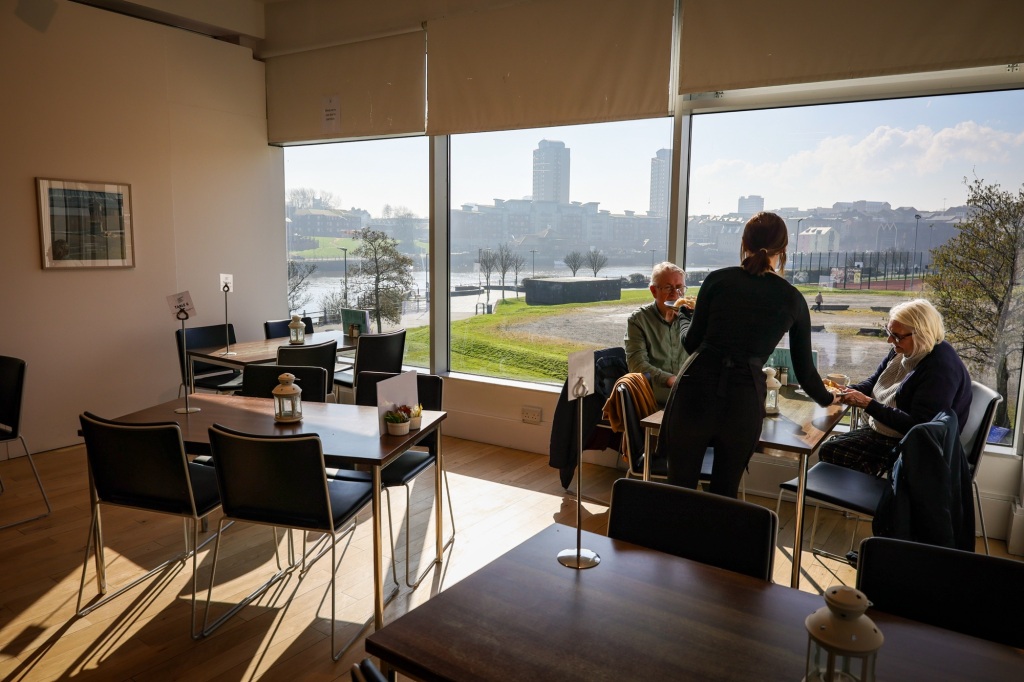
The NGC used to host about 230,000 visitors in a usual year according to Sunderland Culture. People north of the river are worried about what will happen to local businesses such as B&Bs, shops, cafes and pubs if the NGC closes in summer 2026.
A substantial amount of money will need to be raised, and work has barely started on developing a robust business model for the self-sustaining glass making hub. The predicted footfall of 50,000 visitors at Glassworks will make it much harder to afford to employ 16 “creative roles”.
1700 schoolchildren used to visit the NGC annually to learn about the unique heritage of Sunderland and experience the thrill of glassmaking, yet there is no mention of children in the new plan.
If the plan for Glassworks fails to overcome all the challenges, we could be left with nothing!
Campaigners now know through Freedom of Information requests that the university has written off the value of the NGC and NGCA in its accounts, previously the “net book value” was £10.6million (FOI2425/10/16), assets created for the community using a huge amount of public money.
The Chair of the Board of Governors has written that “the land is not of significant value and even that would be largely offset by the cost of removing the building and any potential landscaping” (11.04.24).
The university’s own documents show that the NGC building has not been well maintained, leading to a backlog of repairs. The documents also show that there is a workable solution with build costs of around £6.6million.
Considering all this, campaigners are appealing directly to the university to allow Sunderland City Council to step in and take back full control and return the centre to what it was, a “world-class cultural asset” for the public to enjoy.
In the summer of 2026, the last university students will leave the building. This leaves plenty of space for the important heritage of glassmaking to continue whilst developing an even more enhanced offer for visitors, artists and our future generations by celebrating the religious, industrial and maritime heritage aspects of Sunderland’s proud history.
There are several organisations in Sunderland that could be drawn together under one roof. Never forget that Sunderland was the largest shipbuilding town in the world, that there is a little bit of Sunderland in millions of cupboards around the world in the form of Pyrex dishes, or the memory of Venerable Bede and his creation of the idea of the English as a people. Why can’t our city’s proud heritage be celebrated more?
Whilst The National Glass Centre will probably never beat The Stadium of Light and become the most popular visitor attraction in Sunderland it certainly could continue to enjoy its current second place!
Remember to email us! We are planning something and we need you all to be part of it!
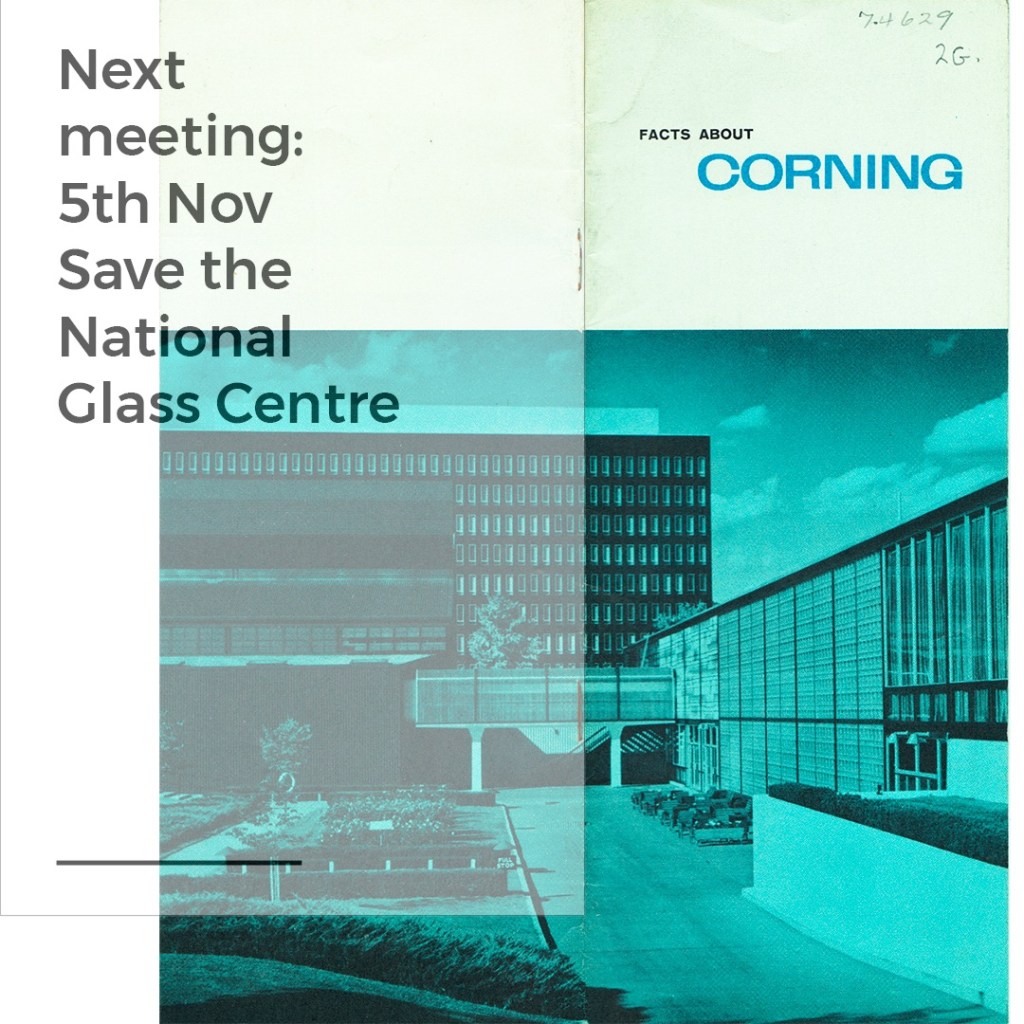
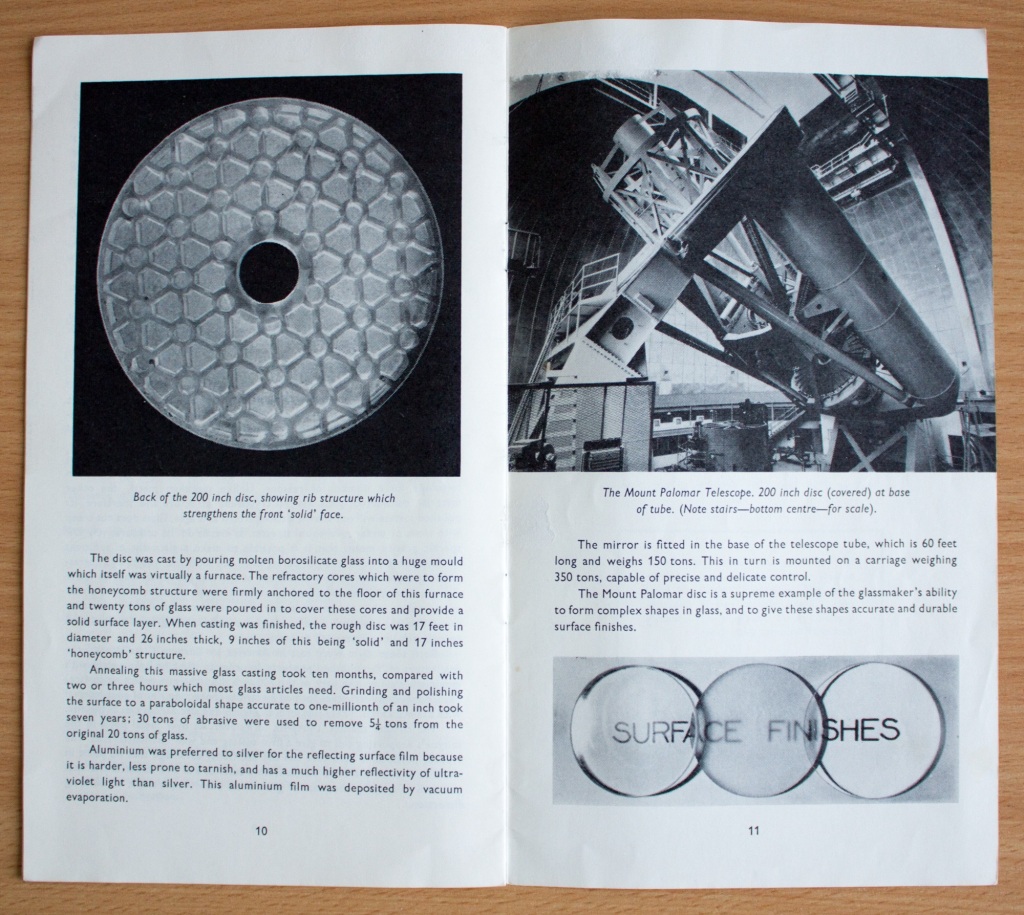
Save the National Glass Centre campaign on historic Corning glass publication
Save our 1350 year glassmaking heritage! First brought to the area to adorn St Peter’s and St Paul’s churches in 674 ad by Benedict Biscop. We have continued with pride and have a unique collection of highly skilled artists who have stayed in the region to make glass. You wouldn’t destroy 1350 years of heritage anywhere else, so why do you think it’s ok to vandalise culture in the North East?
It has now officially been a year since the public meeting in June 2023 when we managed to pull together an A team of people to fight to save the National Glass Centre and all it embodies. I just want to take a moment to thank every single one of you for your ongoing hard work, hope and solidarity. I definitely would not have gotten this far without you all!
Tonight at the meeting we will look at the business plan, talk about Summer Streets, and update everyone about the letter writing campaign.
Next in-person meeting: Tuesday 2nd July 2024 6.30pm to 8pm
At our new venue:
Redby Community Centre, Fulwell Rd, Roker, Sunderland SR6 9QU
10am set up 7.30pm take down we will need some hands to help man the tent and raise awareness for the cause including getting lots of petitions signed!
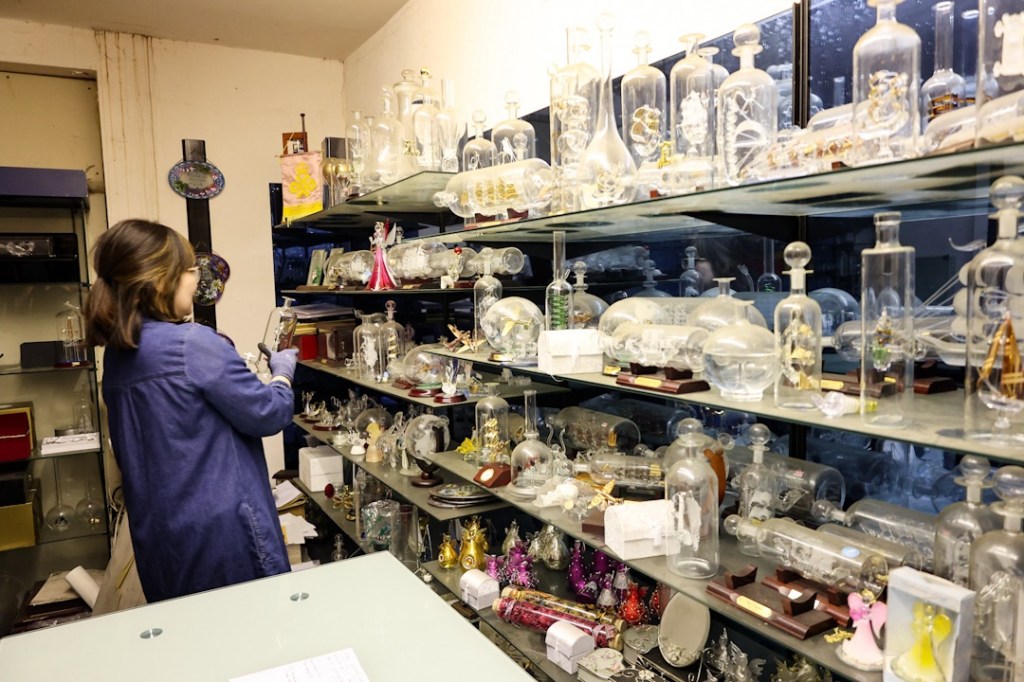
Dive into the history of glass ships in bottles – the changing identity of a post-industrial northern city as told through the eyes of Japanese glass artist Ayako Tani, who is preserving the endangered art of sculpting the hand-crafted glass ships which once put Sunderland on the map.
_____________________________________________________________________ Grow our YouTube by liking the videos and subscribing to the channel
We need you – Save the National Glass Centre
We have put a call out for more people to get involved with the campaign. If you really want to save the National Glass Centre we are going to need more commitment, and people to help. Please share with those who you think can help!
Dive into the history of glass ships in bottles – the changing identity of a post-industrial northern city as told through the eyes of Japanese glass artist Ayako Tani, who is preserving the endangered art of sculpting the hand-crafted glass ships which once put Sunderland on the map.
Following industrial decline in the 1970s and the closure of the Pyrex factory, many of Sunderland’s newly redundant scientific glassblowers turned their talents to giftware, and from the ashes of a former glassblowing empire this new booming practice emerged. But today, scientific glassblowing is considered an endangered craft, and with Sunderland’s own National Glass Centre now facing imminent closure, the art of glass is once again under strain.
After arriving from Tokyo in 2006 to Sunderland, a city famous for its all-but-lost legacies of shipbuilding and glassblowing, Ayako discovered a passion for documenting the history of glass ships in bottles. Vessels of Memory follows Ayako’s journey of discovery, learning from Sunderland’s now mostly retired glassworkers and engineers who once pioneered these ornamental giftware ships sold worldwide.
Ayako was inspired to research and recreate her own glass ships in bottles, and keep the memory of this once booming industry alive. Hear the deconstruction of a glass ship in bottle, as Ayako guides you through experiences that have shaped her journey exploring and learning this fragile, endangered heritage, alongside those who taught and inspired her.
Article written by Nigel Taylor, Chartered Engineer and a Member of the Institution of Civil Engineers. I also have over 40 years experience on large construction projects and was an Operations Director for a tier one national building contractor.
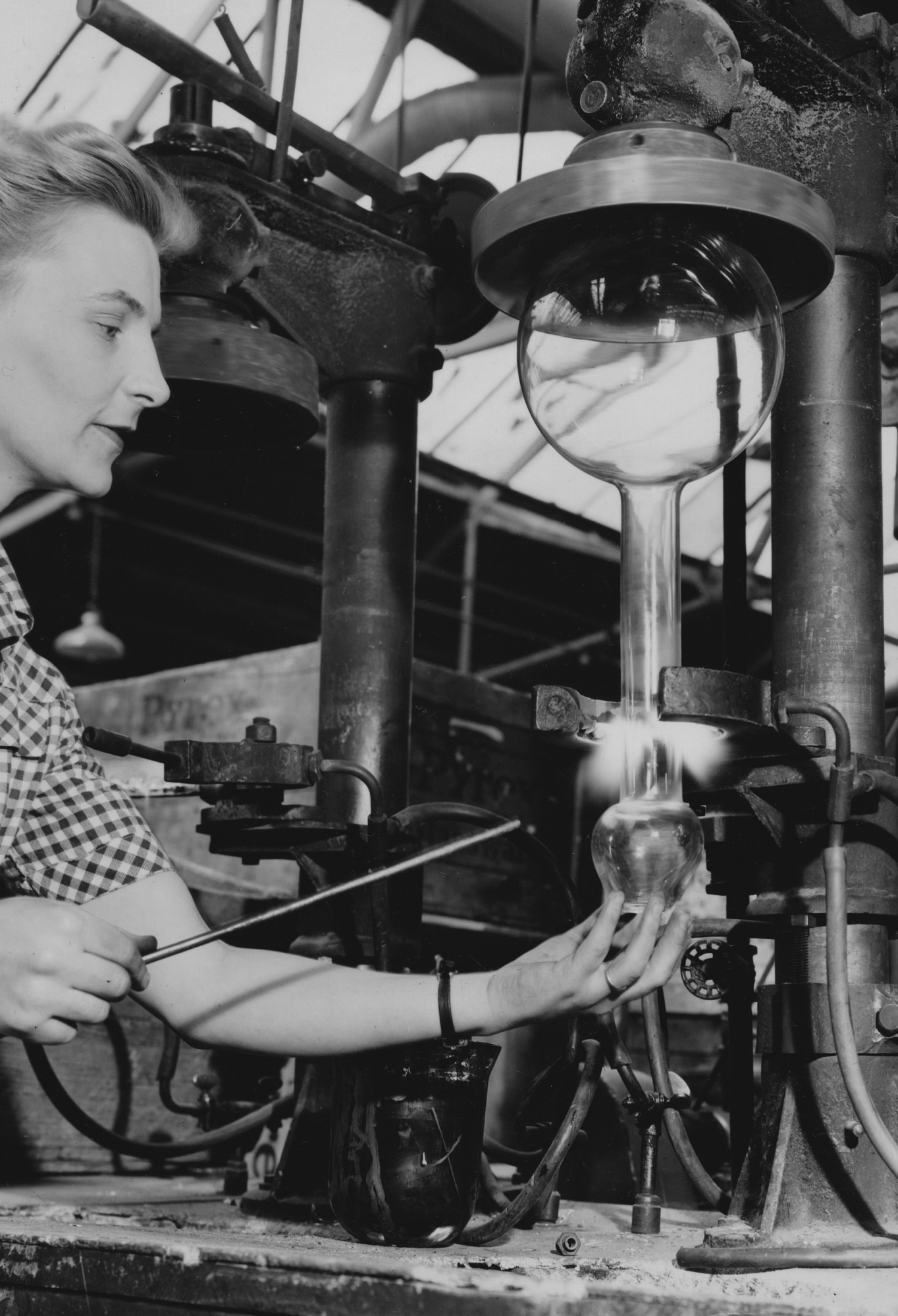
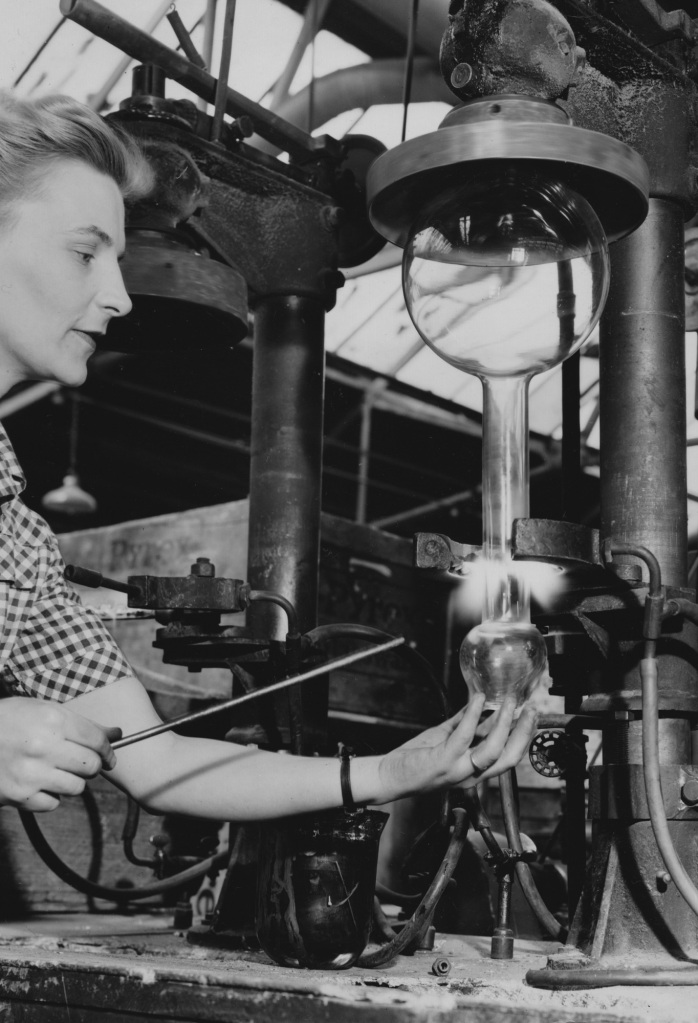
Glass optics circa 1950’s curtesy of Tyne and Wear Archives, Sunderland Museum collection. Pyrex magazine.
Have you heard that the University of Sunderland has decided that one of our City’s landmark buildings, the National Glass Centre (NGC), is to close in 2026?
I am a member of a campaign group set up with the aim of stopping what amounts to vandalism of one of the City’s cultural assets and visitor attractions. Would you like to support the campaign to keep glassmaking alive on the River Wear? We would love more residents of Sunderland, Washington and the coalfields to get involved, along with any other friends and family far and wide who believe that the decision by the University is short sighted and against the wishes of the vast majority of the people of the area.
The NGC was opened by Prince (now King) Charles in October, 1998. Sunderland was chosen as the preferred site, due to our long history in glassmaking. Indeed, this year, sees the 1350th anniversary of Benedict Biscop bringing craftsmen from Europe to start making glass on the banks of the Wear at St Peter’s Church.
1350 years of glassmaking on Wearside
Over the years, glass making grew as an industry. Sunderland glass developed a worldwide reputation and, by 1860, more than 1,000 glass makers were employed in the area working in more than 20 companies.
Most of us will have some glassware made in Sunderland in our cupboards. Who hasn’t got the odd Pyrex bowl, plate, or casserole dish, which often has been passed down through the generations. These were all manufactured on Wearside by Jobling, the glassmakers. Some of the designs are quite valuable now, so hang on to these prized possessions.
The NGC itself is not only a place for local glassmakers and artists to showcase their innovative designs, but is alsokeeping the tradition of glassblowing alive for new generations to see. Many of you may have been on one of the short, day courses to make a Christmas bauble, paperweight, or tile, and have felt the satisfaction, as I have, of creating something unique and beautiful. I am reminded of this every year when the Christmas decorations come out and I see the bauble I made some years ago, with a lot of help from one of the excellent craftsmen employed within the NGC. All of this will be lost if the NGC closes.
Pyrex science department circa 1950’s curtesy of Tyne and Wear Archives, Sunderland Museum collection. Photograph by Leslie Bryce.
This area’s cultural heritage has already been decimated over recent years with the loss of the mining and shipbuilding industries. Are we prepared to let people from outside of the area now running the University of Sunderland make arbitrary decisions without proper consultation and without fully understanding the impact this will have on the local community?
Local children will lose the experience of seeing the traditional skills, for which Sunderland was once famous; school trips to the NGC were often a high point of a school year. Local history is made more real by experiencing an activity, rather than reading about it in a book. Can we afford to lose this important landmark for ever?
Over the years, the NGC has evolved into more than just a museum or workshop space—it has become a cultural landmark and a symbol of Sunderland’s regeneration. It has attracted many visitors to the region from all over the world, which helps the local economy. Glass artists who have studied at the NGC have gone on to receive worldwide acclaim for their work and even now sing the praises of where their journey started, in Sunderland.
Pyrex science department circa 1950’s curtesy of Tyne and Wear Archives, Sunderland Museum collection. Photograph by Leslie Bryce.
Our group has been set up to try to prevent this closure. We meet regularly and have set up a petition which already has over 32,000 signatures, a website and a blog, to keep people up to date with the campaign. You are all welcome at the monthly meetings
If you are as affronted as us by the impending closure, pleasesign the petition and add your weight to the cause.
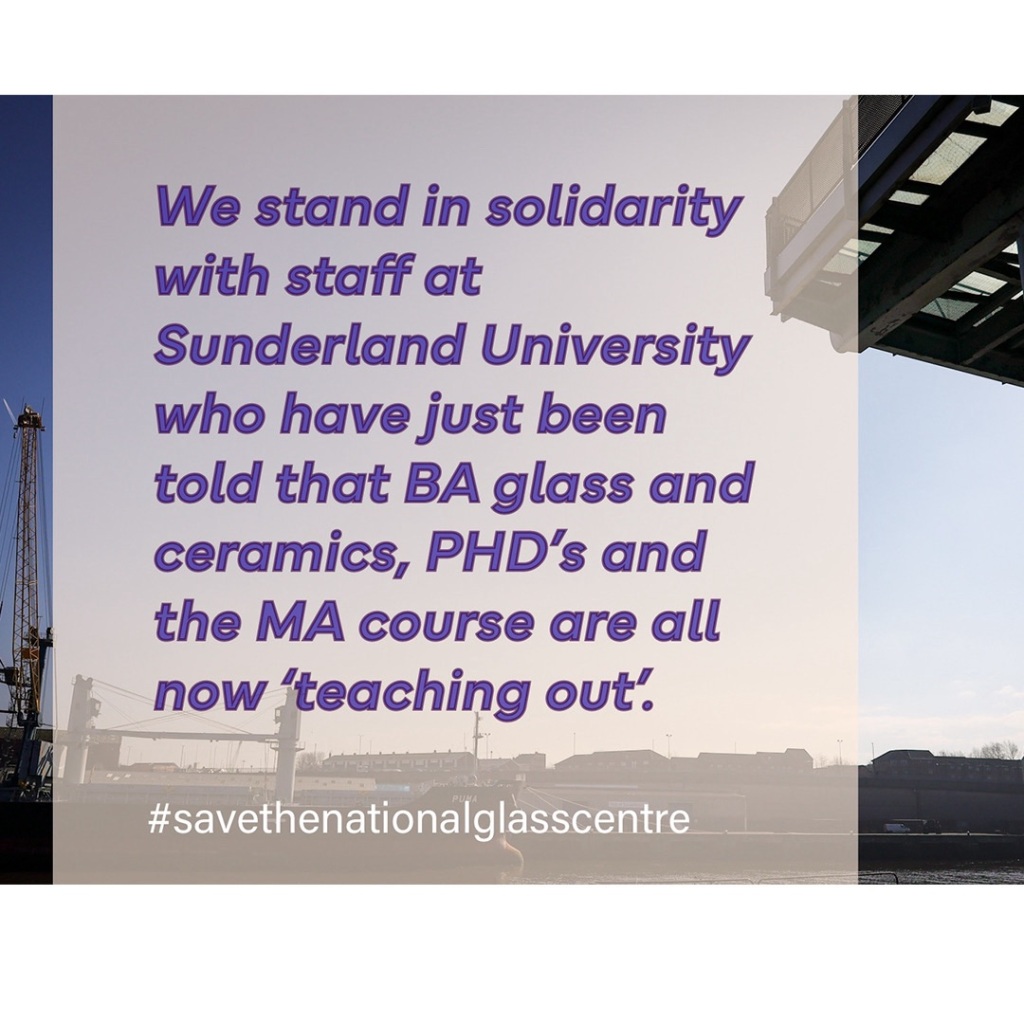
Save the National Glass Centre campaign fully supports any action the unions or the workers wish to take. Solidarity!
We stand in solidarity with all of the staff and students. We are distraught to hear that like a thief in the night Sunderland University is taking away our glass and ceramic courses leading to inevitable loss of highly skilled staff, valued teachers and of course eventually the building itself. Filling their boots with Sunderland’s heritage and the future of glass making in the North East.
By Jo Howell Sunderland based photographic artist and save the National glass centre activist
Save the National Glass Centre needs you to share the petition!
2024 marks 1350 years of glass making on the banks of the river Wear. A humongous triumph to be celebrated.
Yet there is silence.
The cathedral for glass is no longer permitted to shine with pride. This is a great tragedy that we have the power to stop.
Glass heritage on the river Wear, St Peter’s
We need radical change. Right now. To stop the cultural vandalism that is going to be inflicted on Sunderland. The City builds towards net zero and digital infrastructure whilst denying the people their authentic cultural identity.
Now is not the time to divest in our unique skills and throw away more than a millennium of prestige. As we move away from plastic towards sustainability we need to be investigating the potential of glass in future technologies.
The City is enjoying success for the local film industry after the chancellors budget announcement allows for the Crown Studios to go ahead. It seems crass to allow the decline and disappearance of a unique building with such specialist artisans inside. Let me propose a UK blown away! Let me suggest that we may need glass for props in period dramas and science fiction productions.
The National Glass Centre 2024
We are a City of scientists, artists, engineers and innovators. Let’s innovate and not capitulate ❤️
Our campaign is still here and we think it’s time to supercharge it to maximum effect. Whilst we are extremely proud and grateful for every single one of you. That’s 33,000 inclusive of our local paper based petition. We want 100,000 of you on board so we can take this to government level.
I know you all agree to the vital part that the National Glass Centre has played in all of your lives is worth saving. Whether you live in one of the 78 signing countries, or right on the doorstep this legacy means something to all of you.
Please get sharing across social media ❤️ the longer we wait the harder the fight will be. Let’s get a wriggle on!
All our heartfelt thanks from everyone at
Save the National Glass Centre campaign
If you can help further please email us. We are calling all hands on deck ❤️
2024 has arrived and we need committed people to help!
By Jo Howell
Save the National Glass Centre Campaign
As a campaign that is run entirely by volunteers from the community, and in fact from further afield, we have achieved a lot in a year.
The public meeting way back in June 2023, was well attended, and we have had a regular core group of 5 who have attended meetings on zoom and in person, and a regular in-person group of between 8 and 12.
Everyone has come to the campaign with various different backgrounds, talents, and strengths.
We are looking for some extra people to commit to our monthly zoom meetings.
We need some help digitally to ease the workload for those who have already given so much.
Do you want to help Save the National Glass Centre? Can you commit to regular attendance, and a voluntary workload?
We need the following skills:
Social media marketing – regular updates across all platforms twice weekly
Proficiency with google drive, google docs, spreadsheets, digital literacy.
Minutes and record keeping – weekly online and in-person once a month. Including meeting agendas, invites, and meeting reports.
Organisation – updating the team, events, excellent filing skills, coordination of different tasks across the team.
Data management – properly filed, and stored with data protection regulations met.
Research – archive, public data, personal stories, heritage, social equity, local economy, wider cultural landscape.
Letter writing – MPs, newspapers, governors, funders, heritage bodies, etc
Emailing newsletters – monthly newsletters with up to date info, fresh photographs, exciting and inviting, easy to read.
Blog and website management
YouTube and moving image content creators
Also in the coming months we are going to need:
Fundraisers, accountants, finance officers, policy writers and similar.
Please email Jo Howell with details of which area you can commit to help with.
You will need to have availability to attend for 1 hour Zoom meetings currently every Friday evening at 6pm, and in-person meetings are the 3rd Thursday of every month, 6pm at the Queen Vic Hotel in Roker, Sunderland.
We do have some excellent writers, photographers, industry professionals, and glass artists on board.
The second year of our campaign is going to have to raise the bar, and we need you to help.
Email: savethengc@gmail.com Include which area you are interested in helping us with, and a short paragraph about your experience.
Read through our website and blog, and share this with anyone you think could be a good fit for the campaign.
Thank you!
All the best
Jo Howell
And everyone working in the Save the National Glass Centre Campaign
Professional children’s, and mental health writer, gives us a brief history of glass, and its legacy in Sunderland.
This is the story of how a wealthy nobleman, a lord in the court of a Northumbrian King, became a man of religion, innovation and patron of the arts, bringing glassmaking to Wearside.
I am talking of course about Biscop Baducing, who lived in the North East of England in the 7th century, and first started his career at the court of King Oswiu of Northumbria. Biscopwas such a brave and dedicated member of court that, on his decision to devote his life to religious study, he was gifted 70 hides of land, by Ecgfrith, who had succeeded Oswiu, on which the monastery of St Peter, Wearmouth was built, with its associated church. The church was consecrated in 675AD and Biscop, who now adopted the name, Benedict, became its first abbot, leaving his old life, and indeed his marriage, behind.
The church and monastery at Wearmouth were unusual for the time, built, as they were, of stone. Most buildings in the North East, at that time, were of wooden construction; but this was not enough for the well-travelled Biscop.
St Peter’s church and monk, illustrated by Jo Howell
Being a physically fit, as well as devout man, Biscop made the pilgrimage to Rome, on foot, five times in his life. He also visited Gaul, now modern day France. It is said that he marvelled at the stained-glass windows in the European churches he saw on his travels and loved fine art. He must also have been quite persuasive, as, on each journey, he not only brought back books, icons and relics, but also stonemasons and glassmakers from the balmy Mediterranean climate, to the windswept coast of North East England.
It was during one such trip in 675 AD that Biscop crossed paths with a gifted French glassmaker, and persuaded him to come to Britain and pass on the rare knowledge of glassmaking. He brought back a shipment of key raw materials – quality beach sand, essential salts and mineral soda ash. Now glassmaking could start in earnest. This was not only for making beautiful items for the church; this was the start of a glassmaking legacy on the Wear, that would continue for more than 1300 years.
The glassmaker showed the monks how to use beach pebbles to raise the temperature high enough to fuel the newly-built furnaces. A ‘secret ingredient’, Gaulish dust, was used to diffuse the bright coloured glass. Soon, not only windows, but tableware, vases, flasks and tiles were being produced in Wearmouth, whilst training local monks in these skills.Previously, glass goods would have had to be transported to England carefully by ship – a very delicate process. Now glass could be made on the banks of the Wear – and in colour too! It must have been awe-inspiring for the small population who lived near the monastery, to see this innovation of stone and glass take shape.
By the time of Biscop’s death in 689 AD, glassmaking was firmly established on Wearside and the practice had spread to St Peter’s sister monastery at Jarrow. This small town, which eventually became the City of Sunderland, had started a revolution in glass. Over the following centuries, Sunderland became famed for its wares, from bottles to high class dinner services; with many factories setting up home here, during the industrial revolution, such as world-renowned glassmakers,Hartley-Woods, and, later, the famous Pyrex ware wasmanufactured here, by James Jobling, from the early 20thcentury.
St Peter’s Church on Instax wide, photograph by Jo Howell
It seemed natural, therefore, for Sunderland to house the National Glass Centre (NGC), which was opened by Prince, now King, Charles, in 1998, and is a popular, free to access, tourist attraction. Currently a home for independent glass artists, the NGC is both a working glassmaking centre, and the provider of a wider exhibition space. Visitors have the opportunity to see traditional glassblowing, or to take part in workshops to create their own glass objects, at a reasonable cost. These courses are always in high demand.
Sadly, the building, which is now owned by the University of Sunderland, is under threat of fairly imminent closure. If this venue disappears, the mighty fire of the furnaces, first ignited by Biscop, 1300 years ago, will be extinguished on Wearside, possibly forever. A campaign group has been set up with the intention of preserving this Centre and support is gathering momentum.
If you would like to read more about the NGC and how supporters are campaigning to save the venue, please sign the petition! And if you would like to get involved with the campaign email us at:


















 Save the National Glass Centre