thanks for your support. On Wednesday, 25th March, Sunderland City Council will debate a motion which could help to pause demolition and save the National Glass Centre. If you still feel strongly about this, please could you write to your local councillors and MP to express your concerns. This will help the campaign enormously. If you live in Sunderland, consider attending the council meeting in person (4pm at City Hall, Sunderland) to show the strength of public feeling.
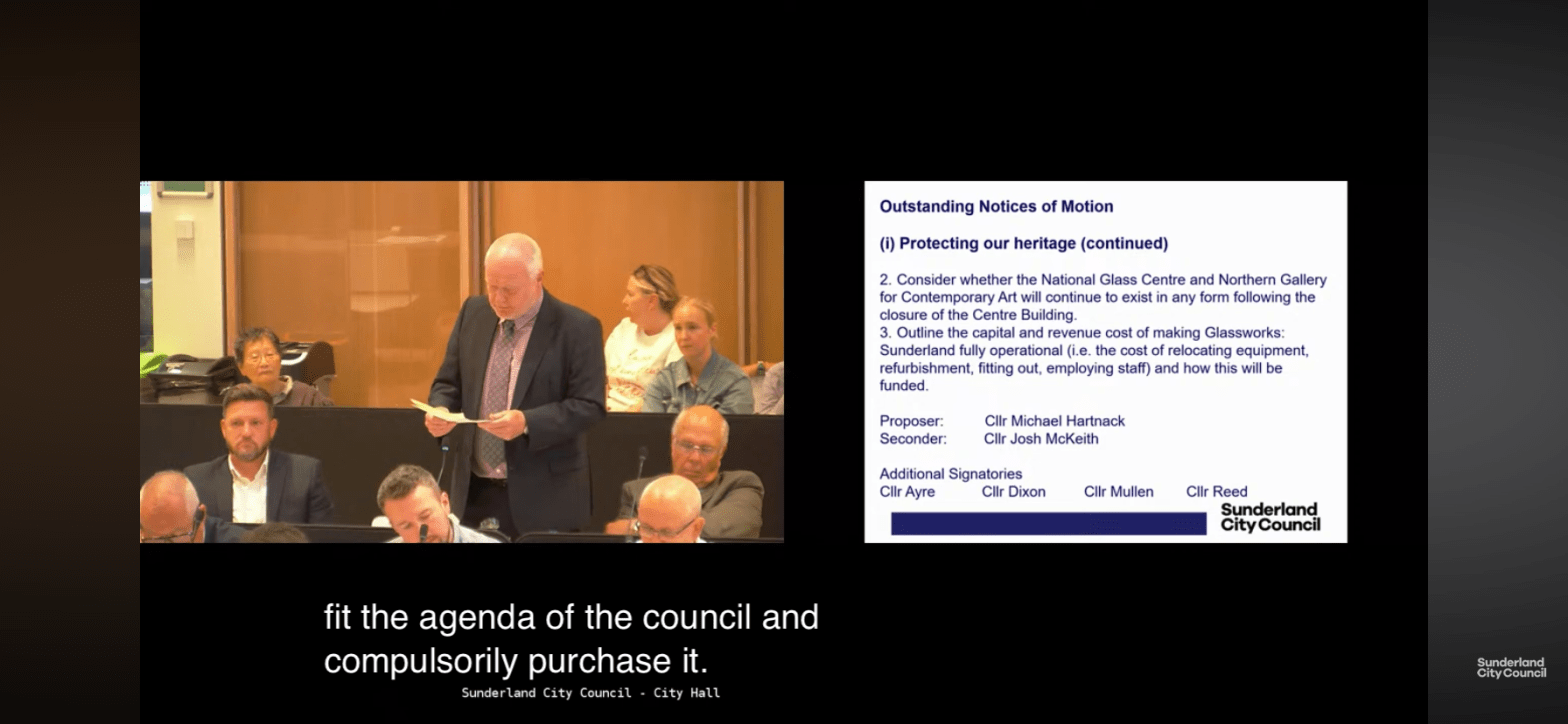
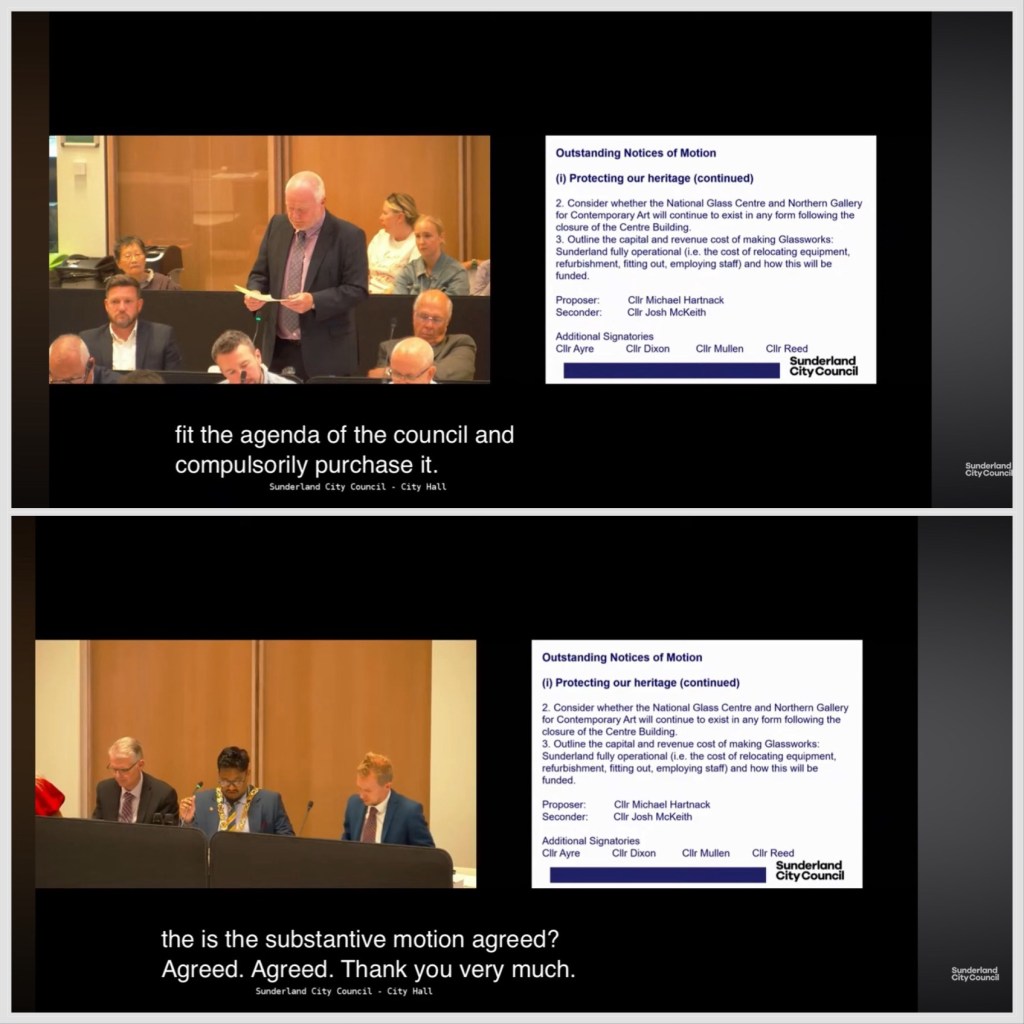
After a remarkable council meeting I thought I’d share some highlights. Cross party support for the motion requesting a more robust look at the presented documents from Sunderland University regarding the National Glass Centre and a call for compulsory purchase.
Labour representatives were reading from carefully considered scripts to spin the narrative towards Glassworks Sunderland whilst patronising us by suggesting we are ‘romanticising heritage’.
This is OUR CULTURE. This is our future. That’s why the fight will continue until common sense prevails. As proud working class people we cannot allow this top down dictatorship. We deserve our NATIONAL Glass centre. Not empty promises.
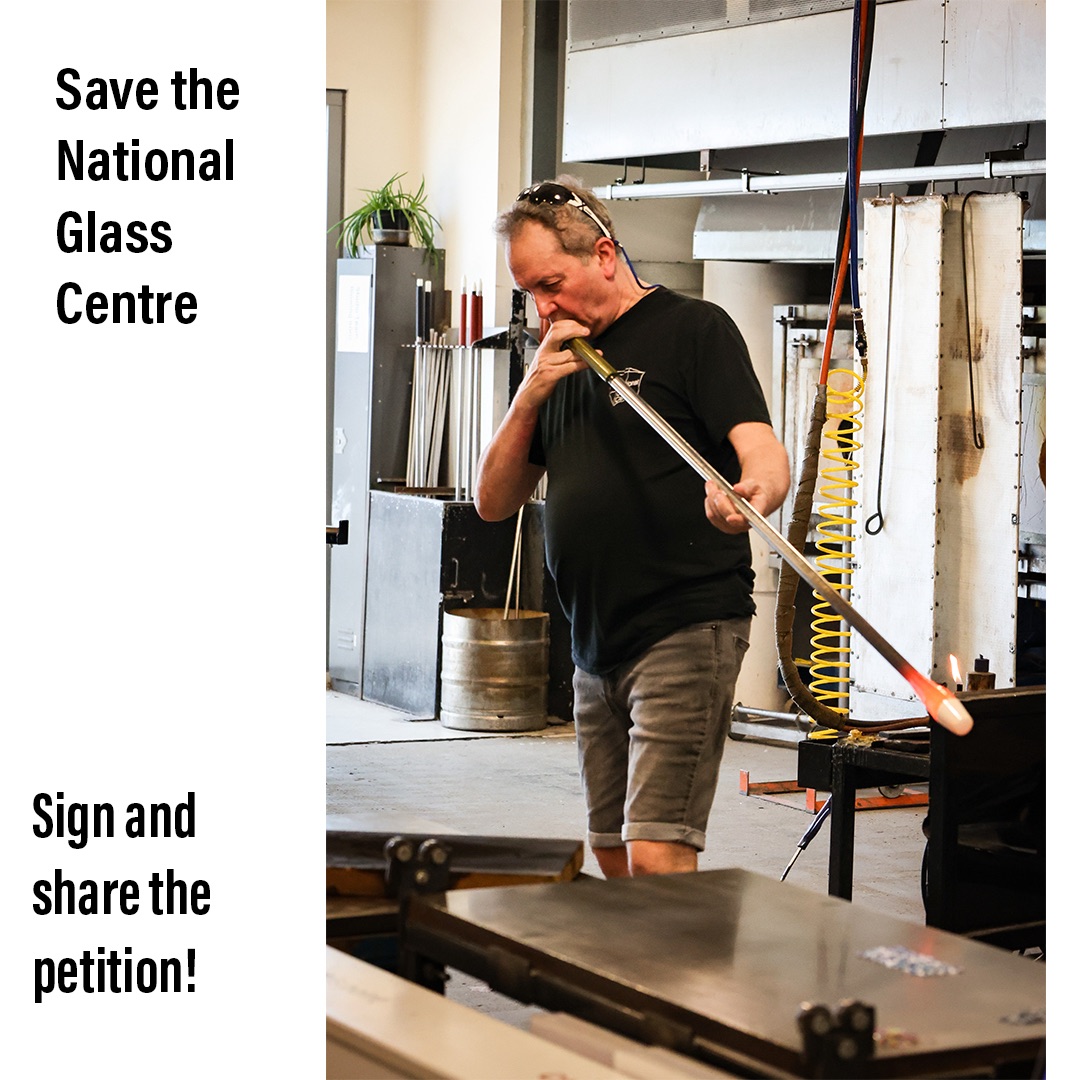
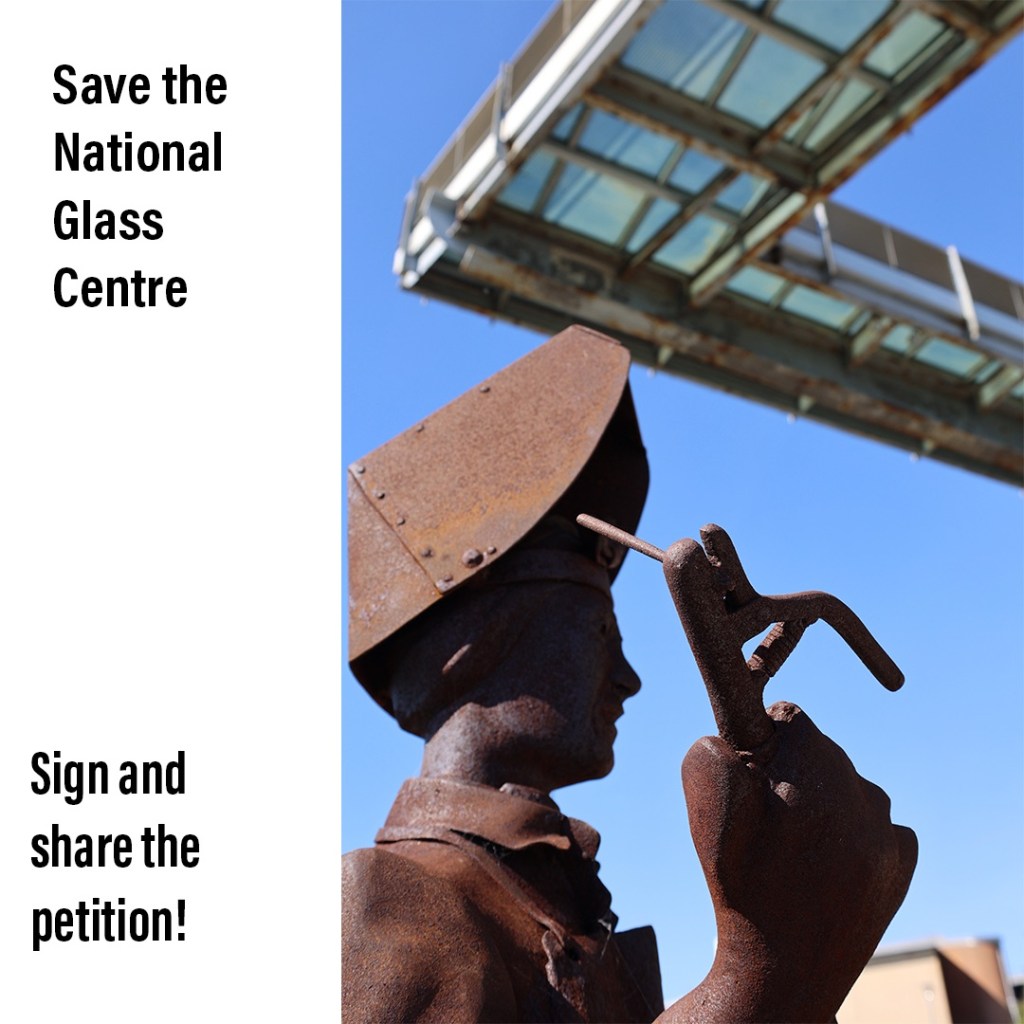
Save the National Glass Centre photograph by Jo Howell
You are invited to…
Sunderland City Council Meeting
At 4.00pm in City Hall, Sunderland on 25th June 2025
To witness the debate deciding if the Council will pass the Motion below and start the process of investigating the actions of the University of Sunderland regarding the decision to close the NGC, thereby ending 1350 years of glassmaking in Sunderland.
The Council Meeting is open for the public to attend, please come and show your support for the Campaign to Save the National Glass Centre.
Or follow the live stream of the Meeting at…
Notice of Motion – Protecting our heritage
This Council regrets the decision taken by the University of Sunderland to close the National Glass Centre in 2026.
Preserving Sunderland’s glassmaking heritage is vital to the city’s cultural offer as well as the Council’s economic growth ambitions.
The University has taken this decision due to what it claims are unaffordable repair costs and sustained operating losses. Council expresses concern regarding the accuracy of the cost estimates so far presented.
Council therefore resolves that the Chief Executive will write to the University’s Vice Chancellor with the following questions:
1. What is the scale of the Centre’s operating loss in the current financial year and the preceding 5 years?
2. Do those losses reflect the cost incurred when structural changes were made to the Centre’s main façade in 3. 4. 2022?
3. How does the University account for the Centre’s income and expenditure?
4. Will the University release all documents relating to its ownership of the Centre and confirm whether that ownership is subject to any restrictions?
The proposal to establish an alternative glassmaking provision in Sunniside in 2027-28, known as Glassworks: Sunderland, fails to address the loss of expertise caused by the Centre’s closure, ignores the economic implications for the surrounding area, and is itself only partially costed.
Council further resolves that the Chief Executive will prepare a detailed report, to be made public within 6 weeks, with the following terms of reference:
Fully explain the proposed ownership structure of Glassworks: Sunderland.
Consider whether the National Glass Centre and Northern Gallery for Contemporary Art will continue to exist in any form following the closure of the Centre Building.
Outline the capital and revenue cost of making Glassworks: Sunderland fully operational (i.e. the cost of relocating equipment, refurbishment, fitting out, employing staff) and how this will be funded.
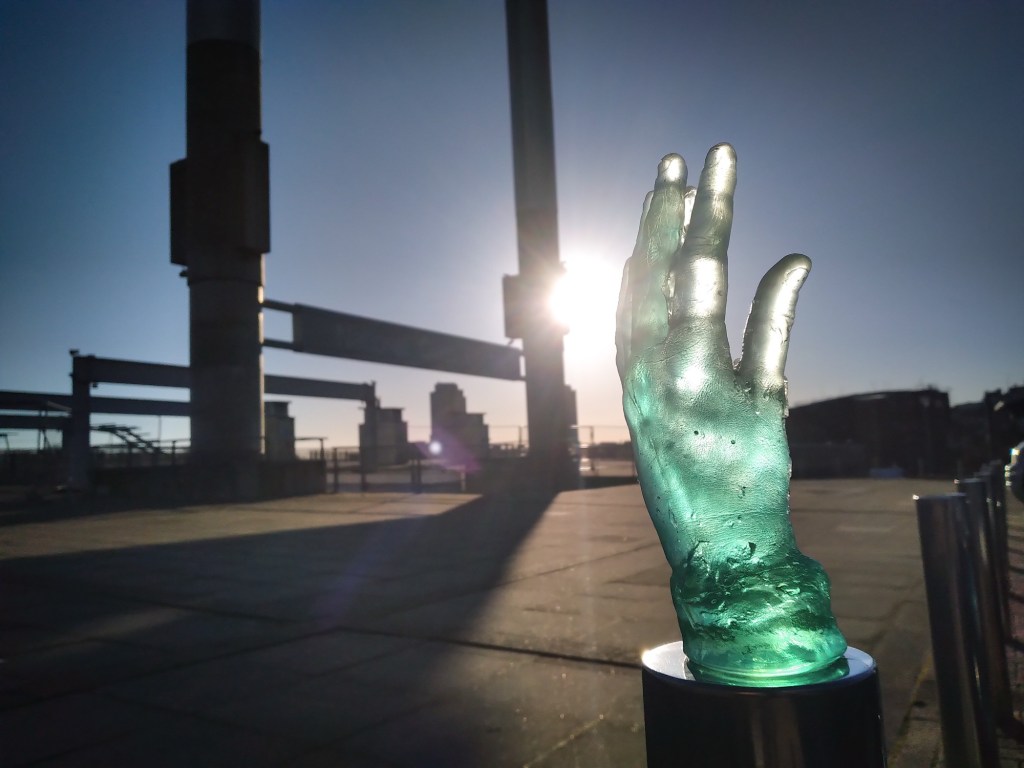
Save the National Glass Centre photograph by Gill Helps
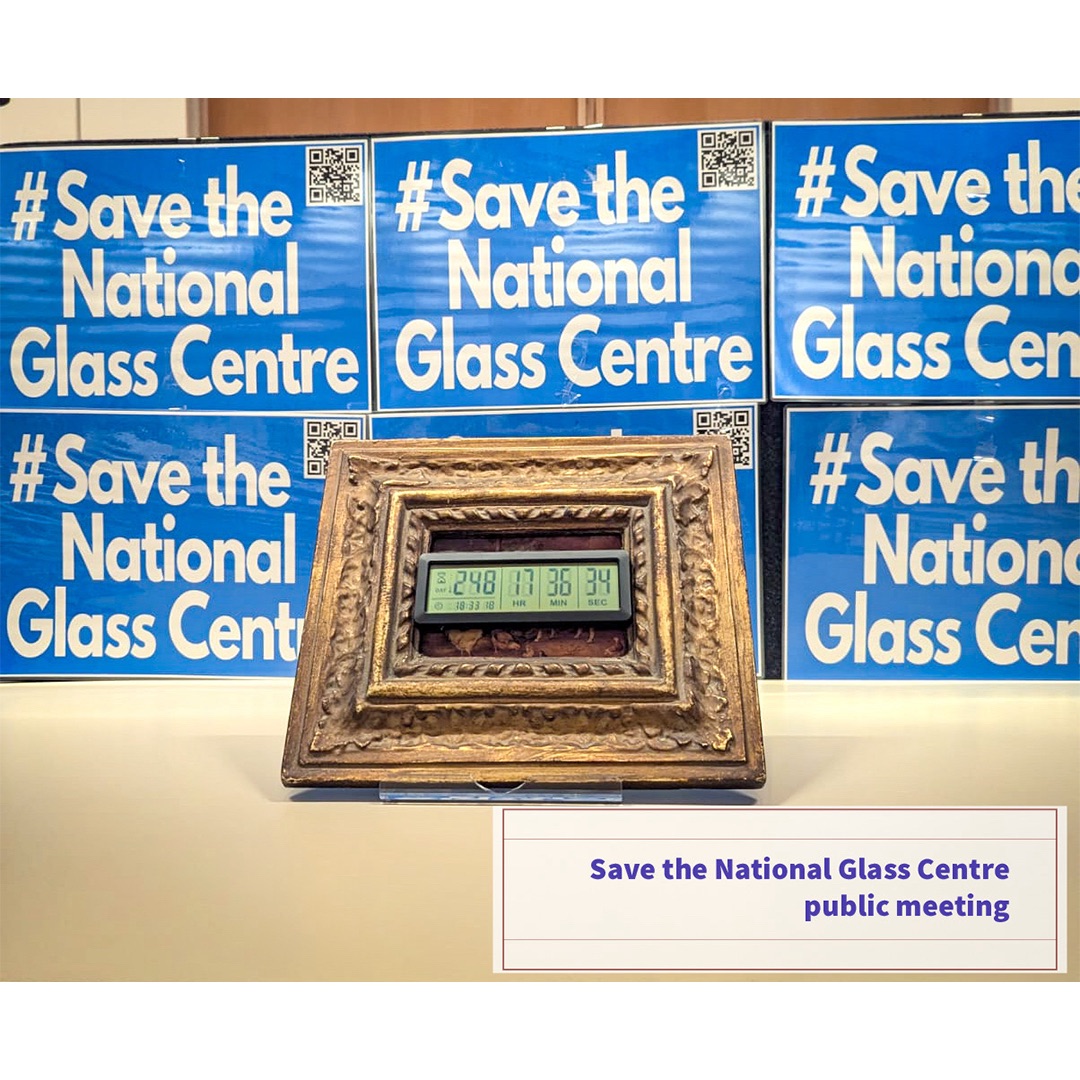
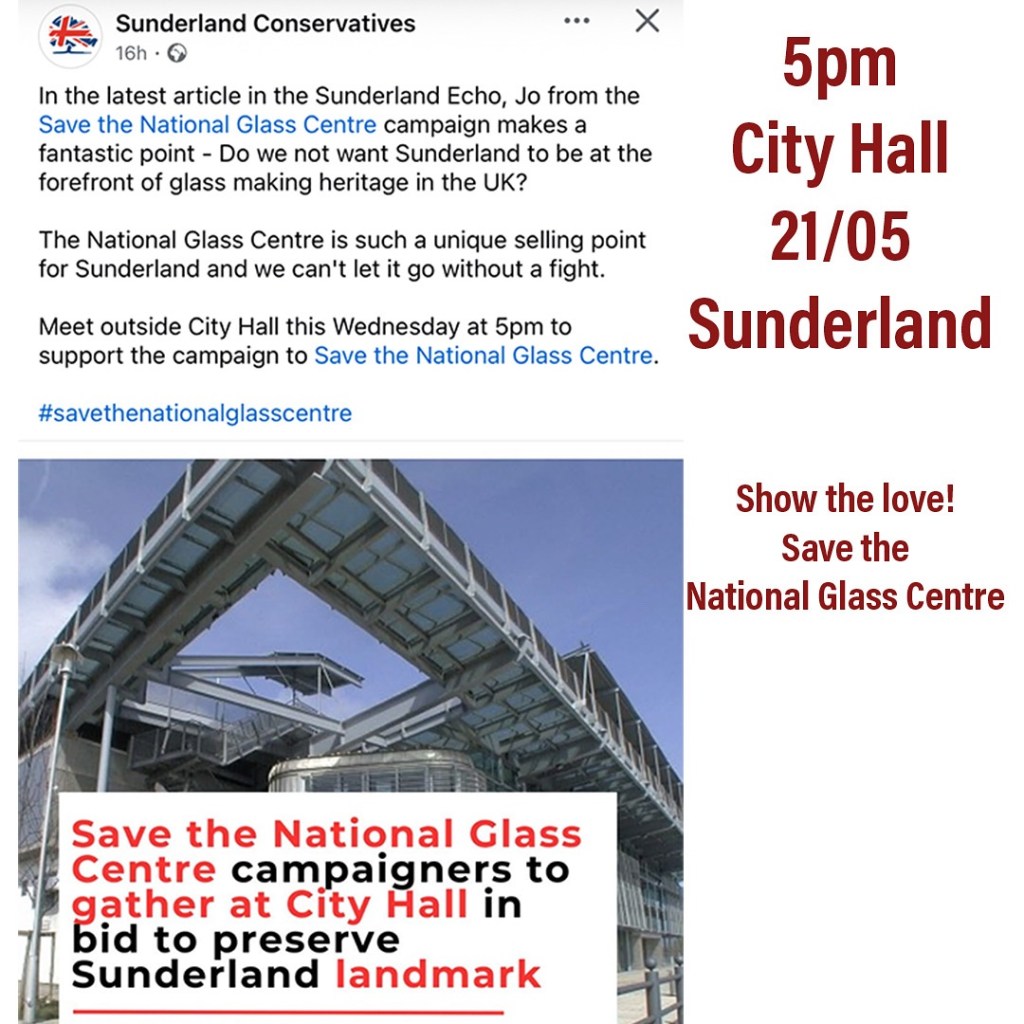
Make some signage or some fashion and pop down to City Hall with us on the 21st May 2025 at 5pm.
Show the love, save the national glass centre promoted by Sunderland Conservatives
What’s the crack?
We want you to come and show support for the National Glass Centre.
Make some signage or some fashion and pop down to City Hall with us on the 21st May 2025 at 5pm.
We want to save the building et al because it was purpose built for our glassmaking heritage as a regeneration project for the City.
We believe demolition is needlessly destructive and will have adverse effects on our delicate marine and coastal environment.
The most sustainable building is the one that already exists.
Add to this that National Glass Centre is situated in St Peter’s because glassmaking was known to have been brought to Sunderland and taught to others in 674ad.
That’s 1351 years of glass!
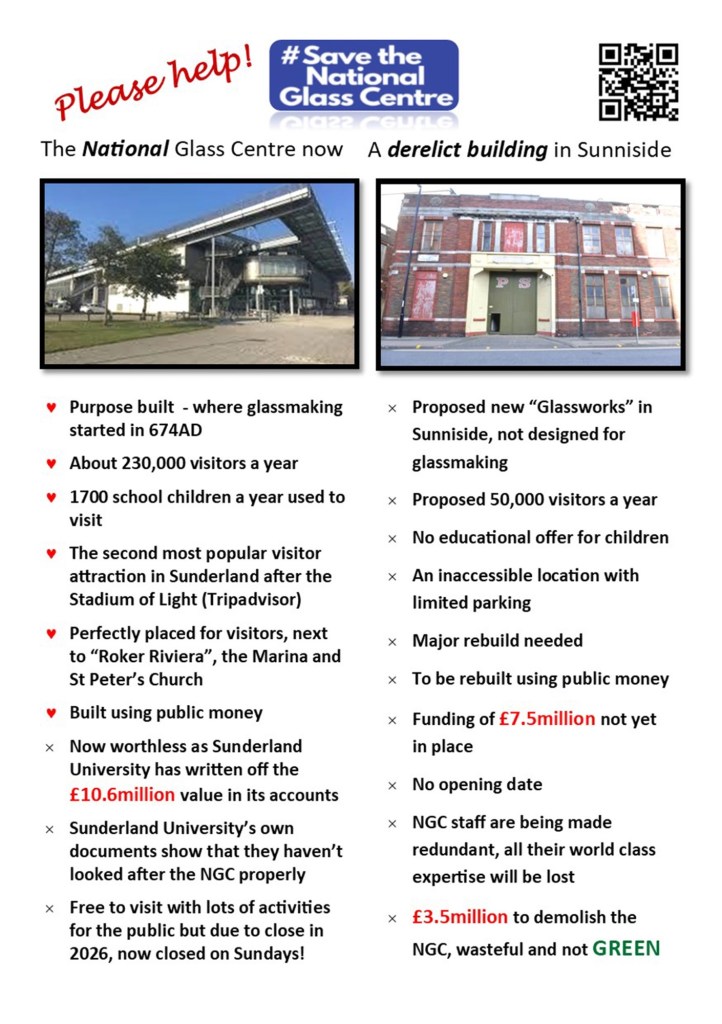
We want to save the National Glass Centre because it has inspired working class people to enjoy art and heritage. It brings 230,000 people a year and we believe it could command even more.
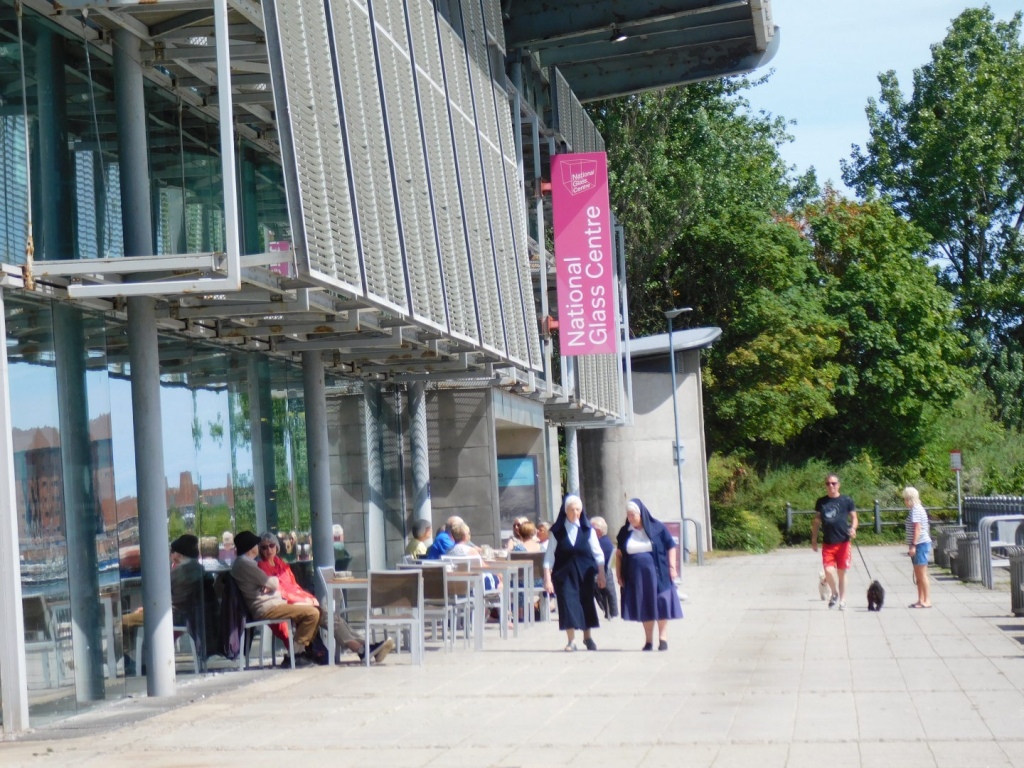
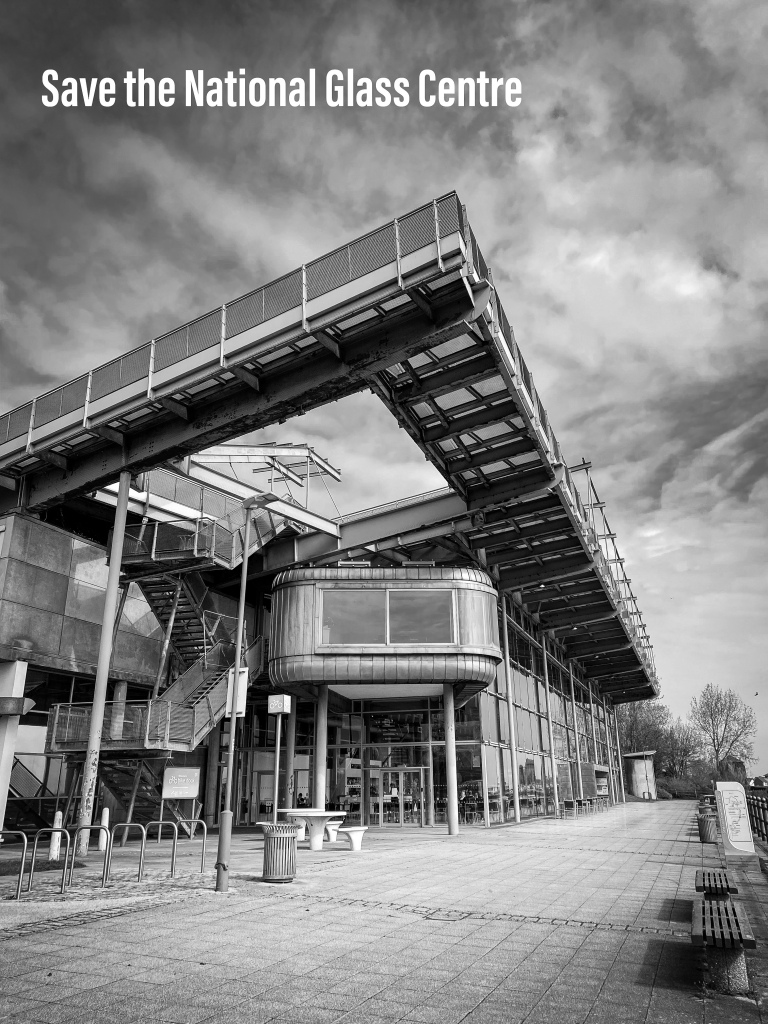
The National glass centre building is an iconic emblem on the riverside. A cathedral of glass. Its cultural wealth and impact upon the surrounding area should not be underestimated.
The prestige of the highly skilled glassmakers has made our city known across the world. It symbolises our rich creative past and could be a flagship of new science or technologies of the future.
This National Glass Centre of ours is uniquely Sunderland. Anywhere can make music. Obviously we’re glad that we make music too but we are about to concede to the destruction of our only internationally facing unique selling point.
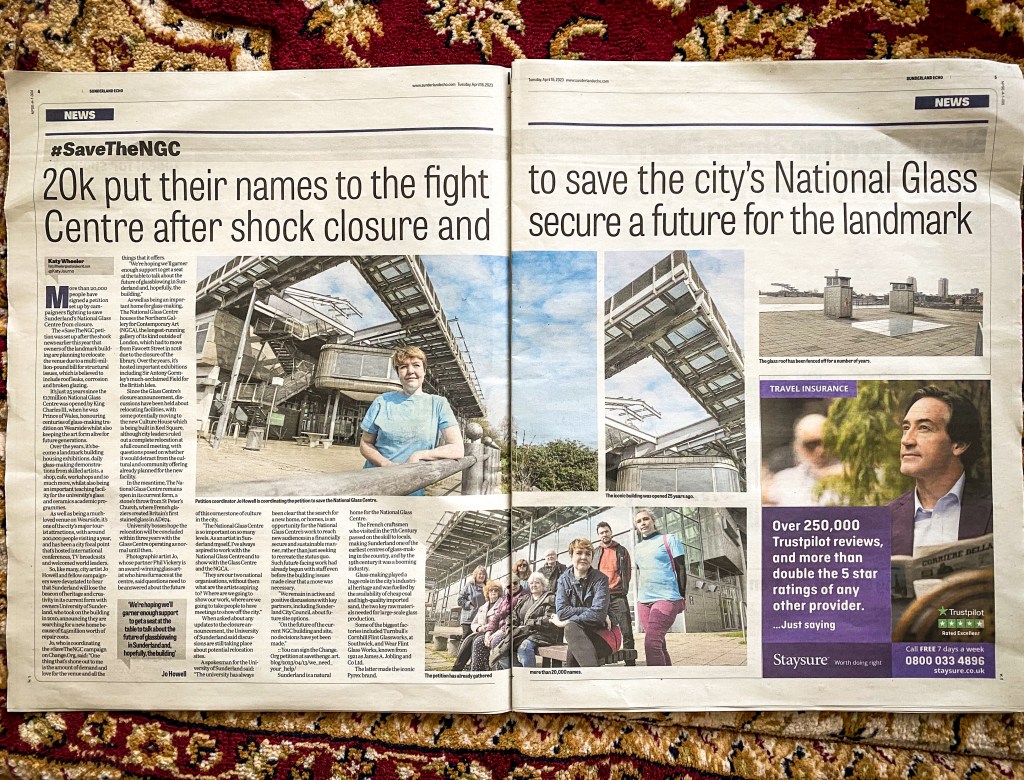
Katy Wheeler has put it excellently in the Sunderland Echo read it here:
Meet us at 5pm on May 21st at City Hall in Sunderland. Bring signs!
We need you beautiful people with some hand painted signs to have a visible outpouring of public love for the National Glass Centre.
It won’t be long until the shutdown of the National glass centre begins in earnest. We are running out of time to press this issue with MPs, councillors and everyone who has sway in this City.
The National Glass Centre has over £30 million of taxpayers money invested in it over the years. This is our investment. Our National centre with global appeal.
If you can’t come in person then take your opinions and crowbar them in on every comments section of every post of the Uni and the council. Point out hypocrisies publicly.
And of course share all of our posts!
See you at 5pm on May 21st at City Hall! Bring posters, signs and righteous indignation.
From
Save the National Glass Centre team
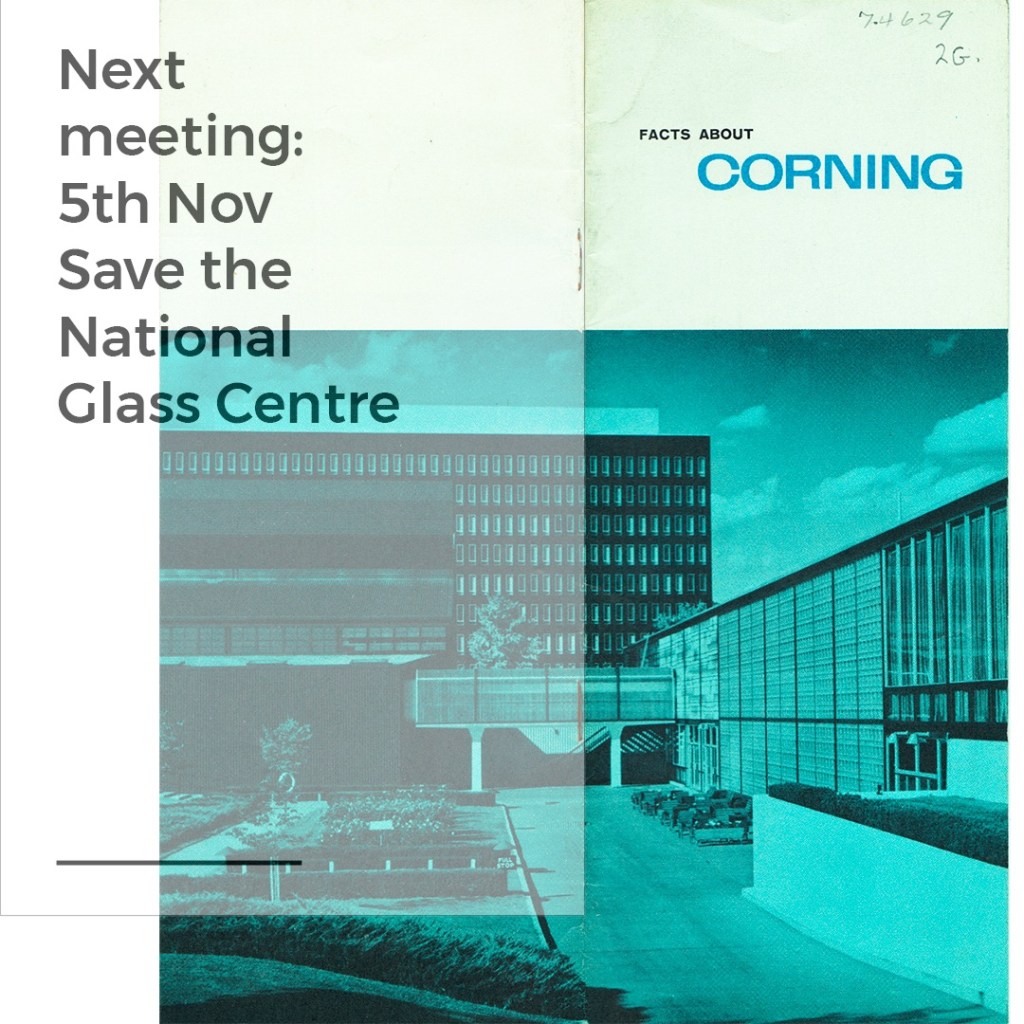
Save the National Glass Centre campaign on historic Corning glass publication
Save our 1350 year glassmaking heritage! First brought to the area to adorn St Peter’s and St Paul’s churches in 674 ad by Benedict Biscop. We have continued with pride and have a unique collection of highly skilled artists who have stayed in the region to make glass. You wouldn’t destroy 1350 years of heritage anywhere else, so why do you think it’s ok to vandalise culture in the North East?
Regarding Their Intent to Close and Demolish The National Glass Centre, Sunderland
14th March 2024
Dear Board of Governors
How do histories end? Is it through neglect, by the misguided actions of a few, the averted gaze of many, or by compliance when there should have been challenge? This year 2024, is thought to be the 1350th anniversary of the start of glassmaking in Sunderland. An important historic event many want to recognise and celebrate.
Instead, in 2026 it will be the end of that history if the University of Sunderland is successful in its campaign to demolish our National Glass Centre (NGC) and in the process deny future generations the opportunity to understand, revere and continue the history and tradition of glassmaking in our unique and proud city. Given that this will cause extensive, irreparable economic and cultural damage it is natural that this decision should be open to the highest levels of scrutiny.
When the University, as owners of the NGC, made the shock announcement in January 2023 of its intention to close and demolish Sunderland’s “world class cultural asset” (2021 City of Culture Bid), it was met with widespread disbelief. People immediately questioned how the University could announce that it would cost £45million to repair an existing building when the construction costs for the brand- new Culture House in the city centre are reported to be £25million. It is not even clear what the basis is for the £45million cost as it was not an option covered in GSS Architecture’s 2022 Roof Level Feasibility Report. There was no explanation as to why the more affordable Option 2 costing was not considered.
The £45million figure has been met with derision by construction industry professionals who have examined the Cost Estimate in detail (see attached Report pg 9 onwards), and who point to Option 2 as a viable solution. Has the quoted repair bill of £45million discouraged any potential financial backers?
The University’s actions show scant regard for, or reference to, the usual regulatory framework, including the: Town and Country Planning Act 1990, Charities Act 2022, Health and Safety at Work Act (HSWA) 1974, Management of Health and Safety at Work Regulations 1999 and The Seven Principles of Public Life (Nolan Principles) 1995.
According to The Seven Principles of Public Life, as a Board of Governors you are “…public officeholders… both servants of the public and stewards of public resources.”
Yet the decision to close and demolish the NGC was made without any public consultation over what would happen to a much treasured educational establishment, visitor attraction and charity, run solely for the “public benefit”.
Instead, your Executive presented you with a set of biased, partial evidence. The decision was made without an Impact Assessment, or a Change Programme, or planning as to the future usage of a site with limited potential for redevelopment. There has been no strategic plan to ensure sustainable, future growth. In addition, there has been no viable plan to relocate the many and varied functions of the building, the academic courses, the galleries, the public engagement and visitor facilities and tenanted studios. This is an astonishing lack of objectivity, due diligence and a rejection of well-established management techniques used to arrive at Best Outcomes. The only determination was to rid yourself of the civic obligations of ownership of a public, charity run asset, described by Vice Chancellor, Sir David Bell as “the burden” when he wrote that “…the University cannot be expected to carry all of the burden on that front…” (letter to Bridget Phillipson MP, 24.08.2023). He considers that “…much of what takes place in the Centre is not ‘core’ to the University’s overarching academic mission as an educational institution…” (letter to Julie Elliott MP, 14.05.2023). His approach to the ethical function of a university within society is somewhat different to other universities such as Durham University, which evidently applies a different moral stance when running its seven visitor attractions.
In October 2022 the Executive’s evidence, the Roof Level Feasibility Report (2022), led to the University making major structural changes to the NGC’s main glass façade by removing the brise soleil and external frame. This was done without planning permission or the involvement of Building Control.
Contractors removed the bracing that stiffened and strengthened the façade and protected it from the force of the wind. Damage occurred in October 2023 during high winds, but before the main impact of storm Babet. Luckily no one was hurt when a large panel of glass dropped out of position. It is the very definition of a near miss; for a year thousands of people worked, walked, sat, ran and cycled past tonnes of glass held in a potentially weakened structure due to the University’s maintenance choices. It led to the University declaring the façade as a “dangerous structure”. Whilst Sir David Bell has continued to insist that it was: “…simply untrue to suggest that the University has failed to maintain the building adequately.” (letter to the office of Julie Elliot MP, 26.10.2023). The University Environmental Sustainability Plan 2025 states that it has been neglectful of the fabric of the building in that they “…fail to plan, invest and maintain the University’s physical estate…”. In addition, it has revealed that “The University does not have an Operation and Maintenance document for the NGC.” (FOI2324/01/10) This explains why there has been no systematic maintenance routine; a potential factor in the current state of disrepair and the resultant increased costs to rectify the situation.
In 2010 the transfer of ownership of the NGC to the University, thought to be for £1, was probably the best solution at the time. Since then, the University has enjoyed the benefit of ownership and the use of facilities that would have cost many thousands to rent annually. The University chose to run the visitor attraction business in a particular way that did not truly take advantage of the unique potential of the NGC. The recent damage to the building has further weakened the visitor attraction business, and people’s livelihoods. Although the NGC enjoys extensive, loyal, public support, and the diligent staff have made heroic efforts to reconfigure the building and provide a warm welcome, inevitably visitor numbers have declined as the building is partially open, less accessible and frankly looks neglected.
Further damage to the NGC has been caused by the lack of a planned future: it was undoubtably a factor in Sunderland Culture and the NGC’s unsuccessful bid to become the new venue for The British Glass Biennale. The prestigious international exhibition and events could have been of great economic and cultural benefit to the city.
This apparent “managed decline” of the NGC as a visitor attraction has been compounded by the lack of support for, and promotion of, the glass and ceramics academic courses leading to a climate of uncertainty. The offer to students has been weakened so that numbers will fall, and the courses will be cancelled, resulting in the permanent loss of vital material knowledge and expertise: glass is a sustainable, future facing material, not an anachronism.
Now after over a year there is no definite plan to relocate the many and varied activities that take place within the NGC. Half-hearted attempts have been made to relocate the NGC gallery and the academic course facilities into two locations, an unbuilt new development and an old building on the other side of the river, neither of which can provide the required specialist facilities. There is no plan for glassmaking to continue anywhere. The University is a Founding Partner of the charity, Sunderland Culture, and glassmaking is written into its Charitable Objects, a fact that the Board of Governors appears to have completely ignored, or been unaware of, when making the decision to close (see Report pg 5 onward).
In October 2023, it was revealed that the University had decided that they were not in the position to ‘lead the charge’ on the creation of a new glassmaking facility (University Internal update) thereby threatening the purpose and assets of a charity.
When is the University going to acknowledge that the NGC is a public asset run by a charity, with millions of pounds of embodied public funds invested in its creation and maintenance? Its inauguration in 1998 was not just about creating a visitor attraction or an asset for the University to dispose of as it wished. The NGC was, and still is, essential to the regeneration of Sunderland after the years of economic decline led by the demise of heavy industries. According to the Seven Principles of Public Life, as “public office holders” the Board of Governors have a duty to act as “…servants of the public and stewards of public resources” and “…act solely in terms of public interest.” The obligation is to “…act and take decisions impartially, fairly and on merit, using the best evidence and without discrimination or bias.” And to be “…accountable to the public for their decisions and actions and must submit …to the scrutiny necessary to ensure this.” You must be aware that there is an online petition to save the NGC which has a wealth of public opinions. If you are in any way unclear as to what people think about your decision read the Report (pg 20 onwards).
Change needs to happen. There is no reason why the NGC cannot be placed on the path to a sustainable future if given the backing of organisations with the expertise, enthusiasm and commitment to effect real change. The campaign to # Save The National Glass Centre have amassed a wealth of evidence and a network of highly skilled supporters ready and able to contribute to a positive outcome for
Sunderland, our children, visitors, the creative community and world-wide glass artists. All that is needed is for the Board of Governors to abide by the Seven Principles of Public Life, review their decision making and start a dialogue with the public over our National Glass Centre’s future.
On behalf of #Save the National Glass Centre, we would welcome the opportunity to meet face to face and if you require any clarification, we are more than happy to oblige.
Save the National Glass Centre campaign fully supports any action the unions or the workers wish to take. Solidarity!
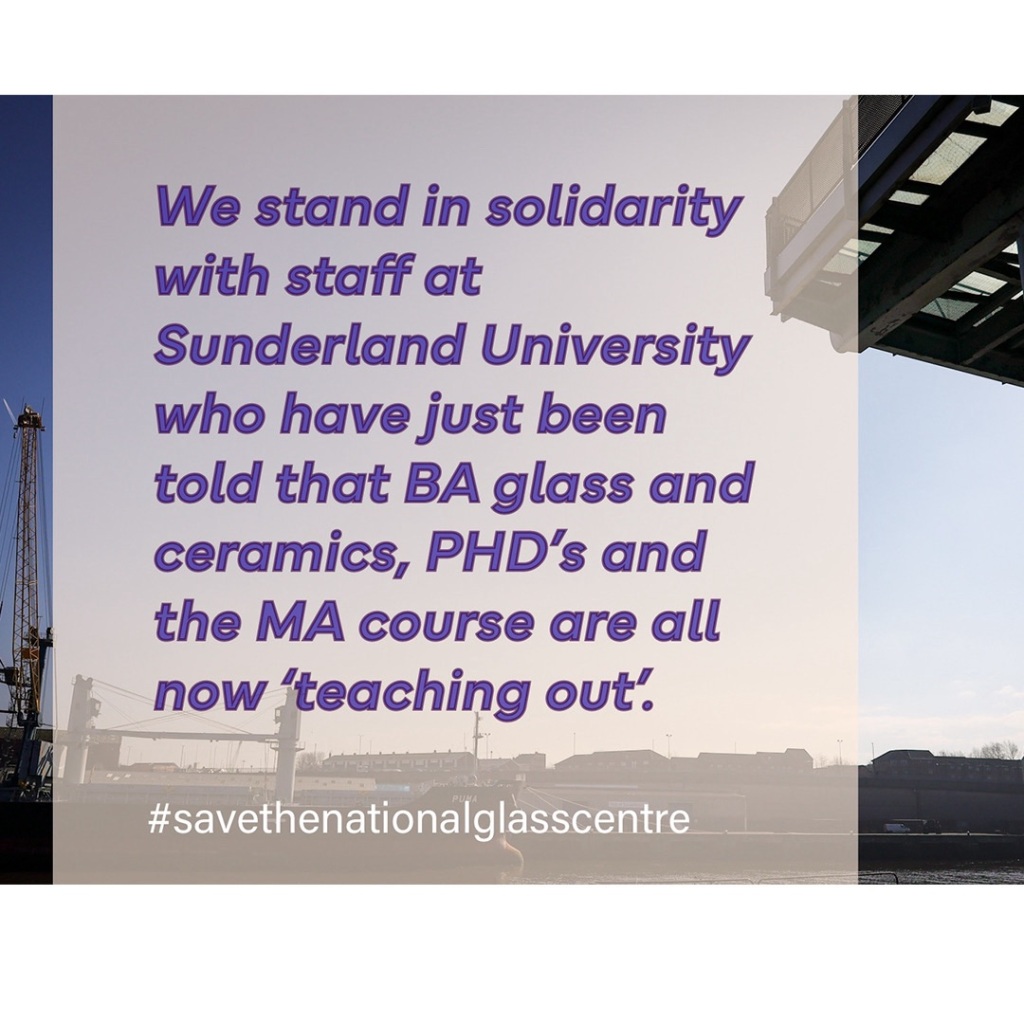
We stand in solidarity with all of the staff and students. We are distraught to hear that like a thief in the night Sunderland University is taking away our glass and ceramic courses leading to inevitable loss of highly skilled staff, valued teachers and of course eventually the building itself. Filling their boots with Sunderland’s heritage and the future of glass making in the North East.
Save the National Glass Centre campaigner Keith Brown explains
On the 8th of December 2022 the University of Sunderland announced its shocking decision to close the National Glass Centre (the NGC) on the banks of the river Wear in Sunderland.
The campaign to reverse that decision and to keep the NGC open in some form is gathering momentum. Campaigners have highlighted the NGC’s iconic architectural status; the devastating cultural and artistic impact of the NGC’s work, not only upon Sunderland but also upon the north-east and the entire UK. People need to be made aware that the cost of repairs widely broadcast by the University are grossly inflated.
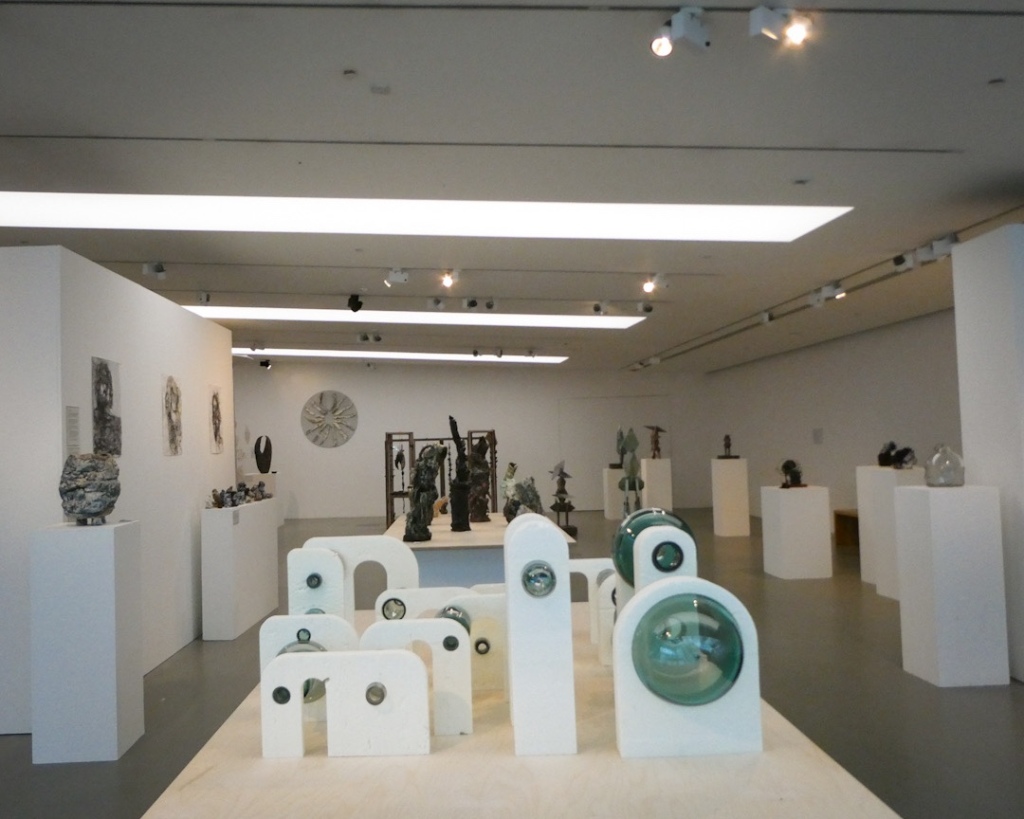
MA exhibition photography by Gill Helps
Well-over 31,000 people have signed a petition against its closure and demolition. Campaigners are now calling for more people to help save the award-winning NGC, cited as a “World-class cultural asset” in Sunderland council’s 2021 UK City of Culture bid. The campaign already involves many local people, and also receives support from key national bodies.
Renowned international architect Piers Gough in the 20th Century Journal has said that
“Sunderland cannot afford to lose such an icon. It would seem ideal for a forward-looking University to use or repurpose, but should it be superfluous another more appreciative owner should be found.” He also stated that “the NGC references Sunderland’s shipbuilding heritage as well as glass making past, making this unique building special to its particular location. It is the best and most apposite 21st Century Building of the region“.
Architect Piers Gough in the 20th Century Journal
The 20th Century Society (C20) , the professional organisation which saves endangered buildings, has sought independent advice from experts in building lifespan and sustainability. They have cast doubts on the figures quoted for repair and renovation.
“condemning this landmark building that’s barely 25 years old and in the process losing one of the few purpose built glass blowing facilities in the country, is unconscionable“.
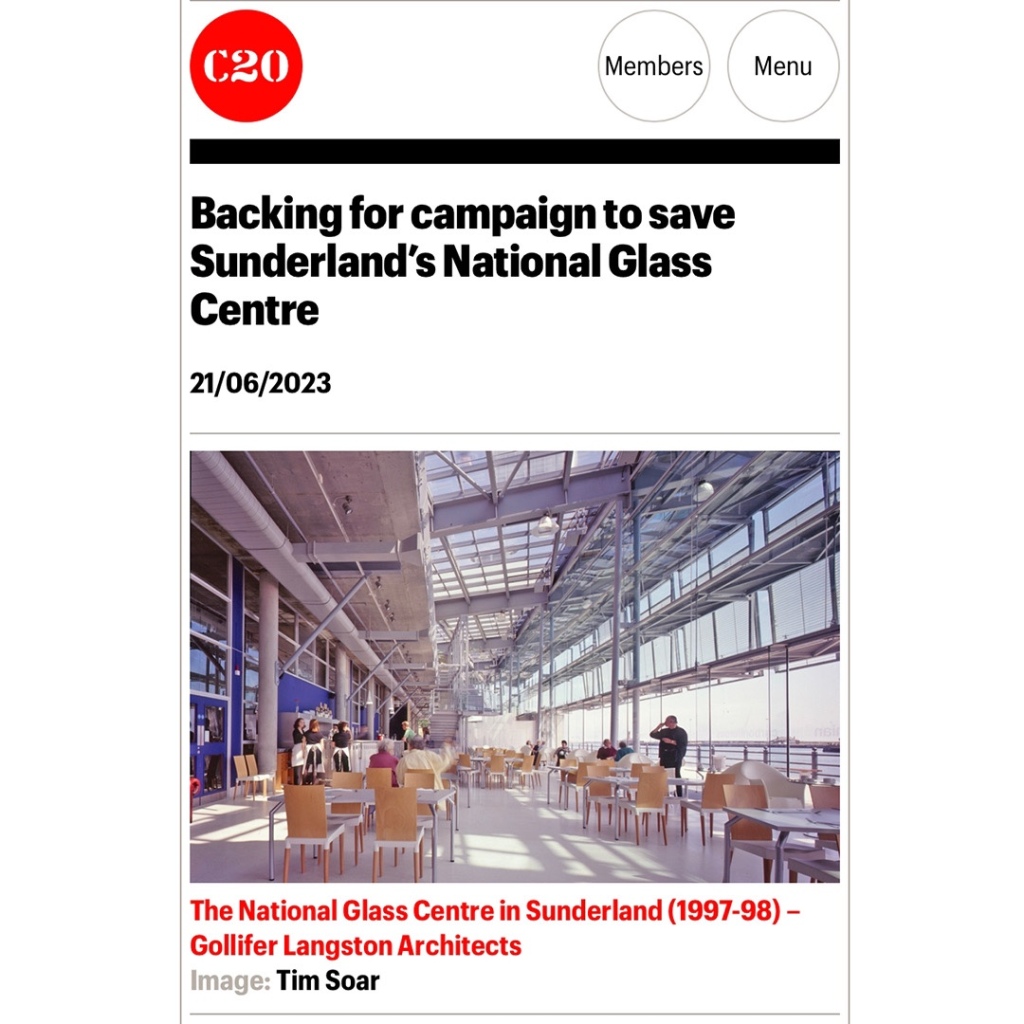
C20’s article 21.6.23
Architecture photography by Gill Helps
In 2000, the Design Council awarded this unique building Millenium Product Status in recognition of its creativity and environmental approach. The building also received commendations from the Craft Council, the Victoria and Albert Museum and the DTI.
The National Glass Centre is owned and maintained by the University. Sir David Bell, the vice chancellor and chief executive stated in May 2023 they could close it as early as 2025, he also stated, without any prior consultation, that the National Glass Centre will be demolished.
The building sits adjacent to the University campus where the University is planning to undertake significant capital works over the next five years. This suggests it intended all along to expand onto the NGC site.
National Glass Centre photography by Gill Helps
The University’s Intention to demolish and redevelop, releasing embodied carbon in the process, is the wrong decision given the concern over accelerating climate change. Retro fitting is by far the best solution. This academic institution should focus on STEM subjects and treat The National Glass Centre as a case study for sustainability and growth rather than managed decline and potential destruction.
The repair costs of £45m broadcast by the University are now widely believed. How the costs can be so high for what essentially should be the refurbishment of the existing building needs further clarification by the University because such an inflated figure is guaranteed to deter any potential funders.
The published costs are not for repair alone, but for an array of other enhancements including replacing the entire roof (solid & glazed) all the glass curtain walling, installing photovoltaic panels, and replacing all the mechanical and electrical systems. Even with these enhancements the reported figure appears seriously inflated, particularly when the construction cost for Culture House, a brand new building in the centre of the city, is reported as being £25m.
MA exhibition photography by Gill Helps
Retired planning inspector David Vickery wrote in a recent campaign article: “Sunderland City Hall was completed in November 2021 costing £42m (which is £3 million less) and for that £42 million Sunderland got two large glass and steel office blocks, one of five storeys high and the other of six storeys (190,000 square feet), both buildings connected by a glass atrium. How can it cost £45 million just to repair a roof?”
Early in 2023, the campaign gave the University a Freedom of Information request to enquire how the University had come to their decision to close the National Glass Centre.
In March 2023 the University published documents online, showing the consultation that they had based their decision on.
The campaign followed up by meeting in person with executives from the University on 22.06.23. (The day of the public meeting at Saint Peter’s church.) During this meeting the campaign requested access to all of the NGC’s maintenance records.
Save the National Glass Centre public meeting photography by Phil Vickery
In August, the University stated via email that the FOI was not received, the campaign issued a new FOI request on the 14th of August ’23 (FOI 2323/0814).
The University said they were gifted the NGC when it was 12 years old, however the land registry document appears to show they were given it for no recorded price when it was only 8 years old, (GOV.UK Title register for: National Glass Centre, title number: TY454590).
There is no doubt that the University has struggled to maintain the NGC, a fact that was recently noted in its Future Strategy Statement.
Also the University’s Head of Estates stated in 2013 ” the centre has suffered as a business and its maintenance regime hasn’t been as robust as it could have been.” Since then, the exterior has further deteriorated under their stewardship.
” The centre has suffered as a business and its maintenance regime hasn’t been as robust as it could have been.”
Future Strategy Statement. The University’s Head of Estates stated in 2013
Sadly, the deterioration and destruction continues and in January 2023, due to some corrosion and safety concerns the University removed and rapidly disposed of the massive heat sink (brise soleil) which was a superb and crucial design feature on the front of this monumental building.
National Glass Centre photography by Gill Helps
In addition, in 2013 the NGC received £2.5m for an internal refit. This grant aided alteration allowed the University to move their glass and ceramics course into the NGC, also Sunderland Council moved the Northern Gallery for Contemporary Art into the building. Two property moves that achieved substantial ongoing financial gains for the University and in particular Sunderland Council.
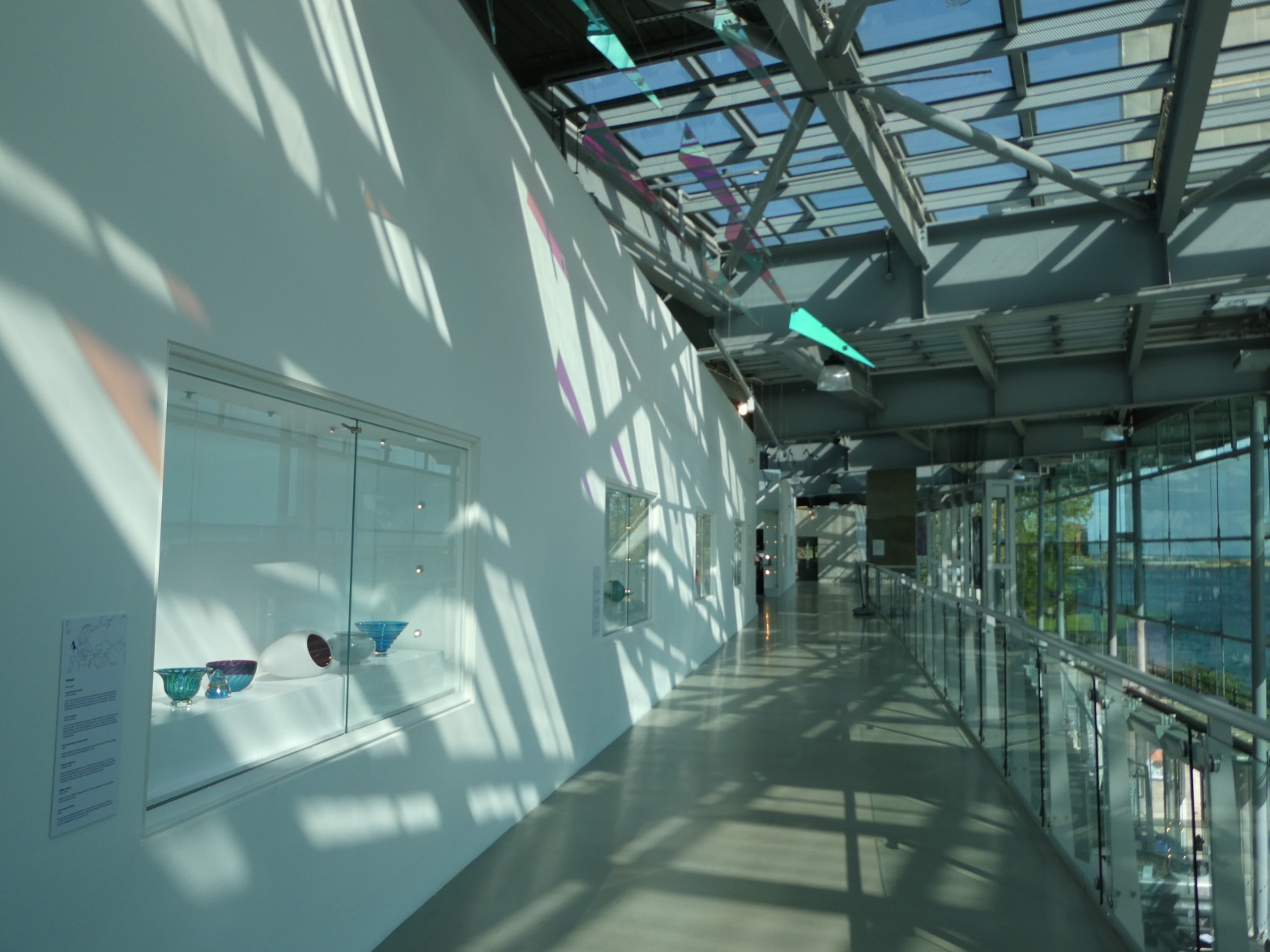
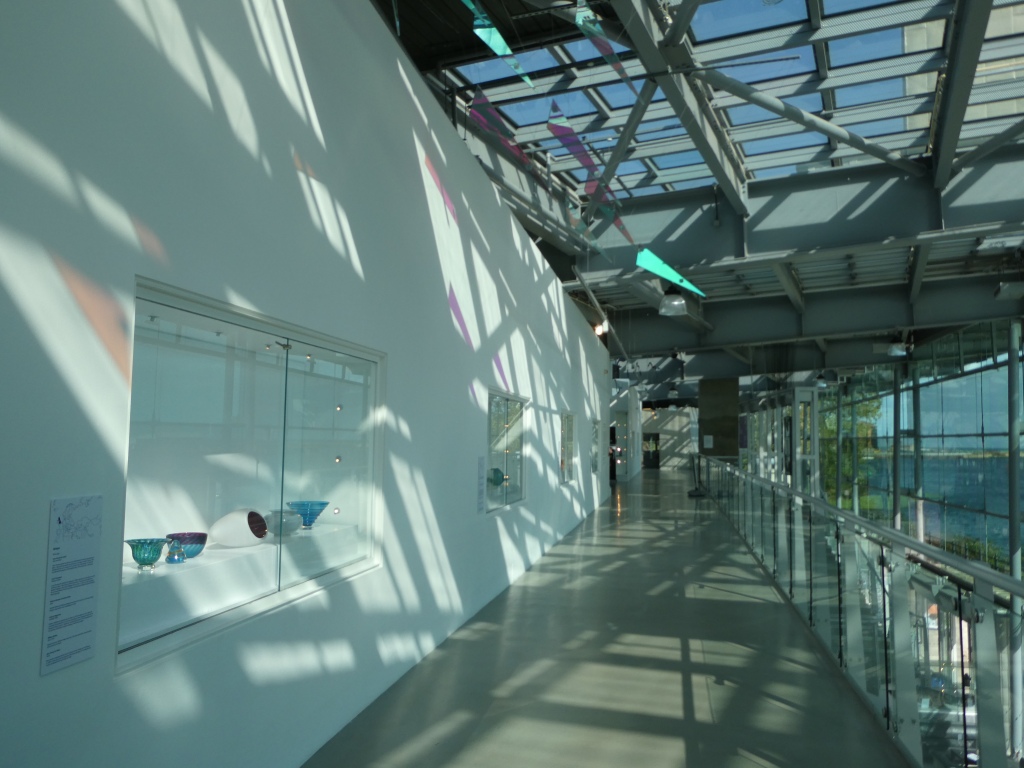
Opened on the 23rd of October 1998 by Prince Charles, now our King, this iconic building encompasses a vast array of crucial delights: substantial visitor experiences and facilities; brilliant collections and exhibition spaces; the Northern Gallery for Contemporary Art; workspaces for the academic courses, the tenanted artists’ studios; and the specialist facilities for the creation of ceramic and glass artwork – all housed within the building. Plus, there are numerous creative and constructive magical children’s workshops, some where children see their designs being cast in molten glass.
Also this extensive and marvelous property used to occasionally be used for weddings, and could actually accommodate many special events if properly managed and promoted.
National Glass Centre photography by Jo Howell
We cannot afford to let this delightful institution go, not just for the enjoyment of locals and many visitors, or even for its national and international status promoting glass and the Arts… but for the cultural heritage of our future generations.
Amid this tangled tale let us not forget that Sunderland is the birthplace of stained glass in the UK; The National Glass Centre can have a viable future and should be allowed to continue the tradition of glass making that was first started here in 674AD.
Please come and visit this unique wonderful place and see why it must be saved.
We strongly urge the University of Sunderland to reconsider their plans, and for local and national politicians to become actively involved. And you can help by supporting the campaign:
Save the National Glass Centre campaign opinion article 14/08/23
By Melanie Shee, FRSA, a lover of glass and glass blowing, (who had a cat called Hartley)
Colin Rennie teaching in the National Glass Centre by Emily Kitching
Along the banks of the River Wear, the teaching of skills has been taking place for centuries. From the shipwrights passing on their skills to apprentices in the shipyards, to the glaziers producing the first stained glass in the UK for Bishopwearmouth Monastery.
Through the ages to the present day, Sunderland has always been a centre of learning. A place where University professors teach an array of subjects to eager students; and of course, the skilled expert glass makers and glass blowers located at The National Glass Centre who are passing on these highly specialist skills locally, nationally and internationally.
In fact in 2008, whilst working at an art college in the region, a Tees Valley glass company contacted me regarding the need to up-skill some of their workforce and in turn increase productivity.
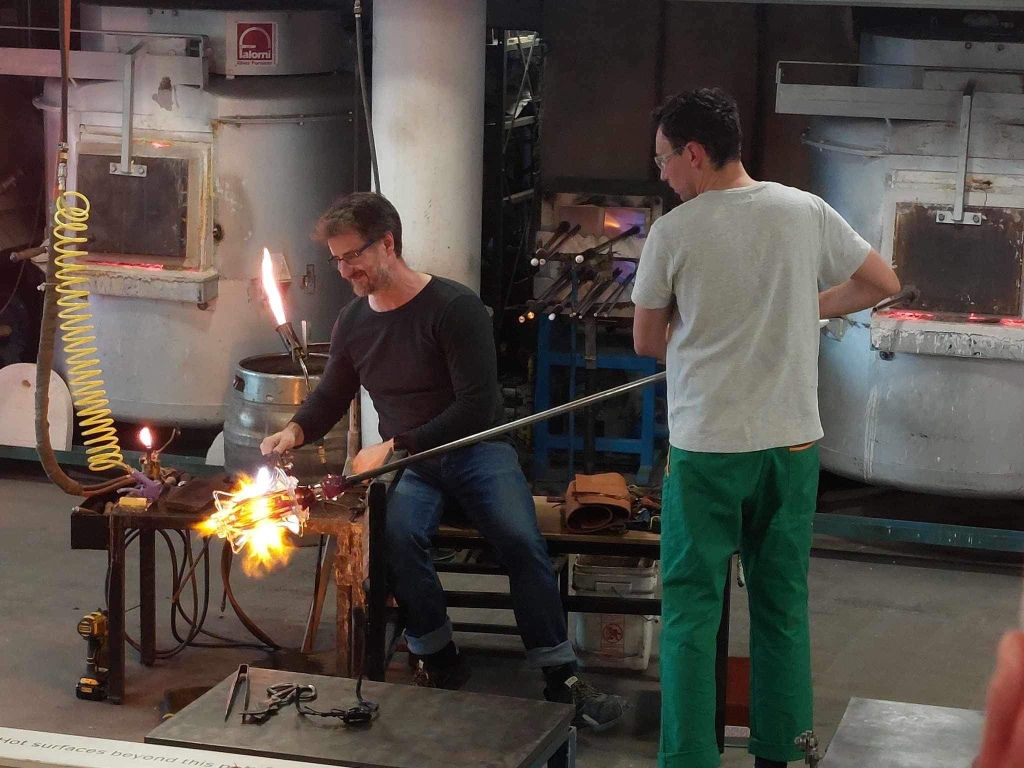
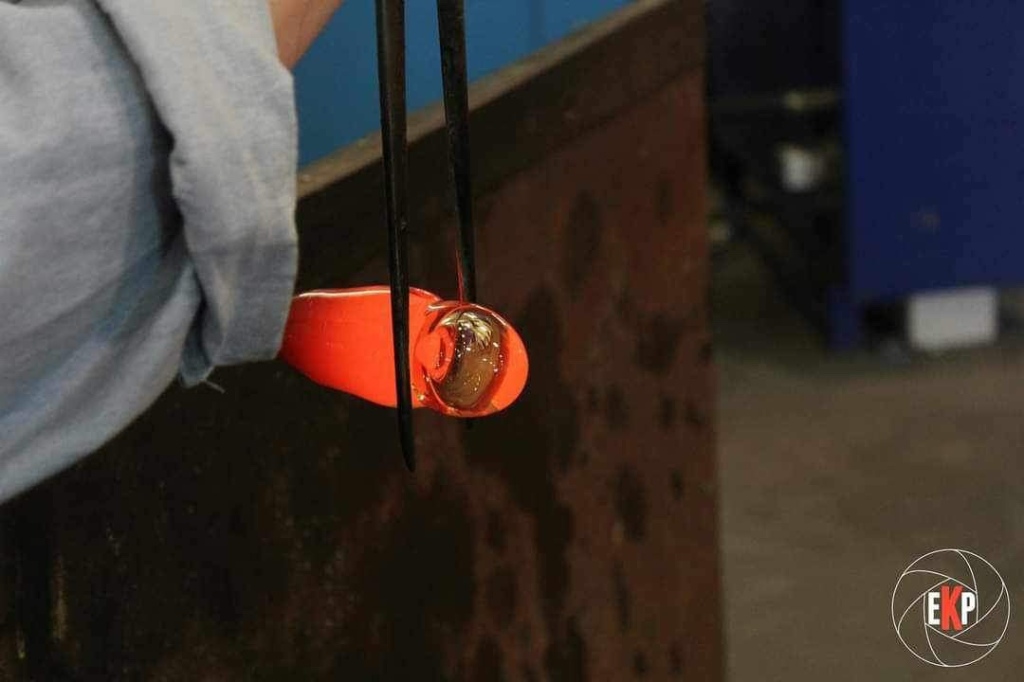
Glass blowing at the National Glass Centre by Emily Kitching
I turned to the skilled expert staff at the National Glass Centre to undertake bespoke training for staff working at the art college. And, they then went to to train the workforce at the glass company. This project was heralded as an example of best practice between colleges and employers by the CBI in their publication Reaching further – Workforce development through employer-FE college partnership, January 2009.
In the UK, stained glass window making is now on the most recent list of craft skills at risk by Heritage Crafts, and it is included on the Red List of Endangered Crafts.
Shining a light on craft skills on the verge of extinction in the UK.
Glass making is a highly specialised skill. This is why it’s so important to inspire people, and to throw a light on the depletion of these skills.
Student learning to blow Glass at the National Glass Centre by Emily Kitching
In 2018, Jade Tapeson was selected to showcase these her glass work in a national careers programme focusing on the creative industries.
Jade was awarded Second Prize in the CGS New Graduate Review 2016, and featured in the British Glass Biennale 2017 where she was awarded the Glass Sellers’ Student Prize. As a freelance glass artist based at the National Glass Centre, both Jade and the National Glass Centre were featured on the Department for Education England Creative Careers Programme https://discovercreative.careers/video-programme/crafts-fashion-textiles/national-glass-centre/.
Student learning to blow Glass at the National Glass Centre by Emily Kitching
In addition, the the National Glass Centre hosted a group of art and design students from the local college. This was to highlight glass making during a week-long National Creative Careers Programme.
So, wouldn’t you therefore think that the University of Sunderland, itself a teaching institution, whose very business is the business of learning and passing on skills would want to preserve the centre?
They are the owners of the National Glass Centre, the only one in UK with specialist kit and highly expert skilled staff. Wouldn’t you think that Sunderland University would be eager to support the development, and safeguard glass making in UK?
Surely, it is better to ensure that it’s removed from the red list of endangered craft? And, thus contributing to securing our heritage?
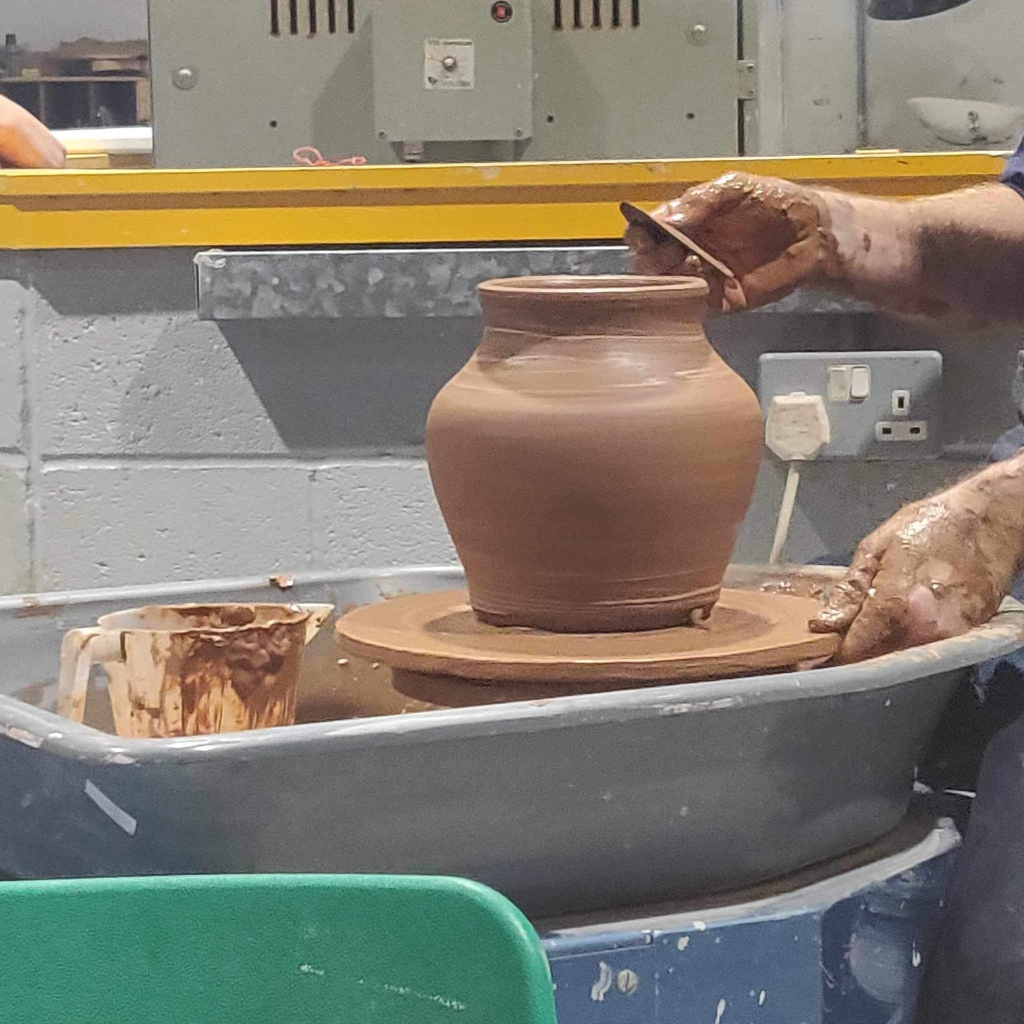
Student learning pottery at the National Glass Centre by Emily Kitching
Open to the continuation of teaching those at risk, highly specialist skills? In a rather wonderful iconic 29th century building rather than just accepting it’s demise, to become history alongside the shipyards on which the National Glass Centre currently stands.
Melanie Shee, FRSA, a lover of glass and glass blowing (who had a cat called Hartley)
What do you think?
We accept submissions of writing, photography, art and video about the National Glass Centre.
Glide around St Peters church, the birthplace of stained glass once the Romans left. Video by Phil Vickery
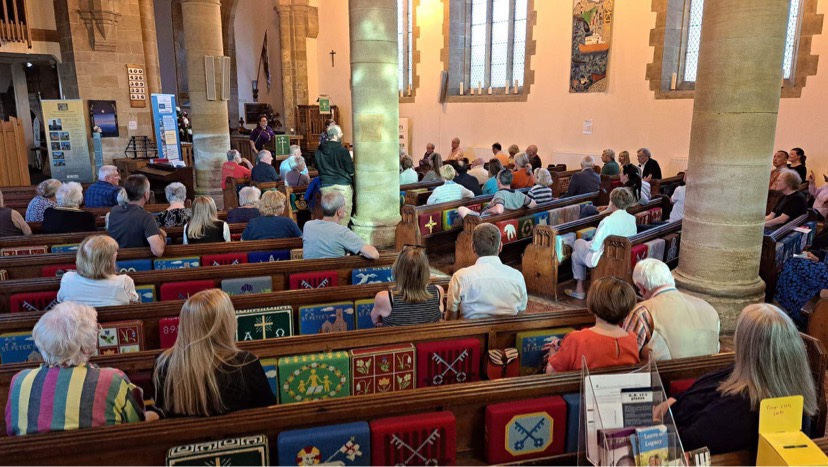
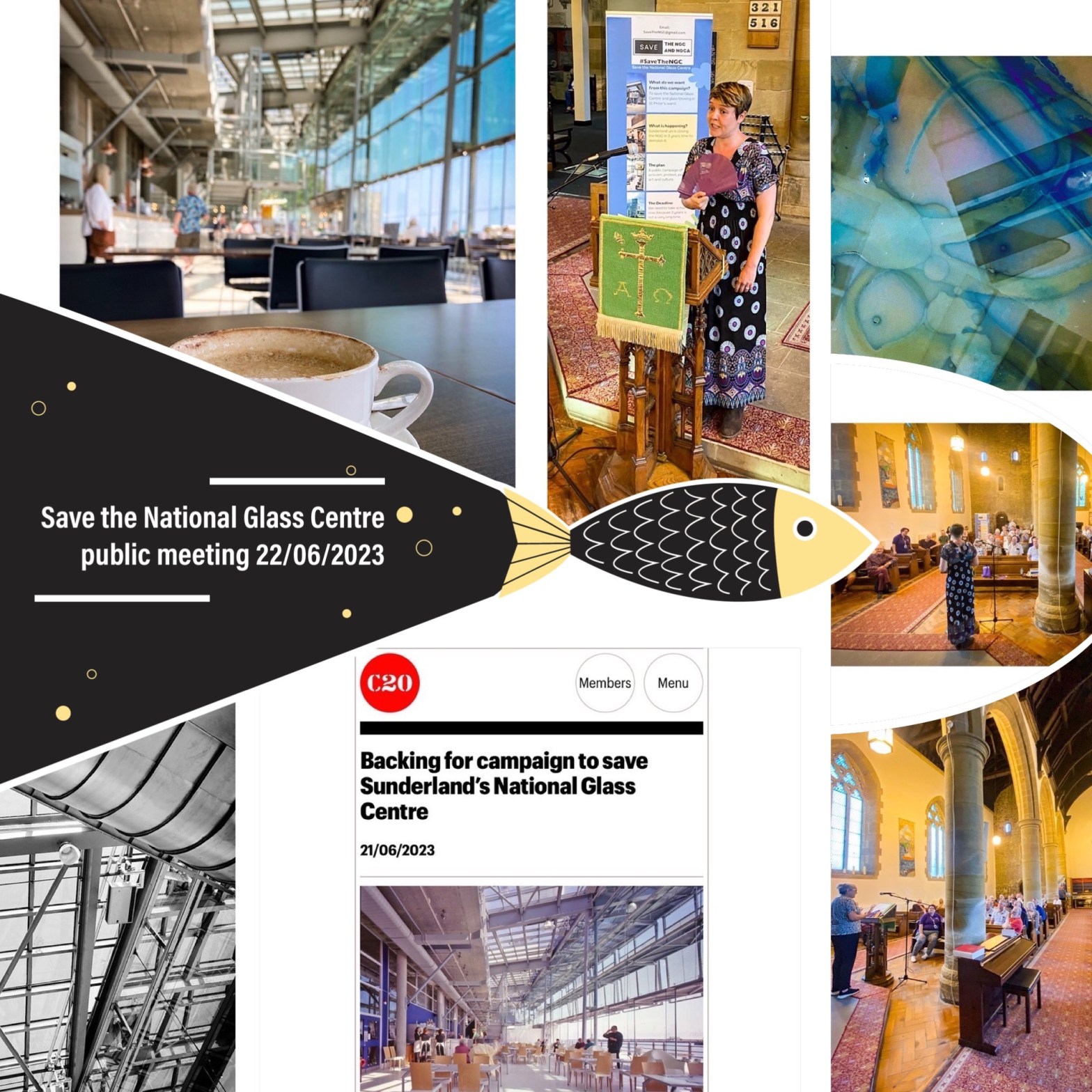
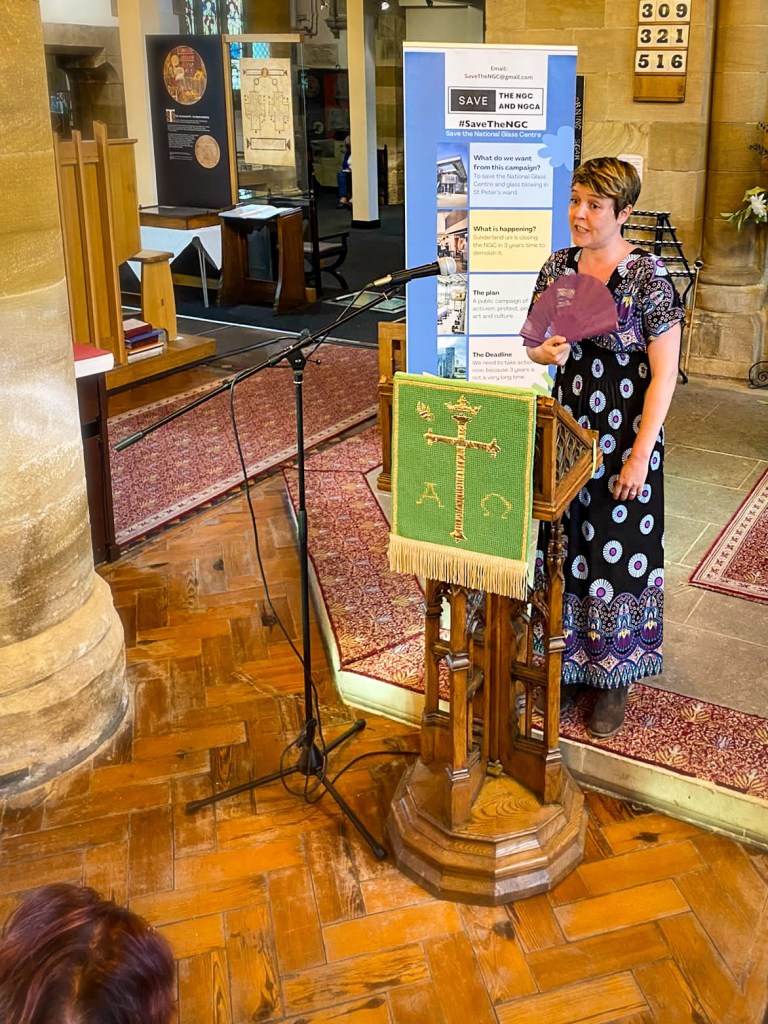
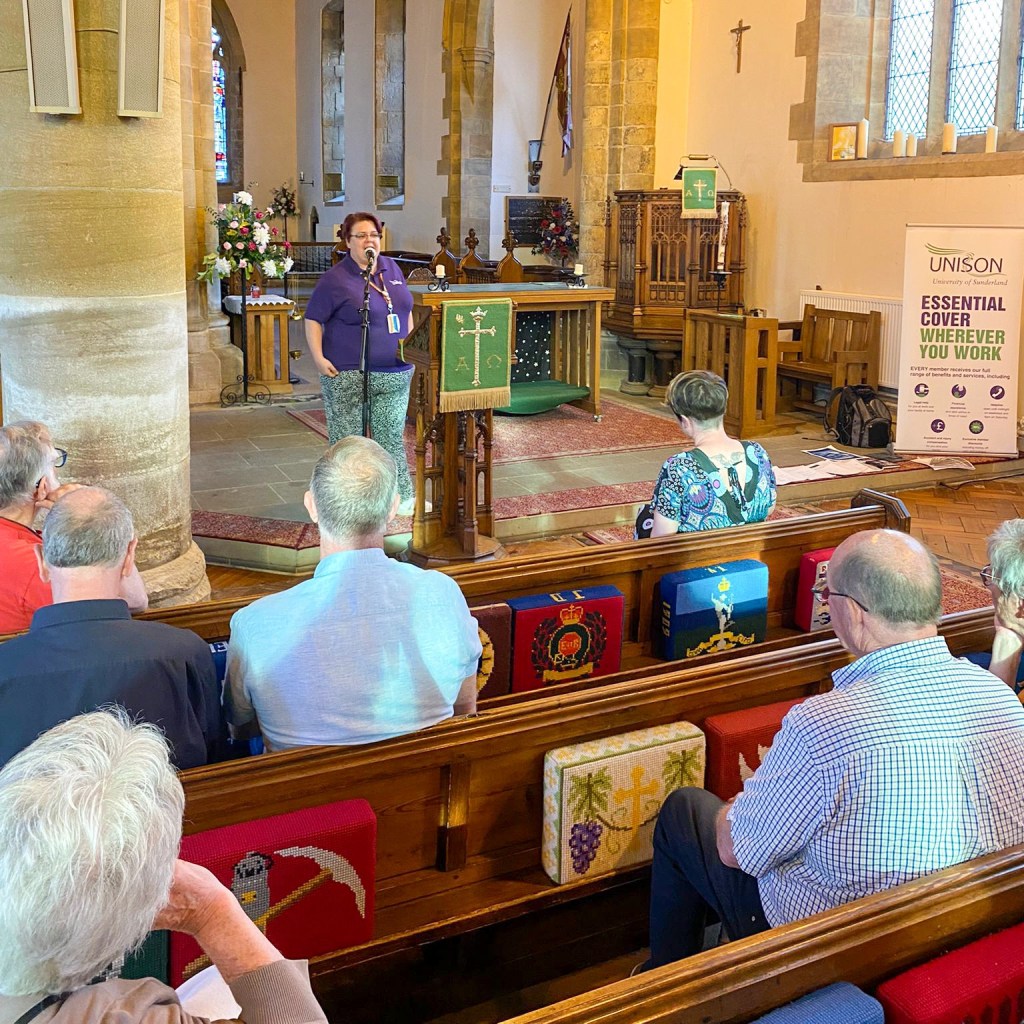
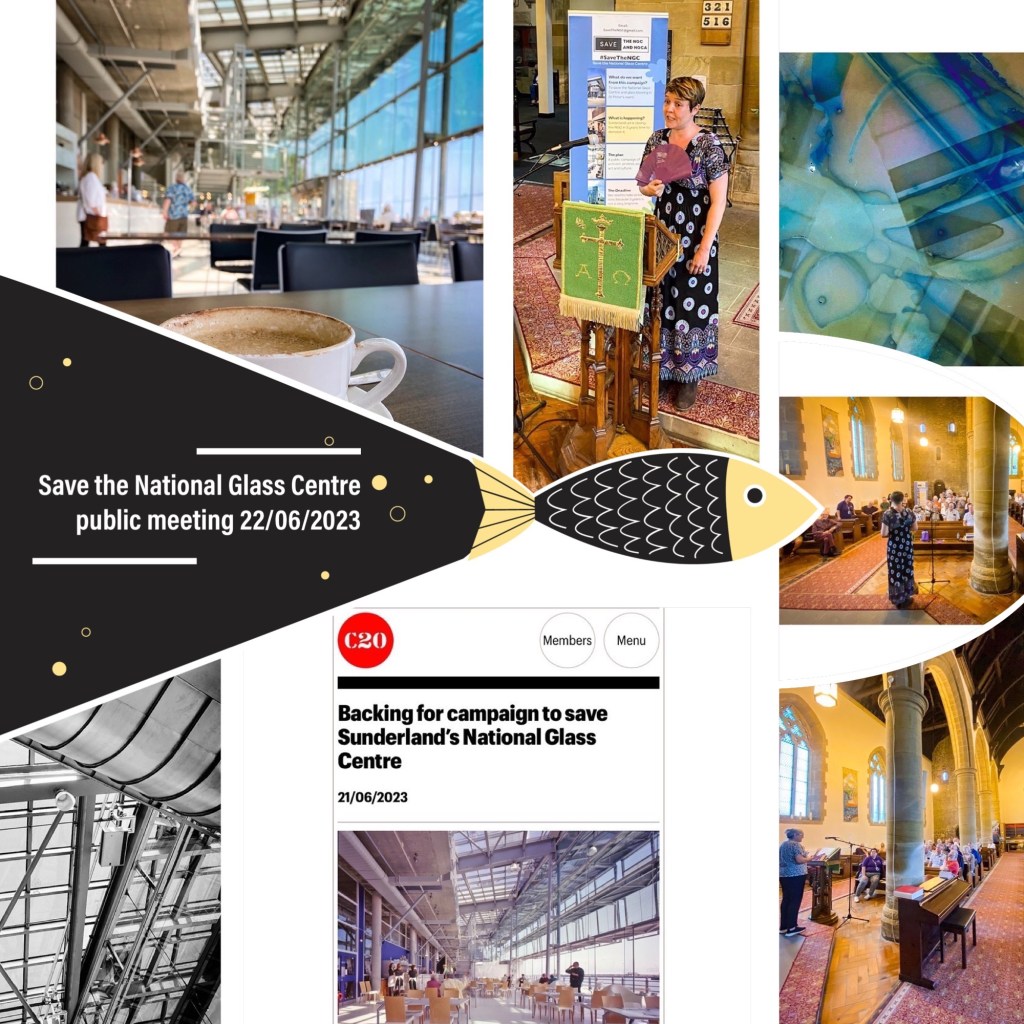
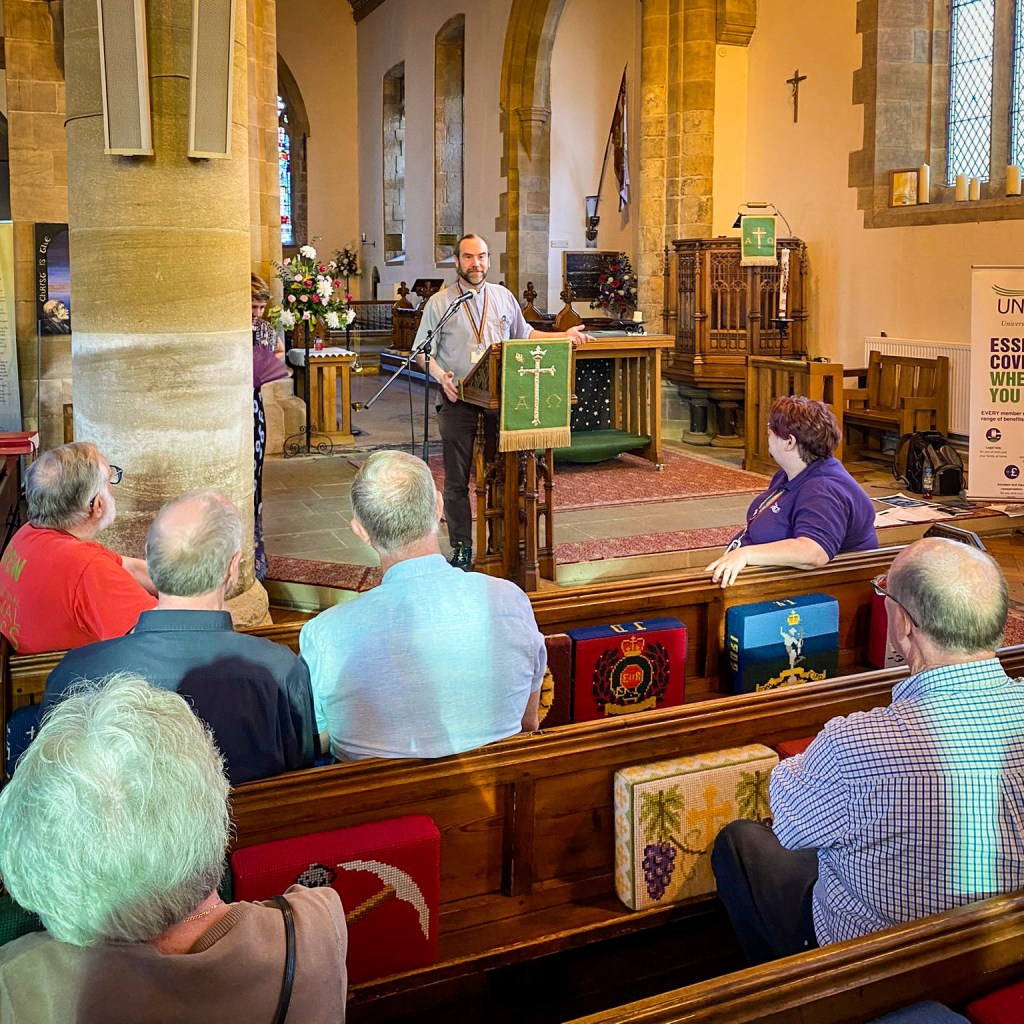
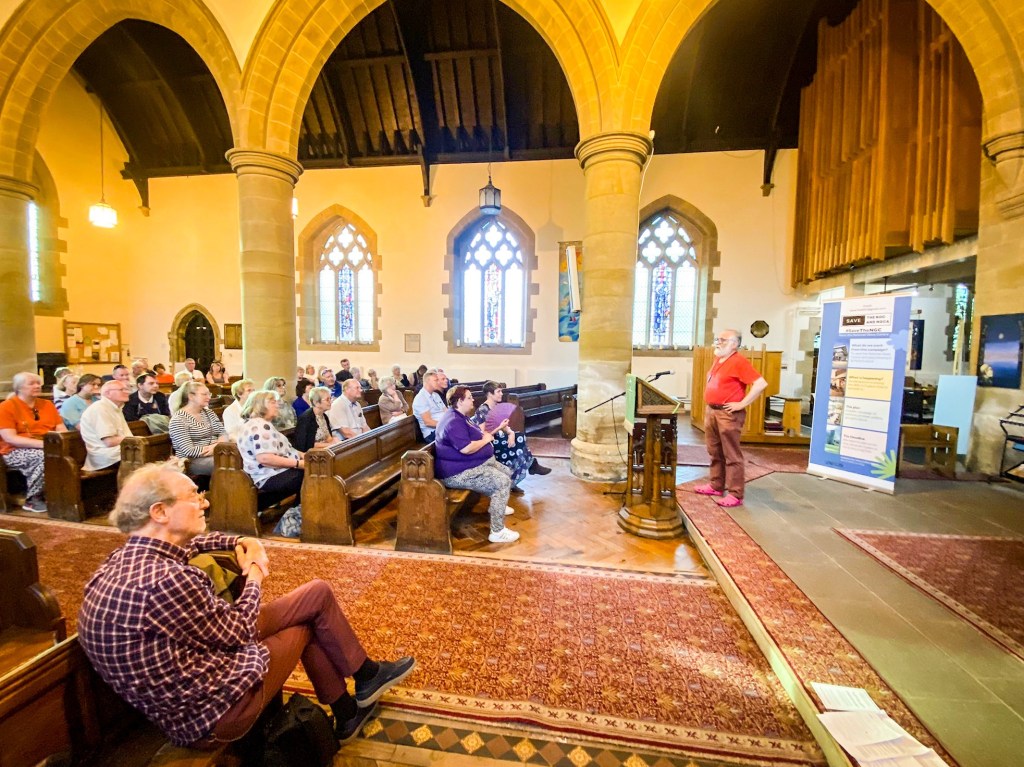
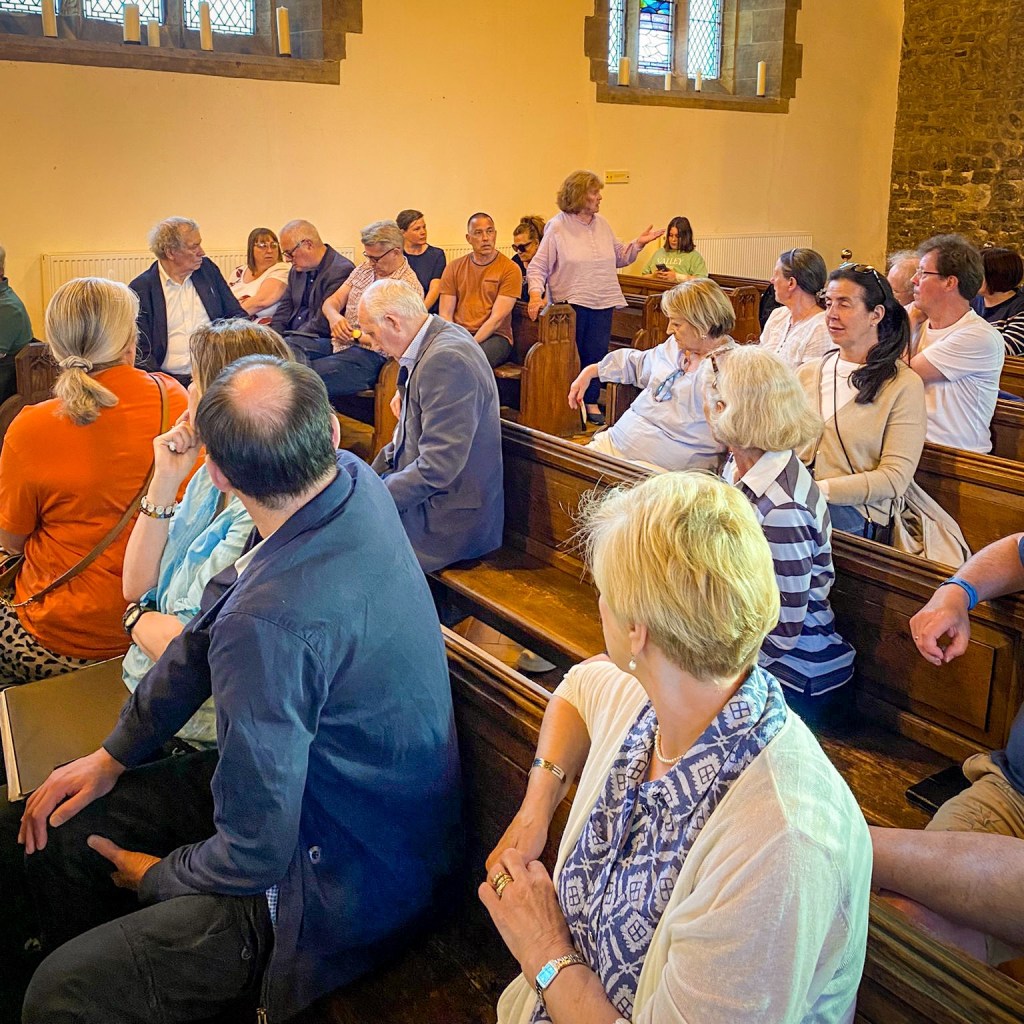
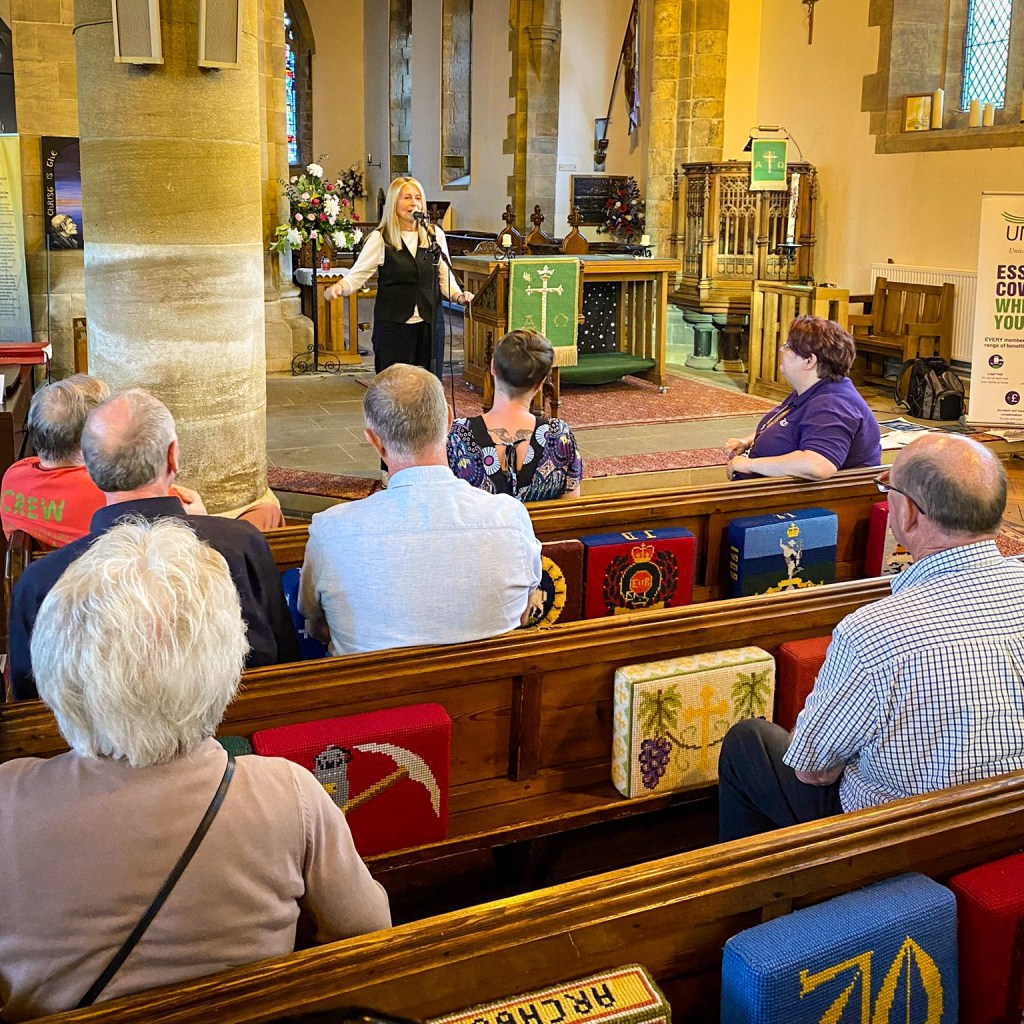
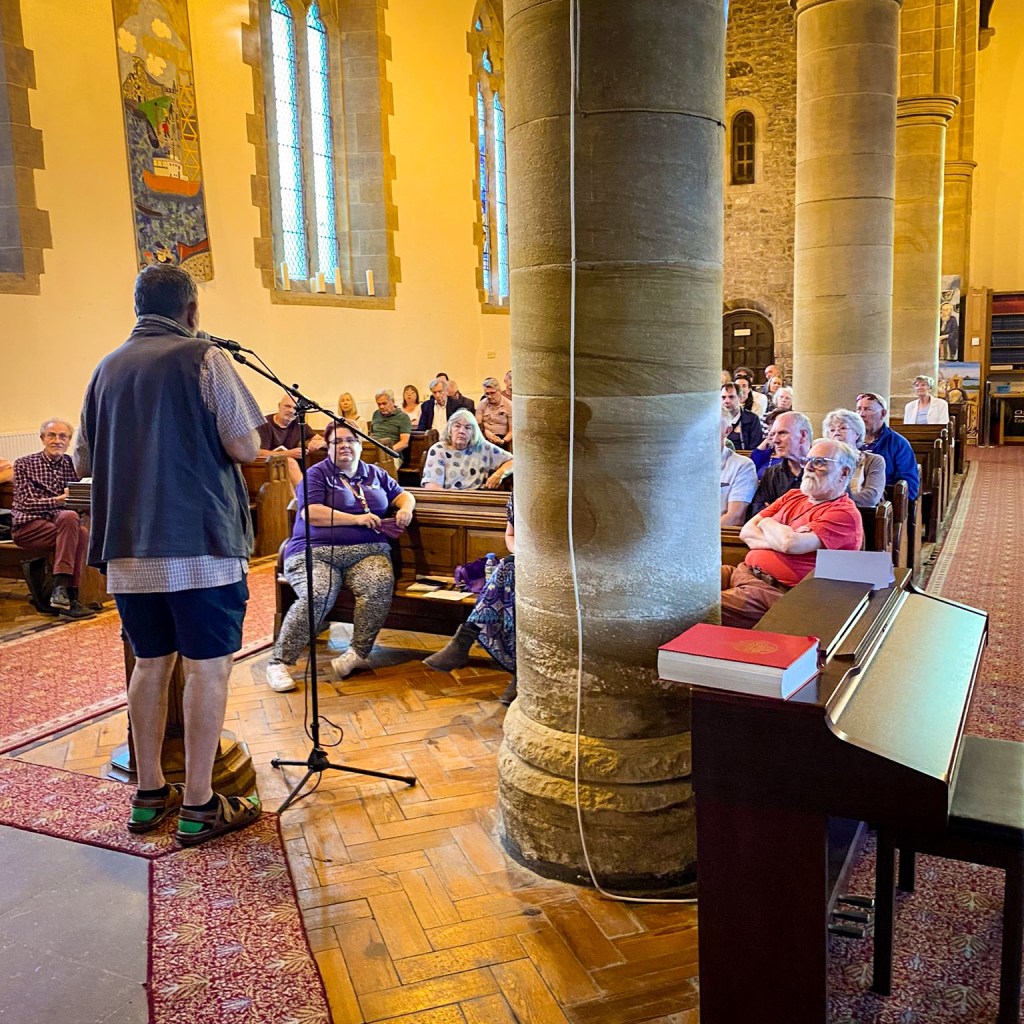
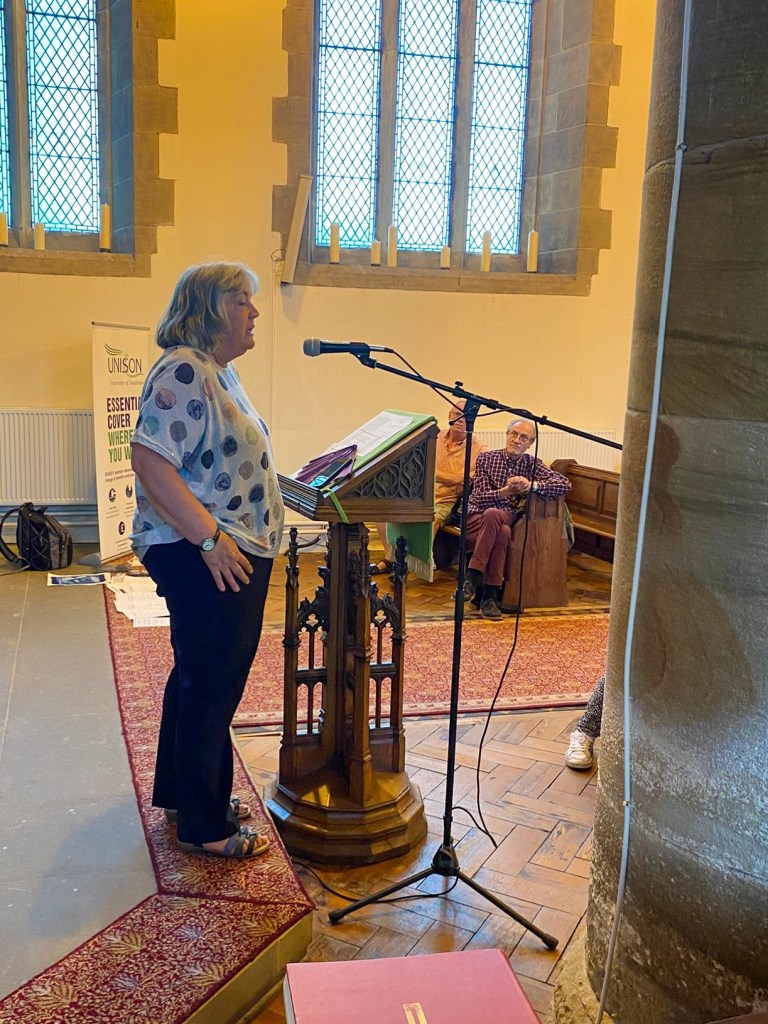
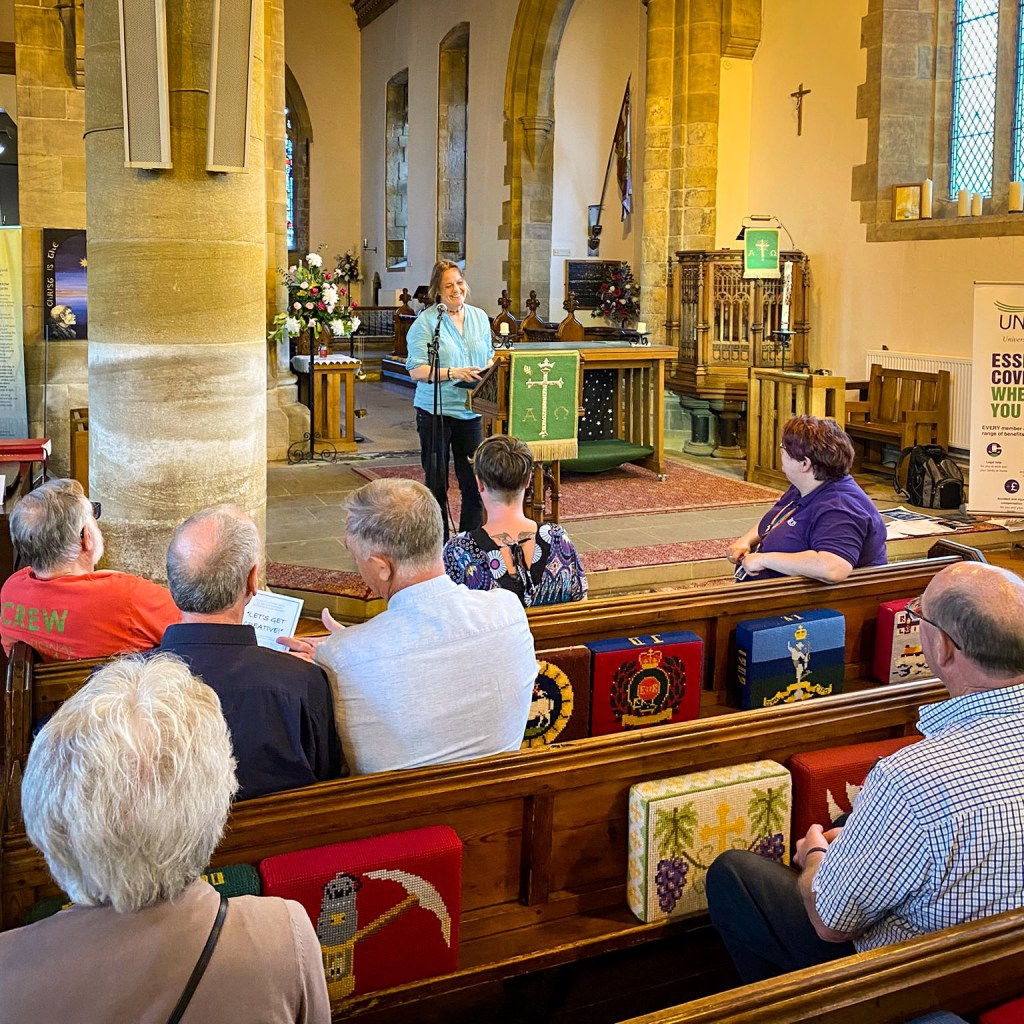
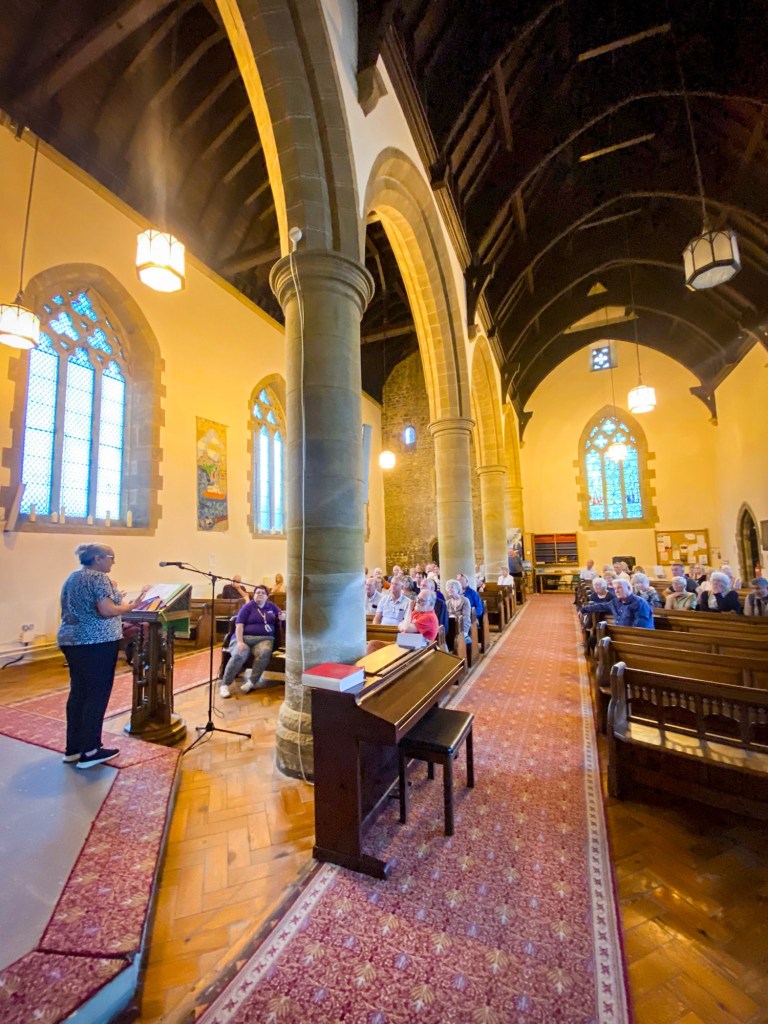
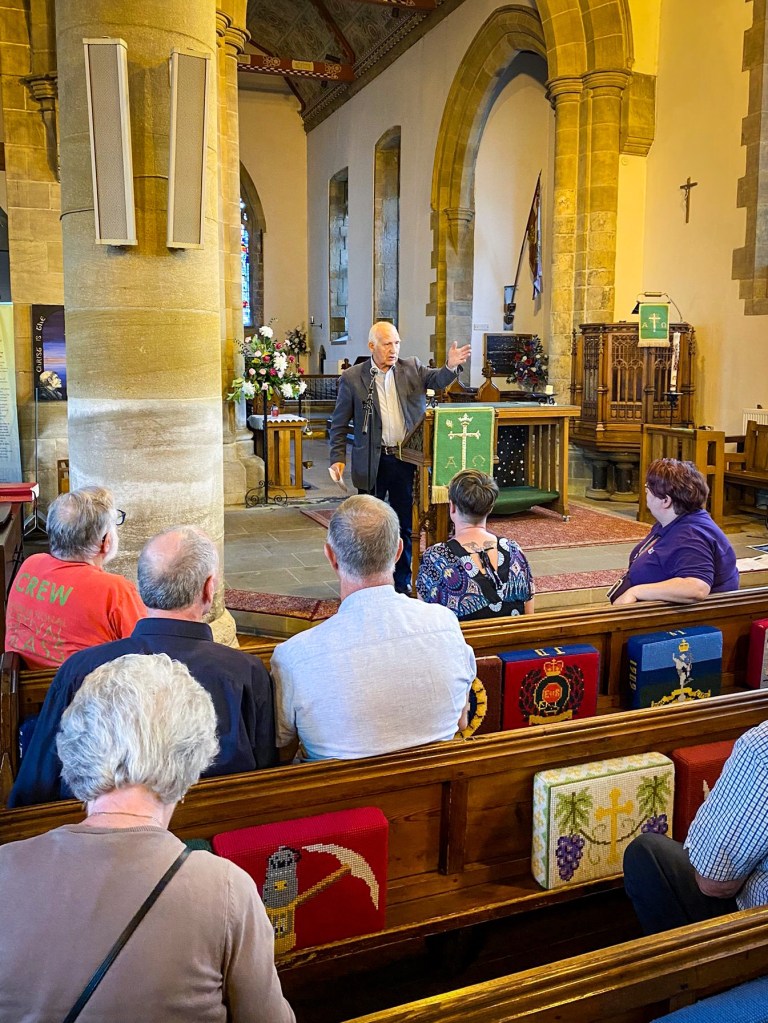
On a balmy summer night on 22nd June 2023, Sunderland citizens came from all across the city to St Peter’s church. This was the first public meeting of the save the National glass centre campaign. We had 30 people book through our eventbrite, but closer to 100 actually attended.
During the week I had visited Sunderland central MP Julie Elliott. I had invited JE to the meeting, but unfortunately she was busy. After an hour of conversation it was clear JE could support the fight to save the essence of glass making, but was adamant that the building of the National Glass Centre had not been beneficial for Sunderland, and that we should support the University line. I requested a statement for the blog. This is still pending.
On the day of our meeting the 20th Century Society, for the protection of at risk 20th century buildings, wrote a fantastic article in support of our grassroots campaign. More support and much needed publicity. You can read their article here:
I also met with senior management from the University to further question statements made in the report. The estates manager confirmed that recent work to remove the metal from the riverside of the glass centre had resolved structural integrity problems.
Furthermore, the services like the heat exchange, furnaces, and utilities systems are all nearing end of life. I have requested further information about the ‘end of life’ equipment. As I believe this will be a key factor in exactly what is saved.
Photograph by Chris Howson
We had a lot of passion in that church during our public meeting. Emotions were running high. The awesome setting struck a cord with all of us. How tragic it would be to end 1350 years of glass making tradition in the North East? There were tears, there was laughter, there was unity, there was outrage, and there were outpourings of love from every speaker.
Jo Howell: Photo by Phil Vickery, glass blower
I opened the evening with a brief introduction to who I am, what we’ve managed to achieve in the campaign so far, and a statement provided by Sunderland University.
See below:
“The University has always been clear that the search for a new home, or homes, is an opportunity for the National Glass Centre’s work to reach new audiences in a financially secure and sustainable manner, rather than just seeking to recreate the status quo. Such future-facing work had already begun with staff even before the building issues made clear that a move was necessary.
“We remain in active and positive discussions with key partners, including Sunderland City Council, about future site options.
“On the future of the current NGC building and site, no decisions have yet been made.
“National Glass Centre and the Northern Gallery for Contemporary Art will remain open in the current building for the next 2-3 years, continuing to welcome visitors to a year-round programme of exhibitions and opportunities to take part in creative experiences.”
Katherine McLeod, Sunderland University, 22/06/23
Photo by Jo Howell
My quick introduction was followed up by Joanna Willets from Unison’s Sunderland University branch, who is in full support of the campaign on behalf of the staff; and she outlined why the unions are United with us.
Unison have put £500 into the campaign to support advertising, printouts, and other campaign costs. Joanna invited people to unionise, and explained how morale across staff in the national glass centre was fairly low due to the immense uncertainty around the future.
Joanna Willets: Photo by Phil Vickery
Chris Howson took the microphone for a moment to express how much his own family appreciated the National Glass Centre. And, he told the crowd of a successful campaign in Bradford, where a building had been marked for destruction but a community show of love turned the tide.
We will be including some of these ideas in our future events. Unity and love will be our primary weapons.
It is accepted and understood that Sunderland University cannot be expected to financially carry a building that is no longer part of their academic vision. What was very clear from the meeting was that there was a strong desire for amicable solutions that ultimately would benefit the City and the University by transferring custodianship. It is clear that the building and its contents are viewed by Sunderland University as a financial millstone.
This dim view of the National Glass Centre is not shared by the people attending the public meeting. The main takeaway being that the National Glass Centre is fundamentally, globally and locally, an important cultural leader.
The National Glass Centre was created as a beacon of hope for the people of the river Wear when shipbuilding was finally killed off. And, it was very successful in providing people from all levels of the city’s population a route out of poverty and depression.
Save the National Glass Centre collage by Jo HowellChris Howson: Photo by Phil Vickery
A lot of members of the audience wanted to share their own impassioned experiences of why the National Glass Centre was so important to them. There were previous employees, current staff, friends of the glass centre, students, family of students, cultural workers, politicians, councillors, glass blowers, artists, construction professionals, legal professionals, heritage professionals, campaign professionals, and even an ex mayor!
And, so many more fantastically useful people, all willing to help in any way they can!
What did people say at save the National Glass Centre public meeting?
The below list is as much as I can recall from the meeting. The meeting overran by nearly an hour, and there were many people who wanted to speak. Each and every viewpoint was clearly heartfelt, and many came with their own suggestions of how we could save the building and the skill set housed inside.
The building is unique, and impressive.
Glass blowing is an endangered craft.
Sunderland has a prestigious and long heritage of glass making. How can we ignore 1350 years of continuous skill in this City?
They do not want to lose an important part of their cultural identity.
They are extremely proud of the National glass centre.
The building has hosted internationally famous artists during programs like the Glass Exchange. It has a global draw, of which no other venue can boast.
It is wasteful to destroy such a young building.
There are still a lot of questions surrounding the maintenance of the building. Many noting that regular painting would have avoided catastrophic rust.
A commitment has been made by several attendees to further work on the save the National Glass Centre campaign.
Could Sunderland Culture, as an Arts Council NPO seek to take over custodianship?
Funds could be raised via crowdfunding, diversifying income streams, adopt a furnace, and/or levelling up fund (apparently Sunderland has only accessed 12% of it’s levelling up allocations).
There are concerns that the intent is to demolish one of our best assets.
If the building is donated back to the people via a suitable local organisation, all it embodies can be saved for future generations.
If properly invested in, the National Glass Centre could create an ambitious cross industry program to research the most efficient and sustainable way of making glass.
Demolition would have a high carbon cost. Can this be justified?
Other glass blowing courses and studios have closed. The National Glass Centre could have far more students, and potential hirers of equipment because of this.
It is worrisome that the dilution, and vast reduction of the current provision isn’t being questioned by more MPs and councillors.
There will be a huge loss of opportunity.
The city will lose highly skilled workers.
The loss of the National Glass Centre will effect our ability to level up.
Students are worried about being able to complete their studies.
Morale is currently low in the centre.
Questions surround Sunderland University’s proposed financial numbers in the online report. We are seeking more information.
How will our young access their cultural heritage with glass?
Worried about losing studio spaces, equipment, staff, specialists, and skills.
Inside St Peter’s church in Roker, by Phil Vickery
What happens next?
Time to organise our campaign and divvy out jobs!
Those who emailed, I will contact and organise a follow up so that we can form a crack team! With this team of knowledgeable people we will have the most effective campaign possible.
There’s still time to email if you want to form part of the steering group. Email:
Savethengc@gmail.com
Initially we will start with a monthly meeting on the 3rd Thursday of the month. Venue TBC.
Thank you for your support. Spread the word. Email, write to, or phone your MP. Write to the culture minister. Write to Sunderland University. Tell everyone to visit the National Glass Centre to show their support. The staff need to know we value them. Without the skilled people the National Glass Centre is just a groovy ship shaped box. But with them, the National Glass Centre is something important to be cherished.
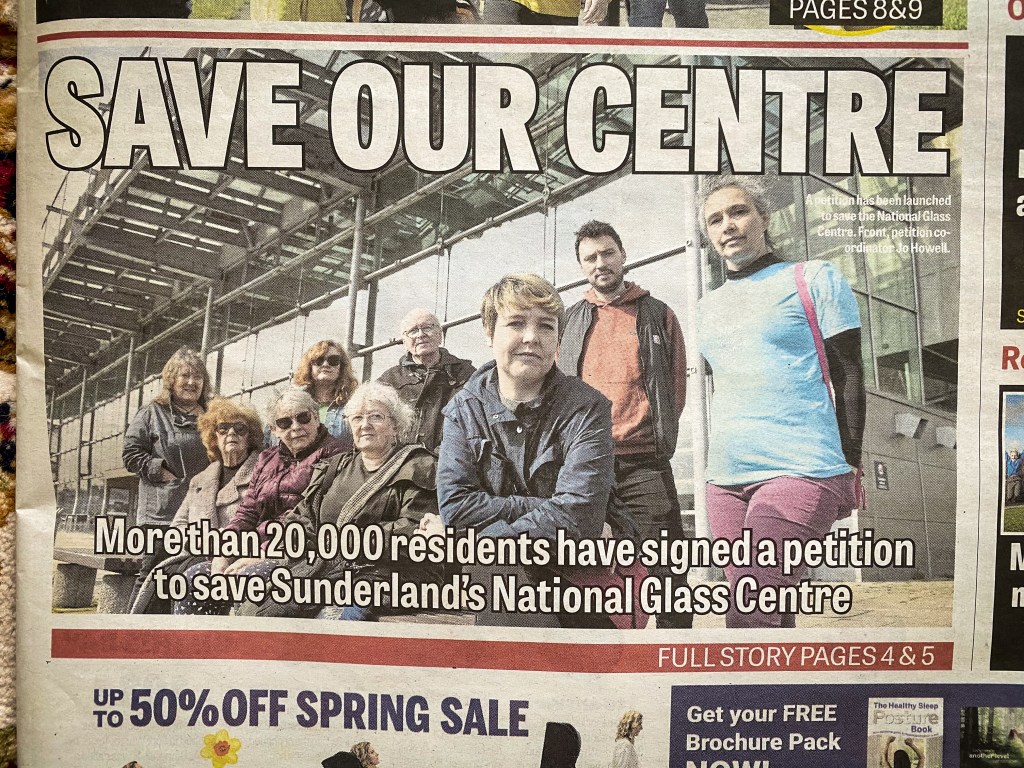
My mind has been blown! The overwhelming support that we have received in the last few days has been amazing. When we met with the the photographer, and Katy, we found out that the petition was nearly at 20,000 signatures. Today we are at over 25,000.
I think it safe to say that there is a lot of support for the national glass centre to continue on in it’s current format. The loss of glass blowing would be untenable by all the signatories. We have been inundated with testimonies about how important the centre has been to people. Reasons ranging from fantastic career opportunities the NGC and NGCA have offered artists, to the importance of its role in mental health and wellbeing. The National Glass Centre is a source of great pride.
In other news, we have set a public meeting for June 2023 at St Peter’s Church. I need to approach some key speakers, and to organise the format. So, more details will soon follow.
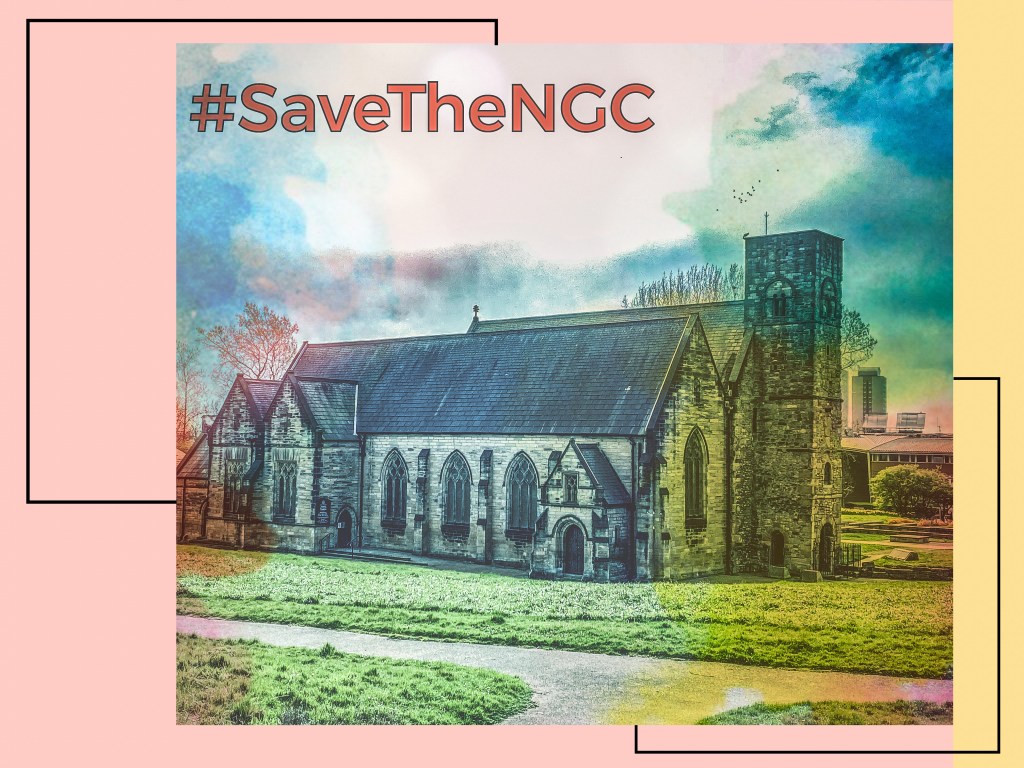
St Peter’s church by Jo Howell
Keep sharing the petition, and if you haven’t written to our MP yet, neither have I! So we had better get on with writing emails, letters, and organising the public meeting.
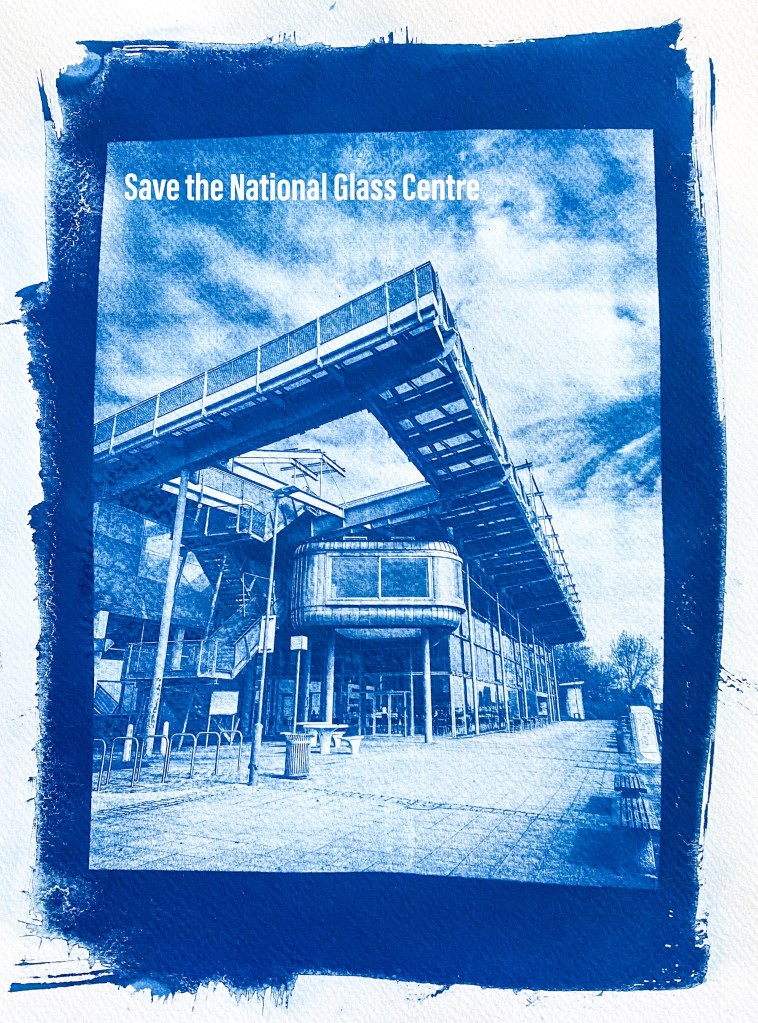
I will also hand print cyanotype versions of the below design in a made to order format.
All proceeds will go towards campaign costs like signage and mail outs. The campaign is run by volunteers made up of concerned locals, and people whose businesses are likely to be affected. We encourage you to sign up for our mailing list, and to follow our blog for updates.
Save the National Glass Centre original made to order prints
We are so close to 5000 signatures! I’d love to hit 5,000 for when I eventually sort out meeting wor Julie (Elliot). I also need you all to put pen to paper and write to or email wor Julie stressing how wrong she is about the will of the people.
Let her know that we love our heritage and all of the wonderful opportunities that the National Glass Centre brings with it! Julie Elliott
Send your post, emails, tweets and calls to wor Julie. Information below:
Telephone 0191 5655327
Email julie.elliott.mp@parliament.uk
Post
Julie Elliott Member of Parliament for Sunderland Central Suite 204 The Place Athenaeum Street Sunderland SR1 1QX









 Save the National Glass Centre