thanks for your support. On Wednesday, 25th March, Sunderland City Council will debate a motion which could help to pause demolition and save the National Glass Centre. If you still feel strongly about this, please could you write to your local councillors and MP to express your concerns. This will help the campaign enormously. If you live in Sunderland, consider attending the council meeting in person (4pm at City Hall, Sunderland) to show the strength of public feeling.
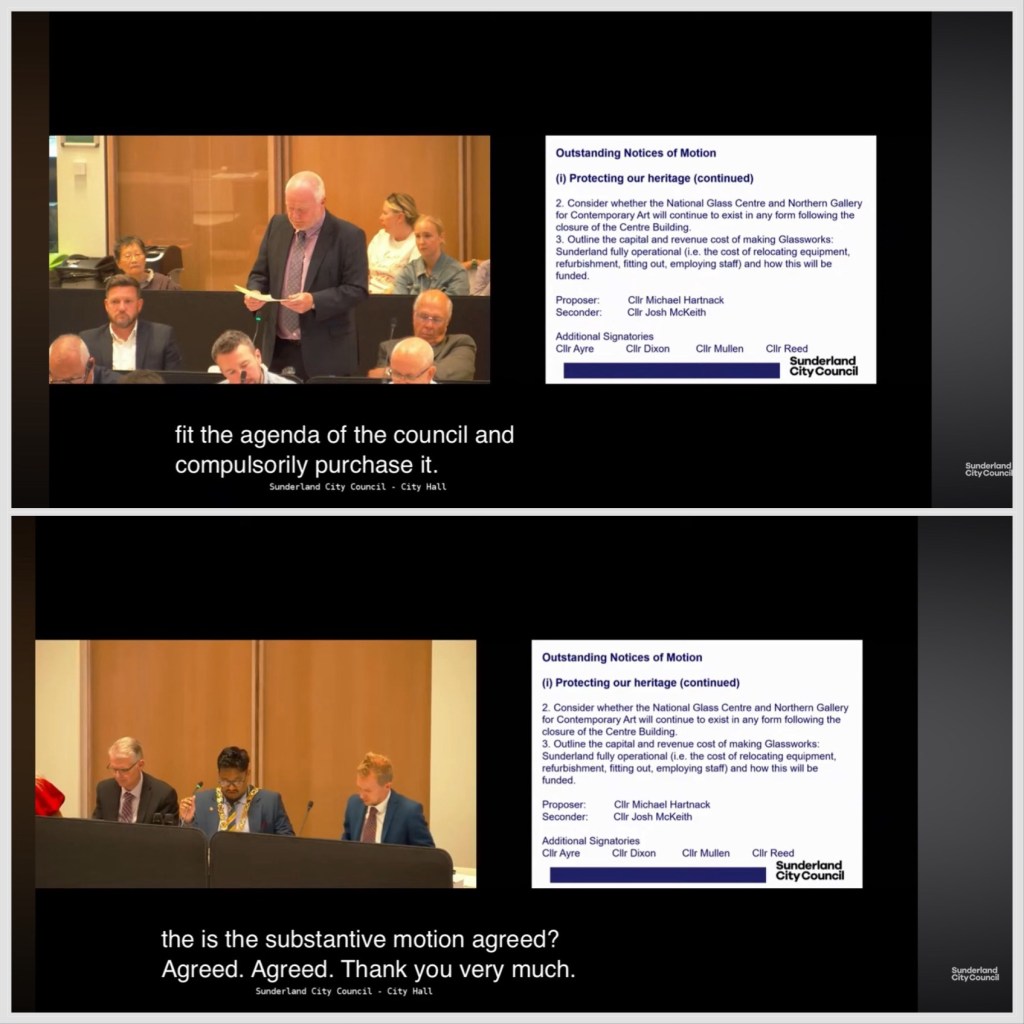
After a remarkable council meeting I thought I’d share some highlights. Cross party support for the motion requesting a more robust look at the presented documents from Sunderland University regarding the National Glass Centre and a call for compulsory purchase.
Labour representatives were reading from carefully considered scripts to spin the narrative towards Glassworks Sunderland whilst patronising us by suggesting we are ‘romanticising heritage’.
This is OUR CULTURE. This is our future. That’s why the fight will continue until common sense prevails. As proud working class people we cannot allow this top down dictatorship. We deserve our NATIONAL Glass centre. Not empty promises.
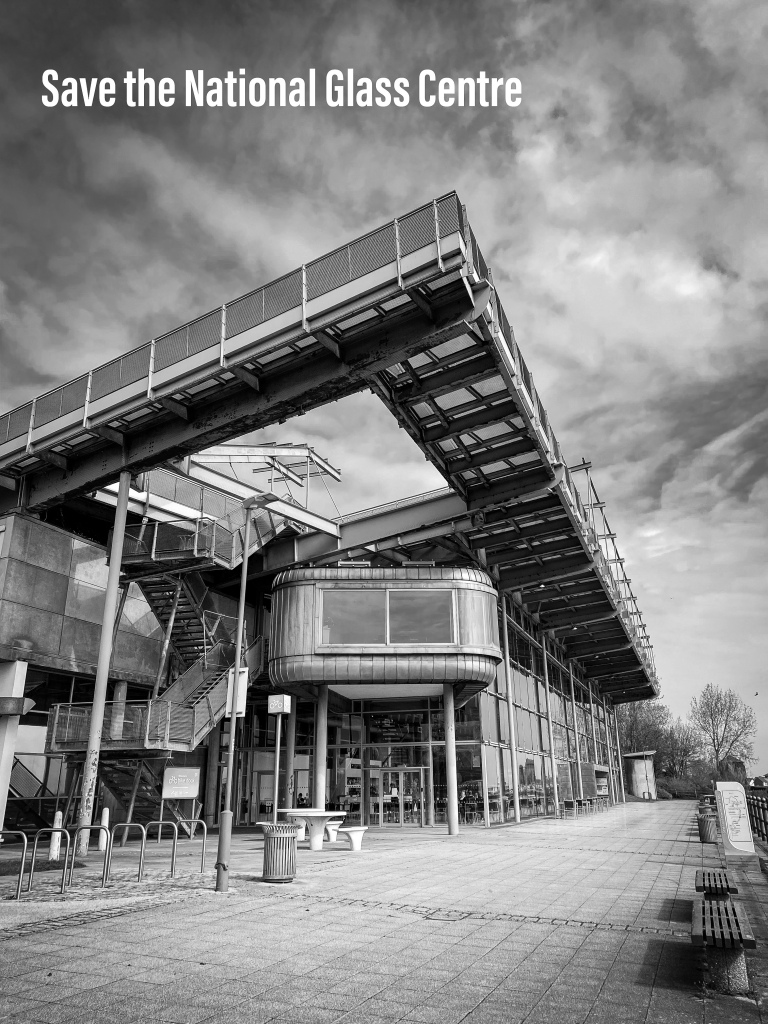
Save the National Glass Centre photograph by Jo Howell
You are invited to…
Sunderland City Council Meeting
At 4.00pm in City Hall, Sunderland on 25th June 2025
To witness the debate deciding if the Council will pass the Motion below and start the process of investigating the actions of the University of Sunderland regarding the decision to close the NGC, thereby ending 1350 years of glassmaking in Sunderland.
The Council Meeting is open for the public to attend, please come and show your support for the Campaign to Save the National Glass Centre.
Or follow the live stream of the Meeting at…
Notice of Motion – Protecting our heritage
This Council regrets the decision taken by the University of Sunderland to close the National Glass Centre in 2026.
Preserving Sunderland’s glassmaking heritage is vital to the city’s cultural offer as well as the Council’s economic growth ambitions.
The University has taken this decision due to what it claims are unaffordable repair costs and sustained operating losses. Council expresses concern regarding the accuracy of the cost estimates so far presented.
Council therefore resolves that the Chief Executive will write to the University’s Vice Chancellor with the following questions:
1. What is the scale of the Centre’s operating loss in the current financial year and the preceding 5 years?
2. Do those losses reflect the cost incurred when structural changes were made to the Centre’s main façade in 3. 4. 2022?
3. How does the University account for the Centre’s income and expenditure?
4. Will the University release all documents relating to its ownership of the Centre and confirm whether that ownership is subject to any restrictions?
The proposal to establish an alternative glassmaking provision in Sunniside in 2027-28, known as Glassworks: Sunderland, fails to address the loss of expertise caused by the Centre’s closure, ignores the economic implications for the surrounding area, and is itself only partially costed.
Council further resolves that the Chief Executive will prepare a detailed report, to be made public within 6 weeks, with the following terms of reference:
Fully explain the proposed ownership structure of Glassworks: Sunderland.
Consider whether the National Glass Centre and Northern Gallery for Contemporary Art will continue to exist in any form following the closure of the Centre Building.
Outline the capital and revenue cost of making Glassworks: Sunderland fully operational (i.e. the cost of relocating equipment, refurbishment, fitting out, employing staff) and how this will be funded.
Save the National Glass Centre photograph by Gill Helps
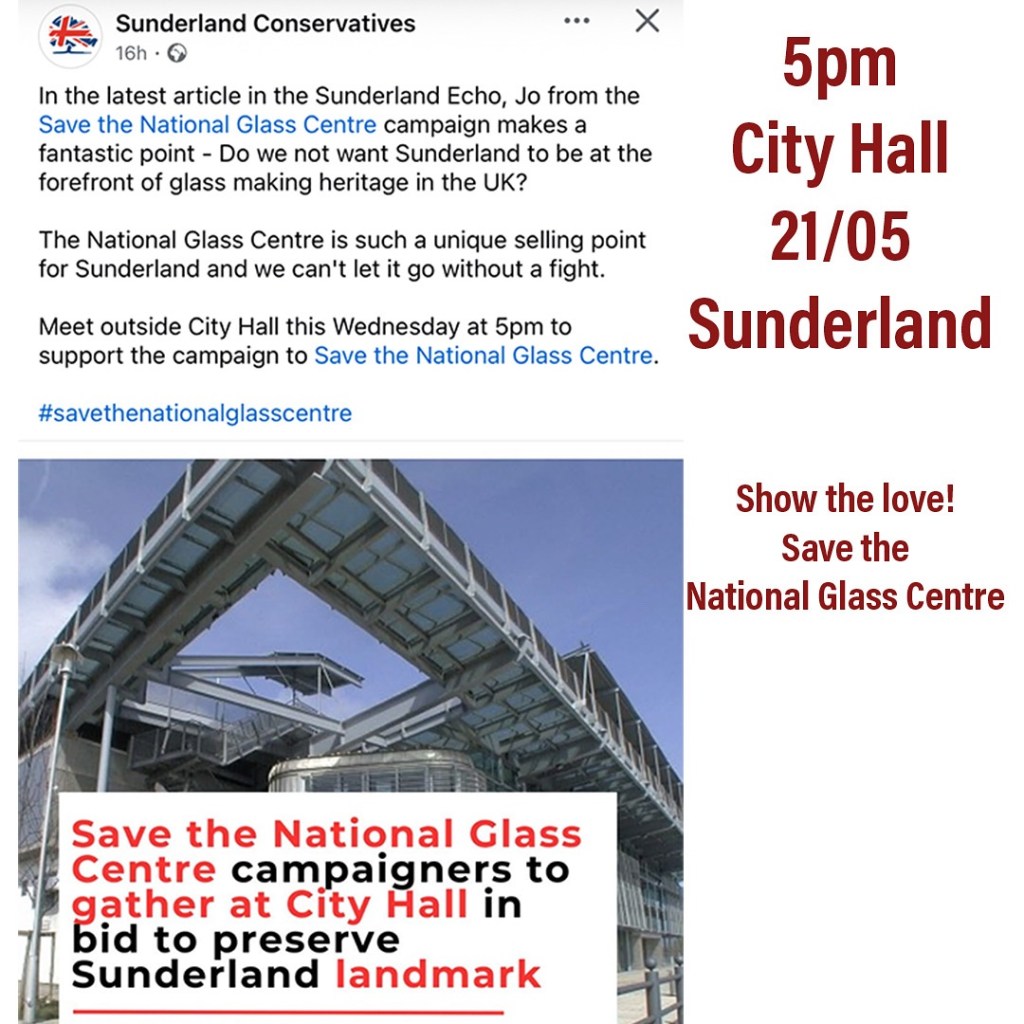
Make some signage or some fashion and pop down to City Hall with us on the 21st May 2025 at 5pm.
Show the love, save the national glass centre promoted by Sunderland Conservatives
What’s the crack?
We want you to come and show support for the National Glass Centre.
Make some signage or some fashion and pop down to City Hall with us on the 21st May 2025 at 5pm.
We want to save the building et al because it was purpose built for our glassmaking heritage as a regeneration project for the City.
We believe demolition is needlessly destructive and will have adverse effects on our delicate marine and coastal environment.
The most sustainable building is the one that already exists.
Add to this that National Glass Centre is situated in St Peter’s because glassmaking was known to have been brought to Sunderland and taught to others in 674ad.
That’s 1351 years of glass!
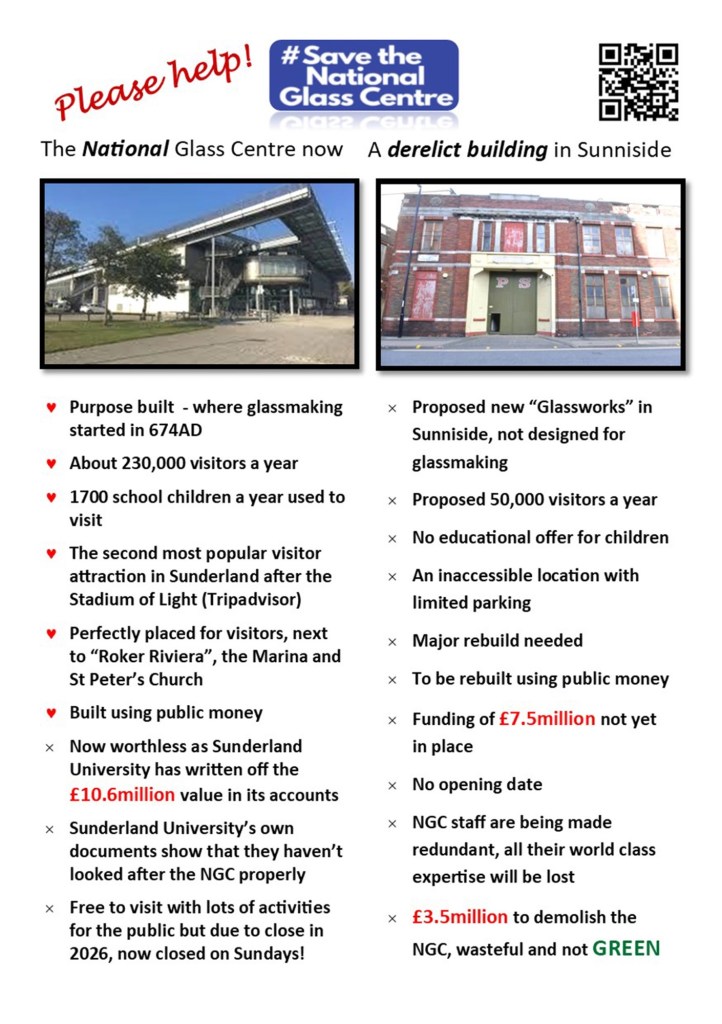
We want to save the National Glass Centre because it has inspired working class people to enjoy art and heritage. It brings 230,000 people a year and we believe it could command even more.
The National glass centre building is an iconic emblem on the riverside. A cathedral of glass. Its cultural wealth and impact upon the surrounding area should not be underestimated.
The prestige of the highly skilled glassmakers has made our city known across the world. It symbolises our rich creative past and could be a flagship of new science or technologies of the future.
This National Glass Centre of ours is uniquely Sunderland. Anywhere can make music. Obviously we’re glad that we make music too but we are about to concede to the destruction of our only internationally facing unique selling point.
Katy Wheeler has put it excellently in the Sunderland Echo read it here:
Meet us at 5pm on May 21st at City Hall in Sunderland. Bring signs!
We need you beautiful people with some hand painted signs to have a visible outpouring of public love for the National Glass Centre.
It won’t be long until the shutdown of the National glass centre begins in earnest. We are running out of time to press this issue with MPs, councillors and everyone who has sway in this City.
The National Glass Centre has over £30 million of taxpayers money invested in it over the years. This is our investment. Our National centre with global appeal.
If you can’t come in person then take your opinions and crowbar them in on every comments section of every post of the Uni and the council. Point out hypocrisies publicly.
And of course share all of our posts!
See you at 5pm on May 21st at City Hall! Bring posters, signs and righteous indignation.
After another shock announcement that the National Glass Centre will close on Sundays from March 16th Save the National Glass Centre Campaign calls for more boots on the ground.
Sign up for updates on how to help the campaign by emailing savethengc@gmail.com with Newsletter in the subject line.
Yet again the offer for locals and visitors is weakening with the University of Sunderland deciding that working families will only be able to enjoy a visit to the “world-class” cultural venue on one day of a usual working week – Saturdays.
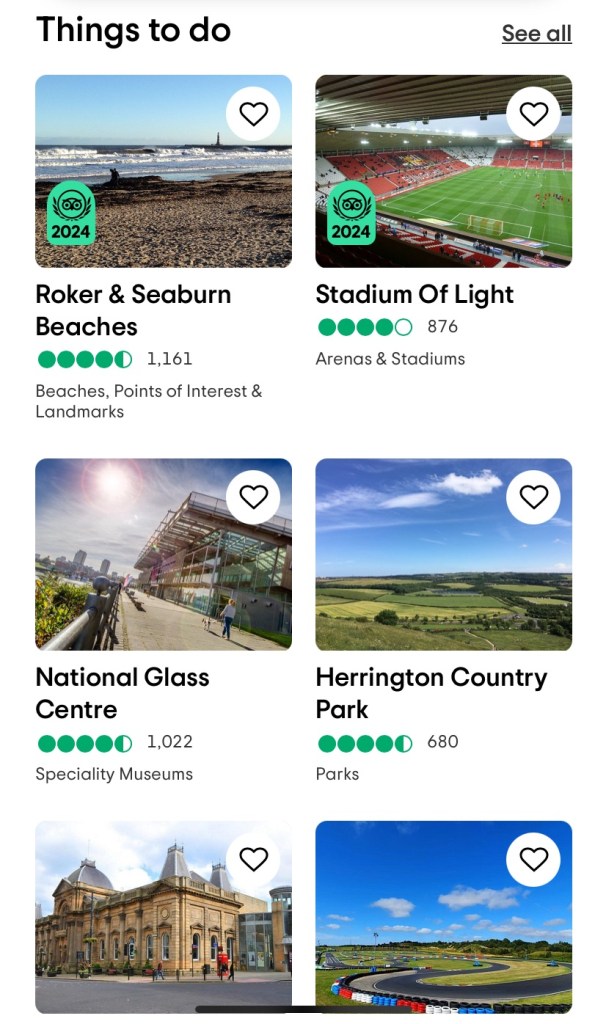
Campaigners believe that the university should not have the sole responsibility for deciding the much-loved attraction’s future. They are questioning why Sunderland’s second most popular visitor attraction, after the Stadium of Light, (Tripadvisor) will be closing on Sundays, the second most popular day for visitors (according to Google).
Tenants have been told by email that,
“The decision has been taken by the University of Sunderland to balance the needs of students, staff and visitors to the NGC, with the University’s efforts to ensure the NGC runs as sustainably as possible until the planned closure of the building in July 2026.”
The NGC used to host about 230,000 visitors in a usual year according to Sunderland Culture. People north of the river are worried about what will happen to local businesses such as B&Bs, shops, cafes and pubs if the NGC closes in summer 2026.
A substantial amount of money will need to be raised, and work has barely started on developing a robust business model for the self-sustaining glass making hub. The predicted footfall of 50,000 visitors at Glassworks will make it much harder to afford to employ 16 “creative roles”.
1700 schoolchildren used to visit the NGC annually to learn about the unique heritage of Sunderland and experience the thrill of glassmaking, yet there is no mention of children in the new plan.
If the plan for Glassworks fails to overcome all the challenges, we could be left with nothing!
Campaigners now know through Freedom of Information requests that the university has written off the value of the NGC and NGCA in its accounts, previously the “net book value” was £10.6million (FOI2425/10/16), assets created for the community using a huge amount of public money.
The Chair of the Board of Governors has written that “the land is not of significant value and even that would be largely offset by the cost of removing the building and any potential landscaping” (11.04.24).
The university’s own documents show that the NGC building has not been well maintained, leading to a backlog of repairs. The documents also show that there is a workable solution with build costs of around £6.6million.
Considering all this, campaigners are appealing directly to the university to allow Sunderland City Council to step in and take back full control and return the centre to what it was, a “world-class cultural asset” for the public to enjoy.
In the summer of 2026, the last university students will leave the building. This leaves plenty of space for the important heritage of glassmaking to continue whilst developing an even more enhanced offer for visitors, artists and our future generations by celebrating the religious, industrial and maritime heritage aspects of Sunderland’s proud history.
There are several organisations in Sunderland that could be drawn together under one roof. Never forget that Sunderland was the largest shipbuilding town in the world, that there is a little bit of Sunderland in millions of cupboards around the world in the form of Pyrex dishes, or the memory of Venerable Bede and his creation of the idea of the English as a people. Why can’t our city’s proud heritage be celebrated more?
Whilst The National Glass Centre will probably never beat The Stadium of Light and become the most popular visitor attraction in Sunderland it certainly could continue to enjoy its current second place!
Remember to email us! We are planning something and we need you all to be part of it!
On behalf of our campaign group, “Save the National Glass Centre”, we extend our warmest congratulations on your recent appointment as Secretary of State for Culture, Media and Sport. We were heartened to hear your speech at the Royal Television Society recognising the importance of the creative industries outside of London and noting that Jonathan Reynolds, no stranger to Sunderland, is putting the creative industries at the centre of your industrial strategy. As you said, “Talent is everywhere but jobs are not”. It was kind of you to mention the beauty of Sunderland in relation to the filmmaking industry, and the same can certainly be said of Sunderland’s longstanding glass making industry.
As publicly speaking out is “critical to a healthy, functioning democracy” we, the people, are appealing to you directly in an open letter…
Save the National Glass Centre
Stop the University from breaking the glass heart of Sunderland
Immediate action is required to prevent the loss of Sunderland’s much loved “world-class cultural asset”.
Our calls for action are,
An immediate stop is put to the University of Sunderland’s closure, demolition and relocation plans for the National Glass Centre (NGC).
An independent review into the situation is commissioned to establish the facts and consider alternatives other than demolition and the destruction of our internationally renowned, unique cultural asset.
That the people who care for, use, value, cherish and, let’s face it, have collectively paid for the NGC are central to the decision-making process.
That our campaign group are given the opportunity to present our evidence-based solutions which can ensure a sustainable future for our NGC, for our glassmaking cultural heritage and, most importantly, for our future generations.
Although the NGC is currently under the ownership of the university it was conceived as a public asset central to the regeneration of that area of Sunderland. It was paid for and supported by several organisations but principally British and European taxpayers. The university assumed full ownership through the collaboration of Arts Council England (ACE) and Sunderland Council.
The university has shown “violent indifference” to our exceptional cultural and educational venue and has decided to demolish the NGC thereby ending 1350 years of glassmaking in Sunderland. The decision was taken using biased, partial evidence. There was no public consultation, no reference to the fate of the complex cultural ecosystem surrounding the NGC and no consideration of the economic damage caused by the loss of the approximately 230000 visitors the NGC used to host annually (source: Sunderland Culture). Since the shock announcement 18 months ago, there is still no coherent plan to save and relocate the many and varied creative activities housed within the building, including the Northern Gallery for Contemporary Art. Millions of pounds of embodied public funds will disappear if the university is successful in its development plans.
Save the National Glass Centre
We are a group of local and nationally based people with a wide variety of experiences and professional qualifications. Collectively, we believe that the NGC can survive and thrive if the community, politicians, other interested organisations and the university work together in a spirit of positive engagement to create an ambitious, sustainable future. We are determined to challenge the averted gaze and lack of curiosity that has characterised the response of the public office holders accountable and answerable for this matter. As of this date, our elected representatives, Councillors and Members of Parliament, have been unsuccessful in holding the university to account so we are appealing to you directly as a group with the backing of over 35700 petitioners from 72 countries.
As a campaign group we have assembled a comprehensive evidence base containing many deeply troubling facts and unanswered questions, and we would welcome the opportunity to discuss this situation with you.
Your predecessors at the DCMS have been made aware of this matter, following enquiries from HRH King Charles and local politicians. In October 2023 Lord Parkinson wrote,
“…this is very much a live issue so we do not believe launching an inquiry would be productive at this stage.”
Do we have to wait until after the destruction of the National Glass Centre before this scandal is examined?
We await your response with anticipation,
Yours sincerely,
Signed on behalf of the Campaign to Save the National Glass Centre.
Save our 1350 year glassmaking heritage! First brought to the area to adorn St Peter’s and St Paul’s churches in 674 ad by Benedict Biscop. We have continued with pride and have a unique collection of highly skilled artists who have stayed in the region to make glass. You wouldn’t destroy 1350 years of heritage anywhere else, so why do you think it’s ok to vandalise culture in the North East?
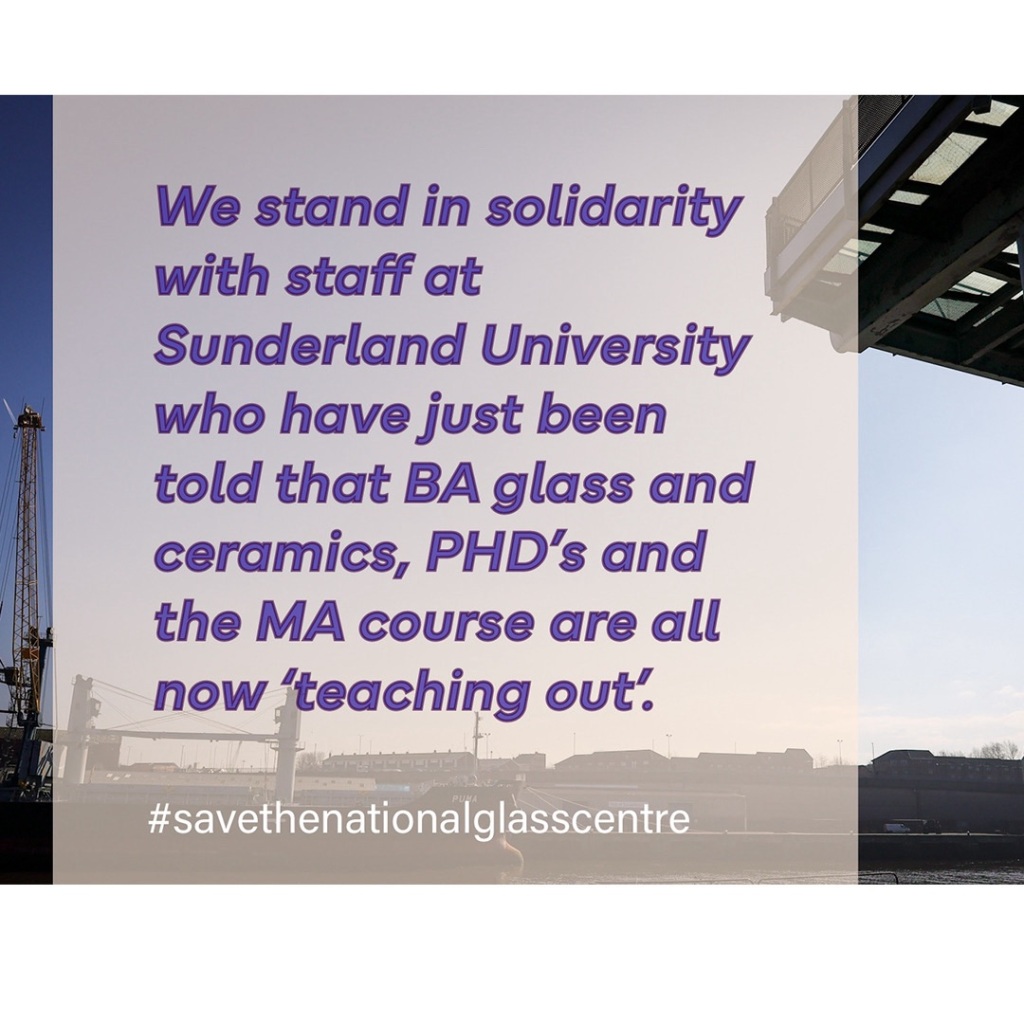
Save the National Glass Centre campaign fully supports any action the unions or the workers wish to take. Solidarity!
We stand in solidarity with all of the staff and students. We are distraught to hear that like a thief in the night Sunderland University is taking away our glass and ceramic courses leading to inevitable loss of highly skilled staff, valued teachers and of course eventually the building itself. Filling their boots with Sunderland’s heritage and the future of glass making in the North East.
Save the National Glass Centre campaigner Keith Brown explains
On the 8th of December 2022 the University of Sunderland announced its shocking decision to close the National Glass Centre (the NGC) on the banks of the river Wear in Sunderland.
The campaign to reverse that decision and to keep the NGC open in some form is gathering momentum. Campaigners have highlighted the NGC’s iconic architectural status; the devastating cultural and artistic impact of the NGC’s work, not only upon Sunderland but also upon the north-east and the entire UK. People need to be made aware that the cost of repairs widely broadcast by the University are grossly inflated.
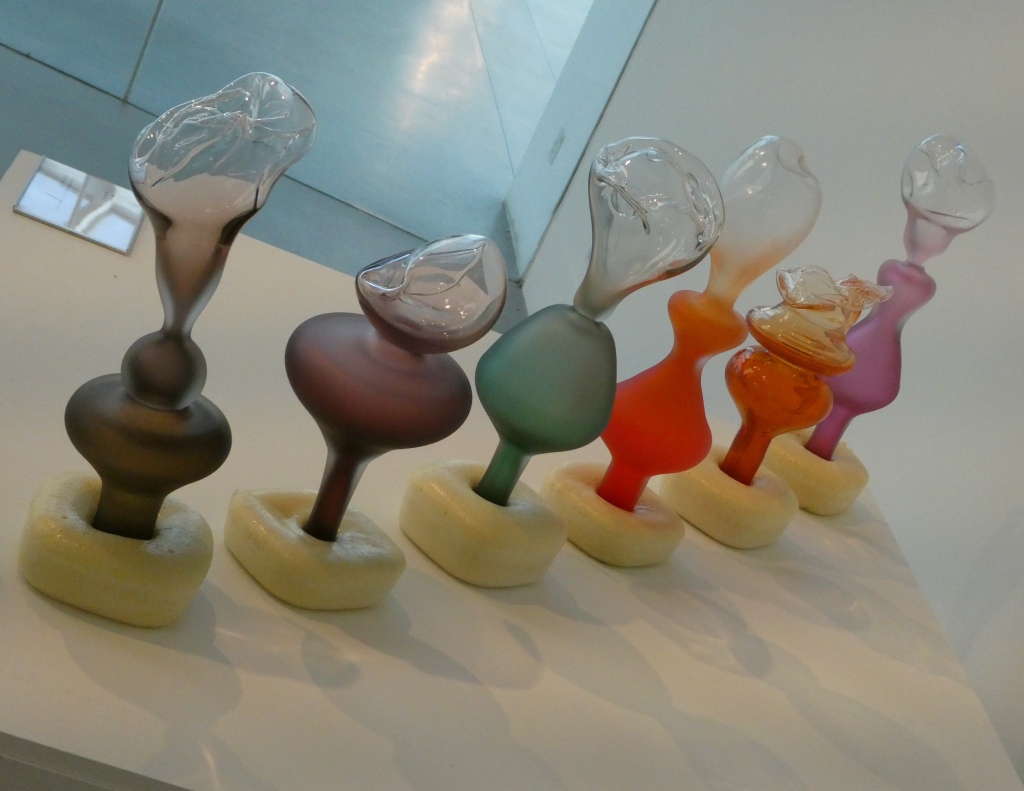
MA exhibition photography by Gill Helps
Well-over 31,000 people have signed a petition against its closure and demolition. Campaigners are now calling for more people to help save the award-winning NGC, cited as a “World-class cultural asset” in Sunderland council’s 2021 UK City of Culture bid. The campaign already involves many local people, and also receives support from key national bodies.
Renowned international architect Piers Gough in the 20th Century Journal has said that
“Sunderland cannot afford to lose such an icon. It would seem ideal for a forward-looking University to use or repurpose, but should it be superfluous another more appreciative owner should be found.” He also stated that “the NGC references Sunderland’s shipbuilding heritage as well as glass making past, making this unique building special to its particular location. It is the best and most apposite 21st Century Building of the region“.
Architect Piers Gough in the 20th Century Journal
The 20th Century Society (C20) , the professional organisation which saves endangered buildings, has sought independent advice from experts in building lifespan and sustainability. They have cast doubts on the figures quoted for repair and renovation.
“condemning this landmark building that’s barely 25 years old and in the process losing one of the few purpose built glass blowing facilities in the country, is unconscionable“.
C20’s article 21.6.23
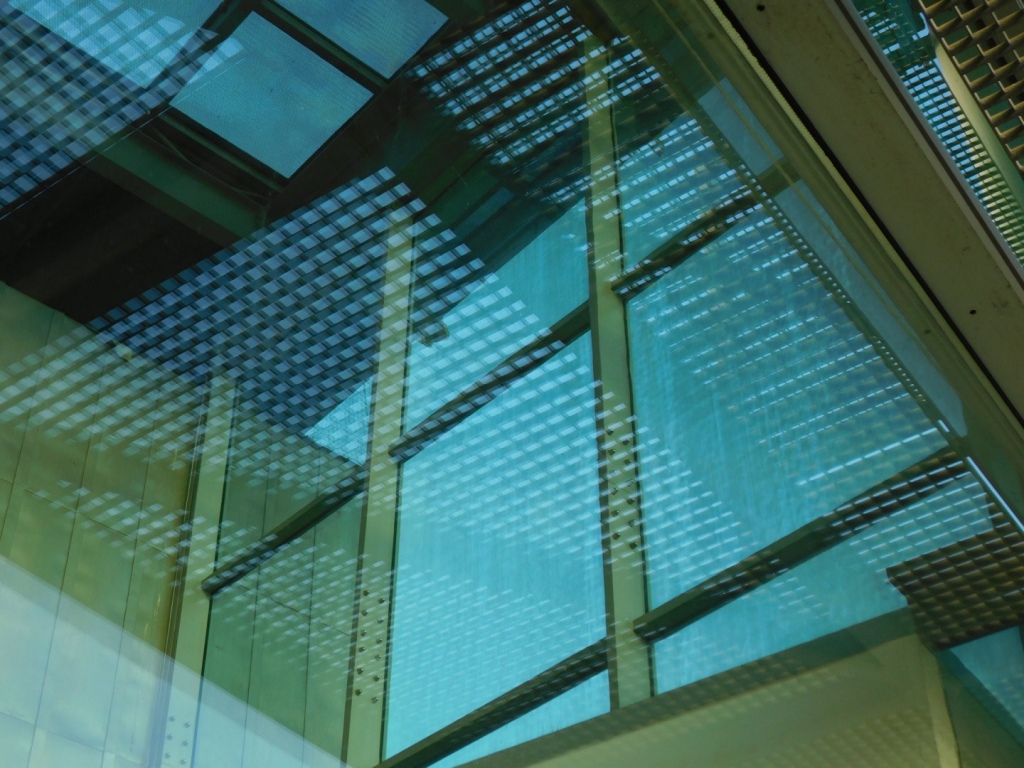
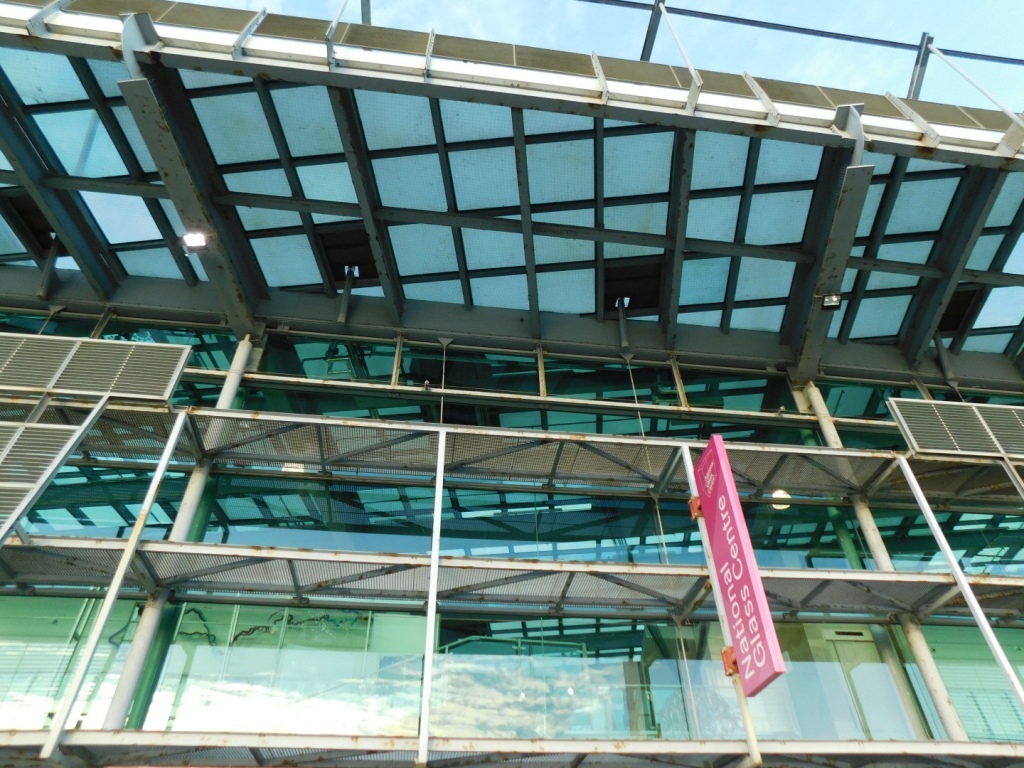
Architecture photography by Gill Helps
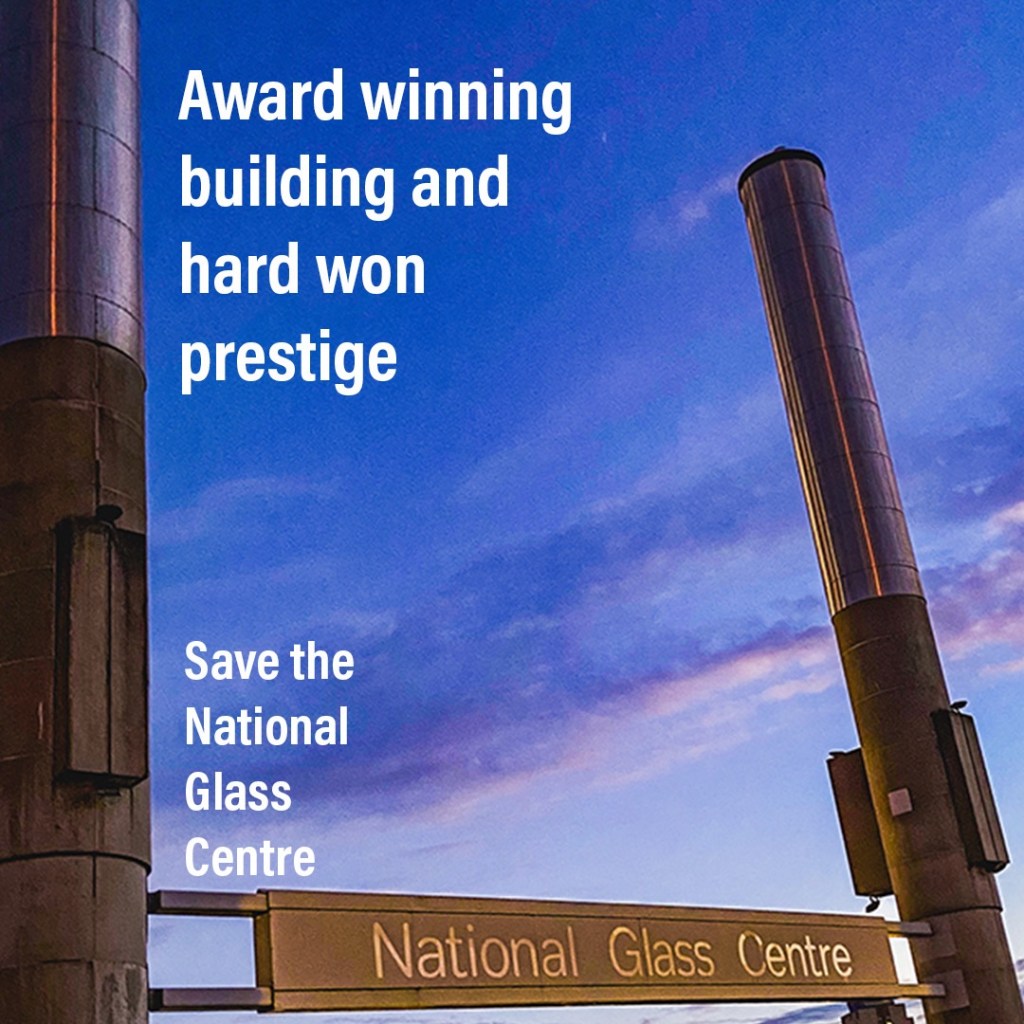
In 2000, the Design Council awarded this unique building Millenium Product Status in recognition of its creativity and environmental approach. The building also received commendations from the Craft Council, the Victoria and Albert Museum and the DTI.
The National Glass Centre is owned and maintained by the University. Sir David Bell, the vice chancellor and chief executive stated in May 2023 they could close it as early as 2025, he also stated, without any prior consultation, that the National Glass Centre will be demolished.
The building sits adjacent to the University campus where the University is planning to undertake significant capital works over the next five years. This suggests it intended all along to expand onto the NGC site.
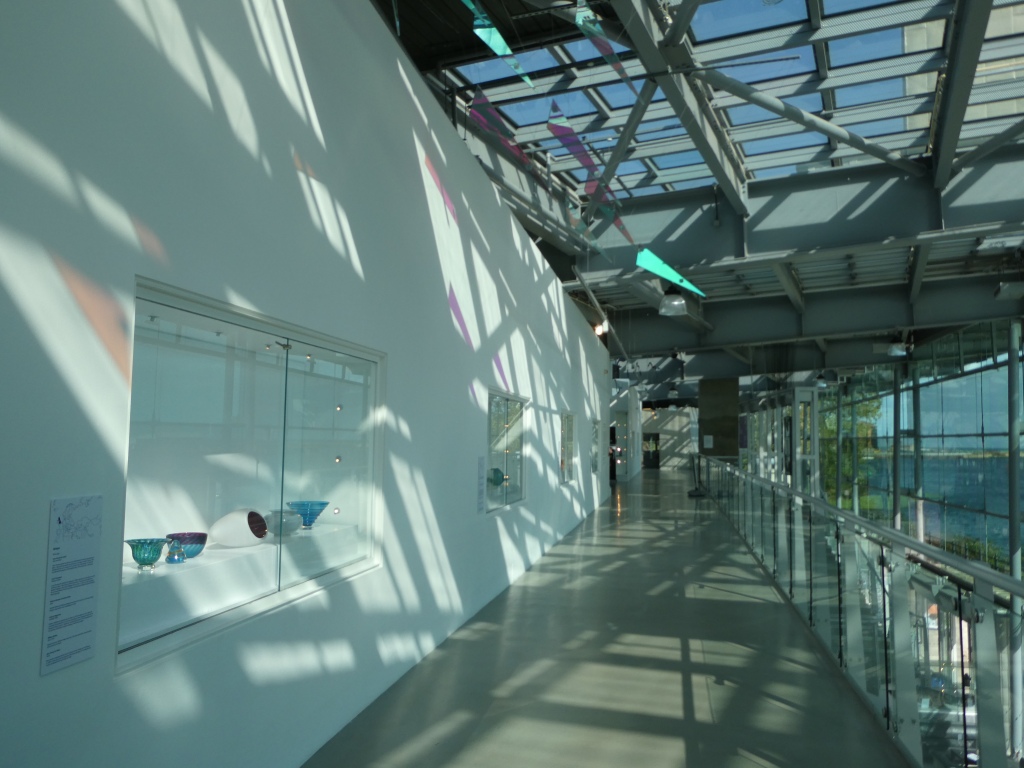
National Glass Centre photography by Gill Helps
The University’s Intention to demolish and redevelop, releasing embodied carbon in the process, is the wrong decision given the concern over accelerating climate change. Retro fitting is by far the best solution. This academic institution should focus on STEM subjects and treat The National Glass Centre as a case study for sustainability and growth rather than managed decline and potential destruction.
The repair costs of £45m broadcast by the University are now widely believed. How the costs can be so high for what essentially should be the refurbishment of the existing building needs further clarification by the University because such an inflated figure is guaranteed to deter any potential funders.
The published costs are not for repair alone, but for an array of other enhancements including replacing the entire roof (solid & glazed) all the glass curtain walling, installing photovoltaic panels, and replacing all the mechanical and electrical systems. Even with these enhancements the reported figure appears seriously inflated, particularly when the construction cost for Culture House, a brand new building in the centre of the city, is reported as being £25m.
MA exhibition photography by Gill Helps
Retired planning inspector David Vickery wrote in a recent campaign article: “Sunderland City Hall was completed in November 2021 costing £42m (which is £3 million less) and for that £42 million Sunderland got two large glass and steel office blocks, one of five storeys high and the other of six storeys (190,000 square feet), both buildings connected by a glass atrium. How can it cost £45 million just to repair a roof?”
Early in 2023, the campaign gave the University a Freedom of Information request to enquire how the University had come to their decision to close the National Glass Centre.
In March 2023 the University published documents online, showing the consultation that they had based their decision on.
The campaign followed up by meeting in person with executives from the University on 22.06.23. (The day of the public meeting at Saint Peter’s church.) During this meeting the campaign requested access to all of the NGC’s maintenance records.
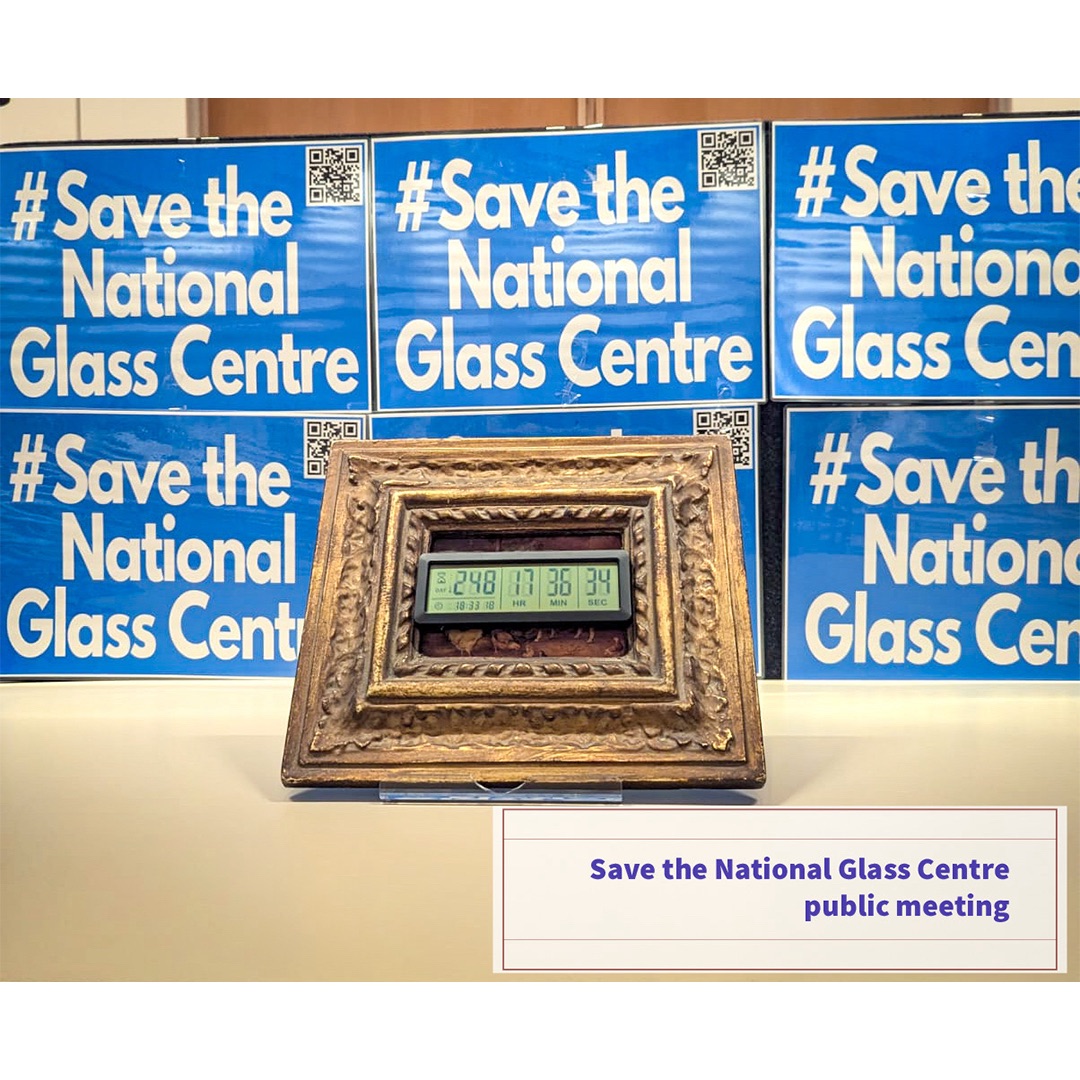
Save the National Glass Centre public meeting photography by Phil Vickery
In August, the University stated via email that the FOI was not received, the campaign issued a new FOI request on the 14th of August ’23 (FOI 2323/0814).
The University said they were gifted the NGC when it was 12 years old, however the land registry document appears to show they were given it for no recorded price when it was only 8 years old, (GOV.UK Title register for: National Glass Centre, title number: TY454590).
There is no doubt that the University has struggled to maintain the NGC, a fact that was recently noted in its Future Strategy Statement.
Also the University’s Head of Estates stated in 2013 ” the centre has suffered as a business and its maintenance regime hasn’t been as robust as it could have been.” Since then, the exterior has further deteriorated under their stewardship.
” The centre has suffered as a business and its maintenance regime hasn’t been as robust as it could have been.”
Future Strategy Statement. The University’s Head of Estates stated in 2013
Sadly, the deterioration and destruction continues and in January 2023, due to some corrosion and safety concerns the University removed and rapidly disposed of the massive heat sink (brise soleil) which was a superb and crucial design feature on the front of this monumental building.
National Glass Centre photography by Gill Helps
In addition, in 2013 the NGC received £2.5m for an internal refit. This grant aided alteration allowed the University to move their glass and ceramics course into the NGC, also Sunderland Council moved the Northern Gallery for Contemporary Art into the building. Two property moves that achieved substantial ongoing financial gains for the University and in particular Sunderland Council.
Opened on the 23rd of October 1998 by Prince Charles, now our King, this iconic building encompasses a vast array of crucial delights: substantial visitor experiences and facilities; brilliant collections and exhibition spaces; the Northern Gallery for Contemporary Art; workspaces for the academic courses, the tenanted artists’ studios; and the specialist facilities for the creation of ceramic and glass artwork – all housed within the building. Plus, there are numerous creative and constructive magical children’s workshops, some where children see their designs being cast in molten glass.
Also this extensive and marvelous property used to occasionally be used for weddings, and could actually accommodate many special events if properly managed and promoted.
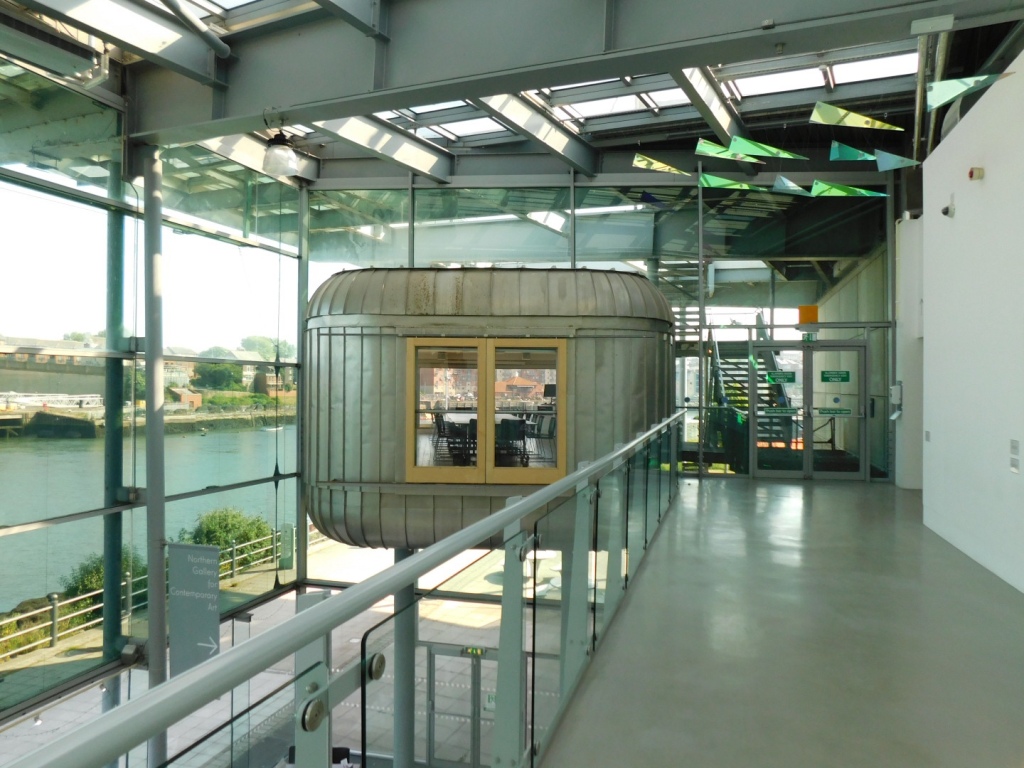
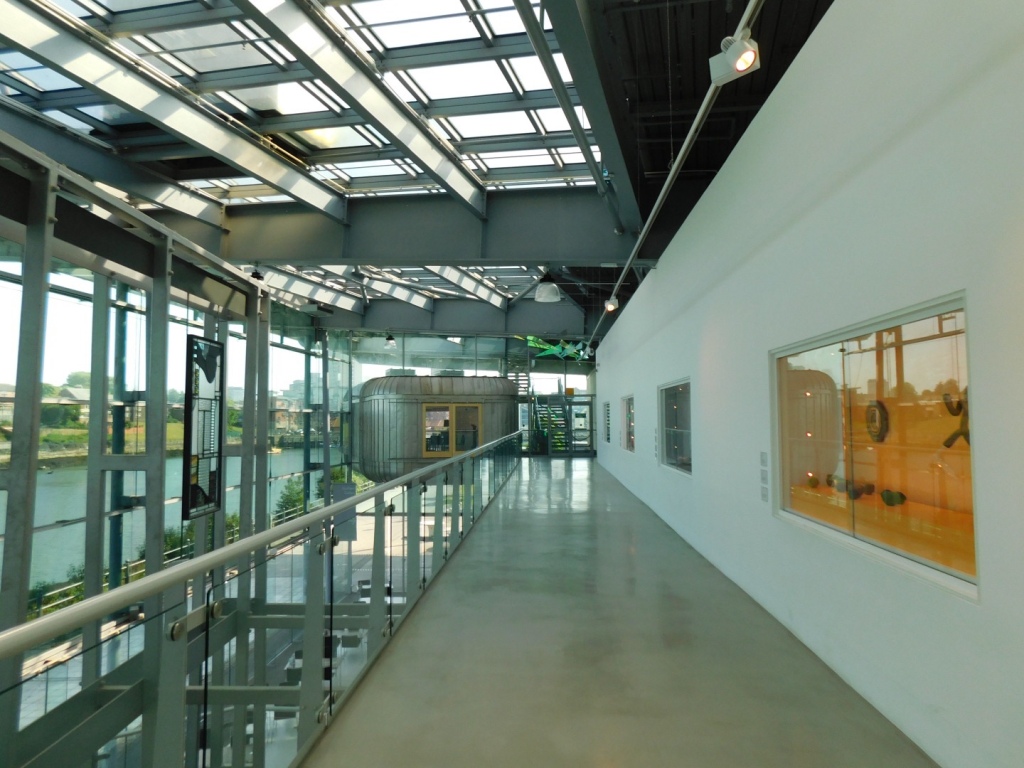
National Glass Centre photography by Jo Howell
We cannot afford to let this delightful institution go, not just for the enjoyment of locals and many visitors, or even for its national and international status promoting glass and the Arts… but for the cultural heritage of our future generations.
Amid this tangled tale let us not forget that Sunderland is the birthplace of stained glass in the UK; The National Glass Centre can have a viable future and should be allowed to continue the tradition of glass making that was first started here in 674AD.
Please come and visit this unique wonderful place and see why it must be saved.
We strongly urge the University of Sunderland to reconsider their plans, and for local and national politicians to become actively involved. And you can help by supporting the campaign:
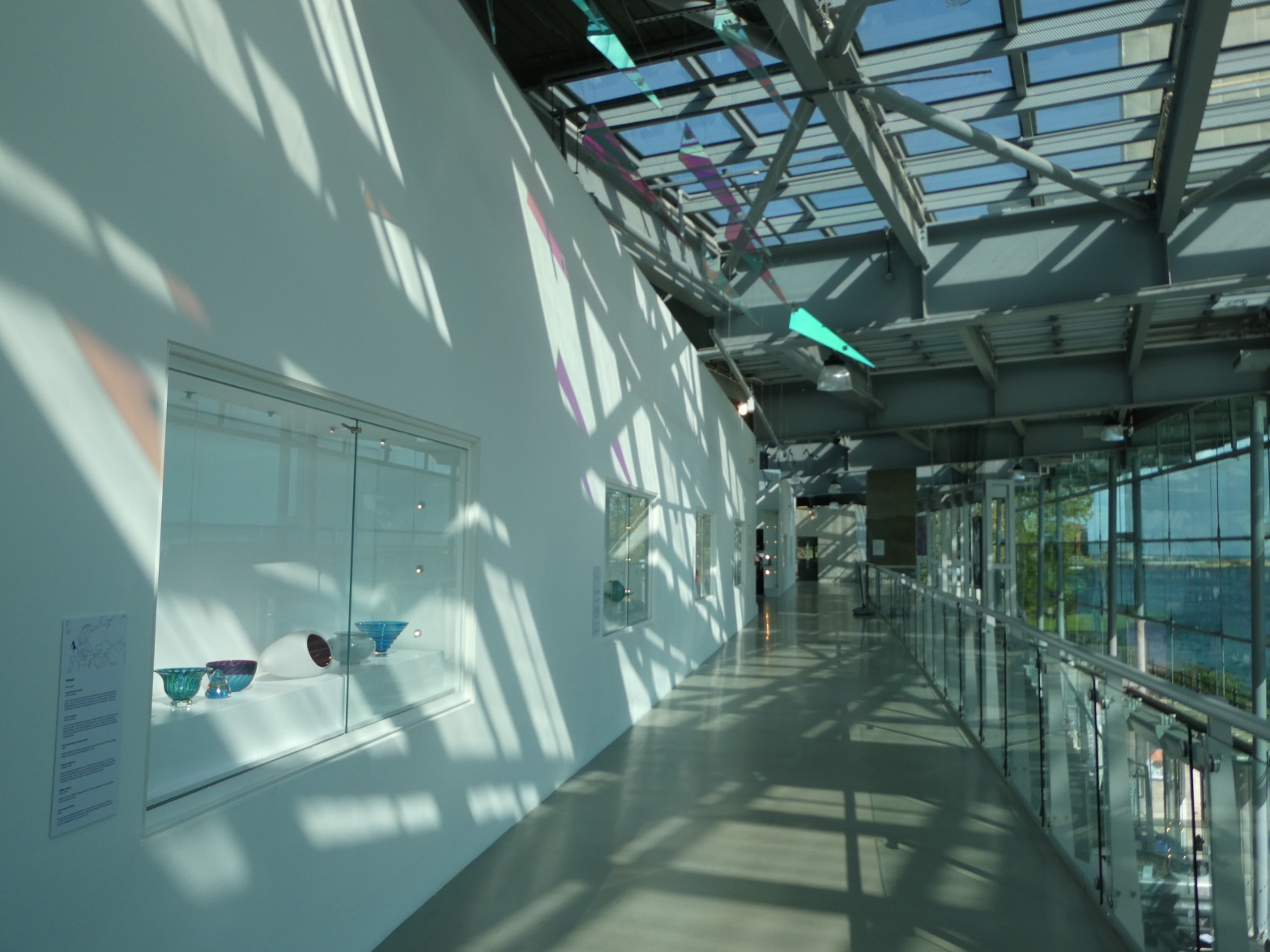
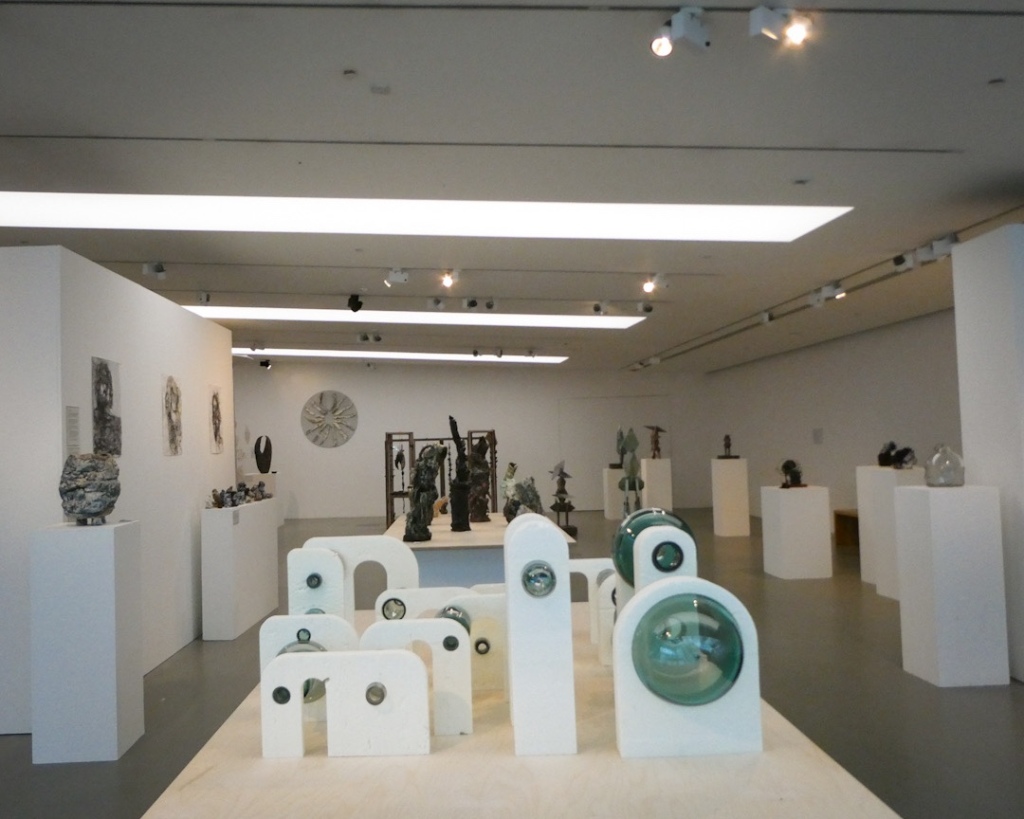
Exhibition photograph inside the National Glass Centre by Gill Helps
I’d just like to say the NGC and St. Peter’s Church belong close to eachother, as the first piece of stained glass in Britain – a skill learned from artisans from Gaul – was installed in St. Peter’s Church. I can’t imagine the NGC being anywhere else, because of these strong historical links with St. Peter’s. Nothing else makes sense.
Also, if it was relocated, where would the NGC be relocated to? What site has the space for glass blowing, studios, exhibition, meeting and learning spaces, shop and large café/restaurant? Would it cost more than refurbishing the NGC, and would people be less likely to visit if it was on a different site?
Exhibition photograph inside the National Glass Centre by Gill Helps
Over the years the NGC has been well loved by many. My own family have enjoyed making happy memories such as Mother’s Day lunches, half term pancake events for children, glass blowing, and of course, walking over the glass roof, to mention a few. I often walk along the riverside sculpture trail and as a keen amateur photographer, I have taken many photos of the NGC. I sometimes stop for a cuppa and meet friends there. The NGC is amazing, something for Sunderland to be proud of.
I am passionate about keeping the NGC in its current location and pray that somehow the money can be found to save it.
Gill Helps
Save The National Glass Centre by Gill HelpsSave The National Glass Centre by Gill HelpsSave The National Glass Centre by Gill HelpsSave The National Glass Centre by Gill HelpsSave The National Glass Centre by Gill HelpsSave The National Glass Centre by Gill Helps
Do you have a story about why we should save the National Glass Centre? Are you a glass artist? Architect? Teacher?
We want to hear from you!
Contact SaveTheNGC@gmail.com with your submissions.
The National Glass Centre is open for business and Save the National Glass Centre campaign wants you to show your love ❤️
BBC reports this morning about the impact of levelling upon North East arts projects. The article draws attention to the lack of footfall to many of our cultural organisations. It’s apparent that the cost of living crisis has become an overwhelming factor of everyday life. Decisions about your weekly budget have to be made carefully. And, at the moment, bus fare and lunch is a stretch too far for far too many.
Many organisations like the Tyneside Cinema in Newcastle are struggling to survive – with audiences failing to return to pre-Covid levels and a lack of local authority support. How is Arts Council funding distributed and how effectively is the government moving spending outside London?
By Richard Moss Political editor, North East & Cumbria
Most of our cultural organisations offer free entry, and often have free workshops or events. The National Glass Centre is one of these fantastic places. Sunderland University wants to eventually demolish the building, and they are ‘considering’ future options for the entire St Peter’s site. The campaign to save the National Glass Centre flies in the face of the current position of Sunderland University, Sunderland City Council, and local labour MPs. We have an extremely tall order to sway these main oppositions around to our way of thinking.
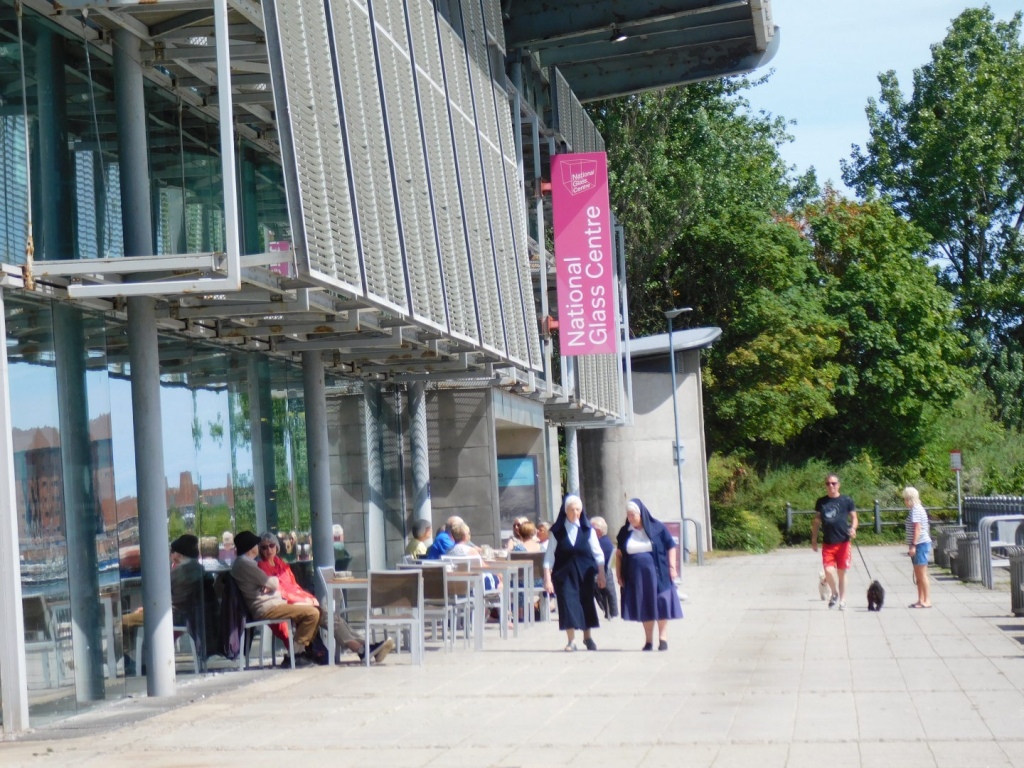
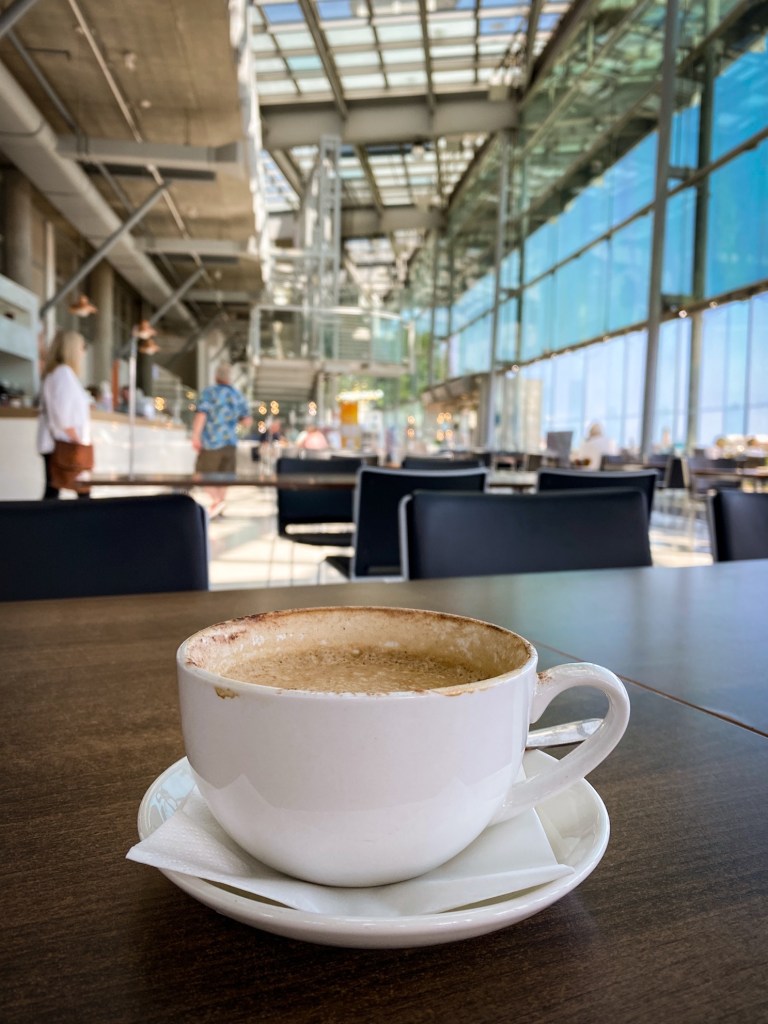
Delicious coffee and excellent views at the National Glass Centre
We are not going to be able to do that if the National Glass Centre doesn’t have enough footfall. The opposition have already won, if we aren’t visibly using the assets we already have. The campaign wants the National Glass Centre to stay, and be the amazing treasure that it is, for future generations. So, it starts today with you choosing to pop in for a coffee, or to watch a demonstration, to buy something from the shop, to take a workshop, or to enjoy an exhibition.
The National Glass Centre is open for you. Let’s keep it that way by visiting it! Check out the list of workshops and exhibitions on their website:
See the sea exhibition 2022 at National Glass Centre
In other news, the amazing Piers Gough, award winning master architect has sent us a message of support. Piers Gough was a great supporter of the National Glass Centre as an excellent example of one of the first buildings of its kind. Read his statement below:
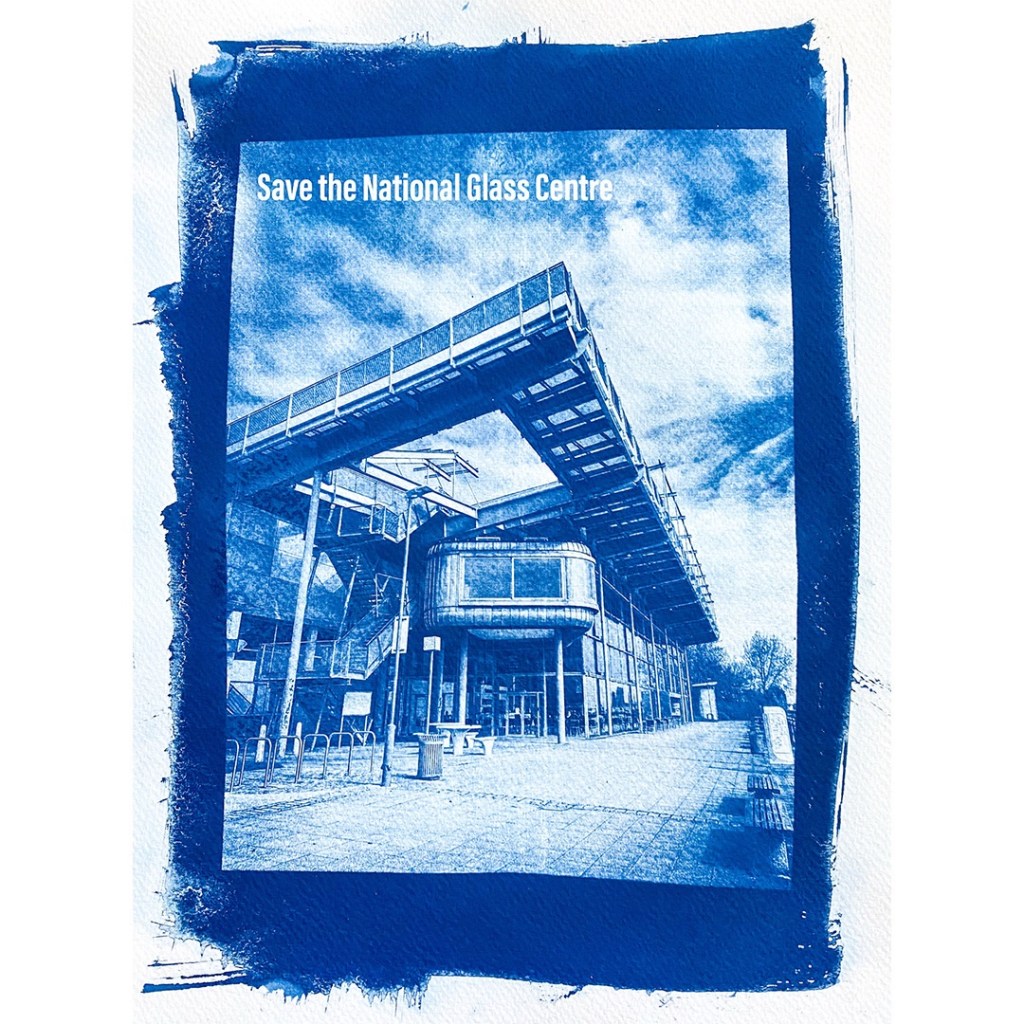
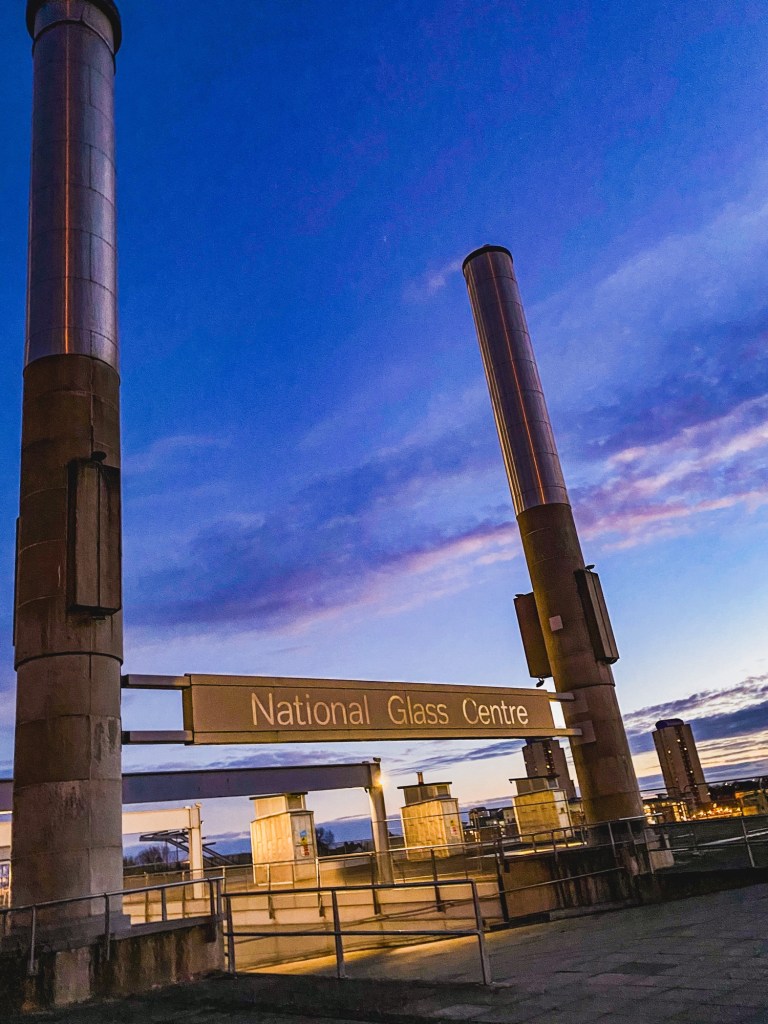
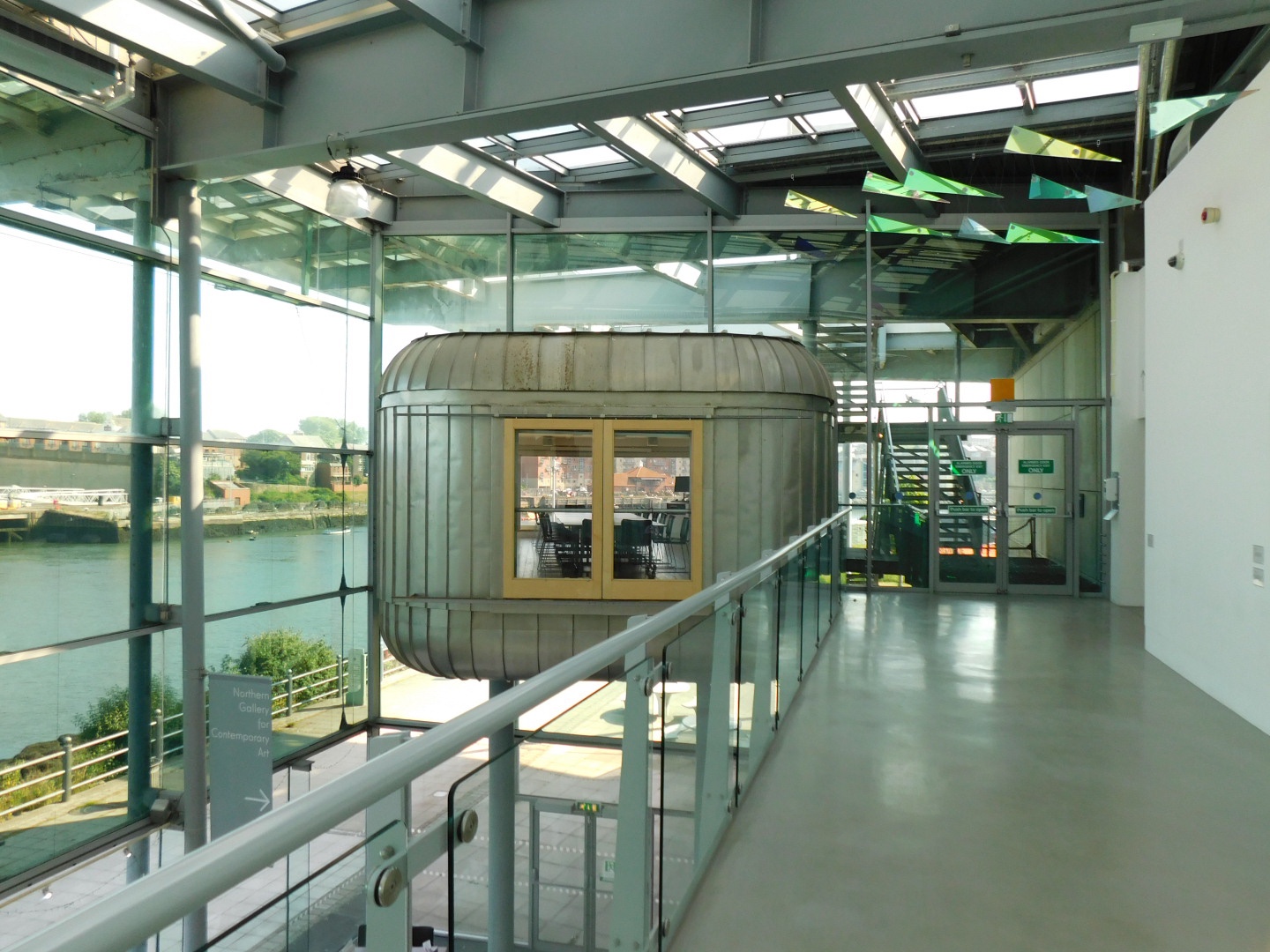
The National Glass Centre does so many thing so right. It exploits the sloping topography between Roker Terrace and the Wear by inviting the visitor straight onto the roof to first get a sense of the panoramic setting. Whilst entry to the building, signalled by two soaring chimneys, is invitingly sliced into the slope [in the manner of the great Oscar Niemeyer] The roof of course turns out to be a tour de force of glazing giving a unique birds’ eye view of the spaces below. The multi function interiors are inviting, spectacular, well lit and flexible enough to allow for many existing and future uses. The lowest level space opens seamlessly onto the quayside from where the whole building can be perceived as akin to a glass aircraft carrier including its quirky below deck control turret. This reference to Sunderland’s ship building heritage as well as glass making past makes this unique building special to its particular location. It is the best and most apposite 21st century building of the region.’
‘Sunderland cannot afford to lose such an icon. It would seem ideal for a forward looking university to use or repurpose but should it be superfluous another more appreciative owner should be found.’


















 Save the National Glass Centre